Bluetooth Low Energy is best known for powering fitness trackers health sensors and smart home devices. Behind the scenes these devices rely on a clear and consistent way to describe the data they offer. This system is built around BLE Services and Characteristics which define how information is organised shared and understood between devices.
Understanding BLE Services and Characteristics helps explain how a phone can instantly recognise what a device does and how to communicate with it.
What are BLE Services and Characteristics
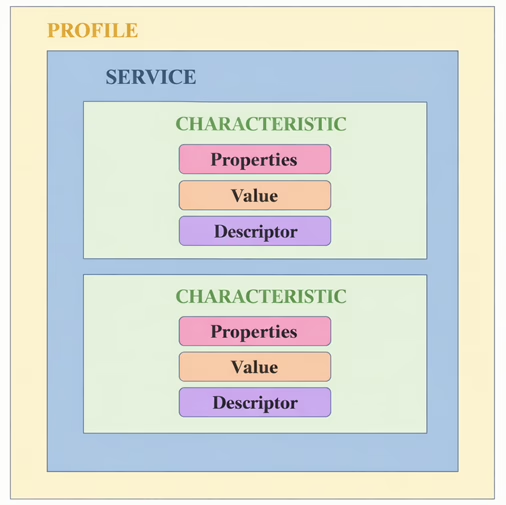
In BLE communication data is organised into logical groups. A service represents a specific function of a device such as measuring heart rate, reporting battery level or tracking temperature. Each service contains one or more characteristics which represent individual pieces of data within that function.
For example a Heart Rate Service may contain a Heart Rate Measurement characteristic while a Battery Service contains a Battery Level characteristic. This clear separation allows devices to expose their capabilities in a predictable way.
How services are declared
Every BLE service starts with a service declaration. This tells connecting devices that a new service is available and identifies it using a unique identifier known as a UUID. Some services use standard UUIDs defined by the Bluetooth SIG while others use custom UUIDs created by manufacturers.
Services are stored in a specific order on the device and can be discovered as soon as a connection is established. This discovery process allows a client device such as a smartphone to build a map of the available services and decide which ones it wants to use.
Characteristics hold the real data
Characteristics are where the meaningful data lives. Each characteristic belongs to a single service and is defined using its own UUID. A characteristic includes information about how it can be accessed such as whether it can be read written or updated automatically.
The characteristic value holds the actual data. This could be a sensor reading a status flag or a configuration setting. By reading and writing characteristic values a client can interact with the device in a controlled and efficient way.
Descriptors add extra detail
Some characteristics include descriptors which provide additional context. Descriptors can describe how a value should be interpreted or how it should behave.
One of the most important descriptors is the Client Characteristic Configuration Descriptor. This allows a client to subscribe to updates from a characteristic. Once enabled the device can send new values automatically using notifications or indications without waiting for the client to ask.
Why BLE Services and Characteristics matter
The structure of BLE Services and Characteristics ensures that devices from different manufacturers can work together reliably. By grouping related data into services and exposing values through characteristics BLE creates a common language for connected devices.
For developers much of this complexity is handled by operating systems and Bluetooth libraries. However a basic understanding of BLE Services and Characteristics makes it easier to design clear efficient and interoperable devices.
As BLE continues to power more everyday technology services and characteristics remain at the heart of how devices describe themselves and share information efficiently.