The last couple of weeks have felt like slow progress, but when I stop and look back, quite a lot has actually happened.
One of the biggest developments has been starting sessions with a business coach. I’ve really enjoyed them so far. My background is very much rooted in technology, and if I’m honest, I feel quite vulnerable when it comes to the business side of things. We’ve only had two sessions, but the very first question she asked was, “What is your long-term goal?”
It sounds like such a simple question, but it wasn’t something I had really thought about in any depth. Having a clear destination helps shape the route to get there, but it also influences things like pricing, funding, and timescales. It was one of those questions that seemed obvious once it had been asked.
I also paid a visit to The Cube in Plymouth, a service available to graduates of the University of Plymouth. It was another really positive experience and, surprisingly, something I wasn’t aware of when I started my previous business.
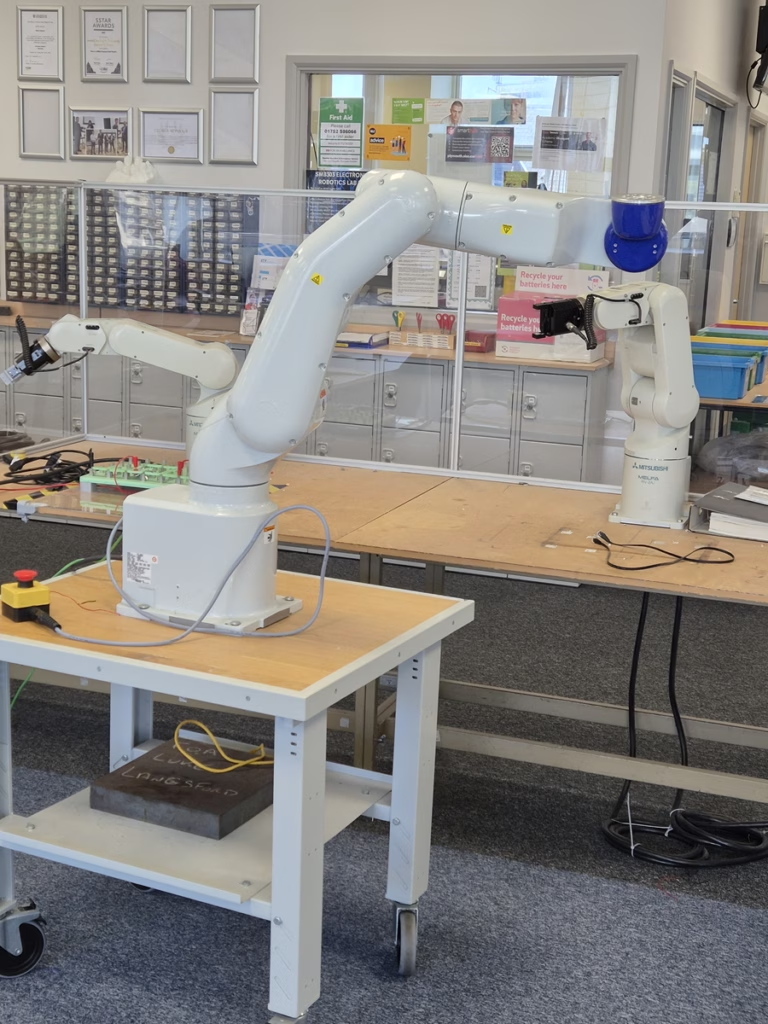
It turns out they offer a wealth of resources, support, and contacts, so it was well worth the visit. While I was there, I also got the chance to look around my old robotics lab from my university days. A lot has changed since I was a student, and some of the projects being worked on there now looked incredibly impressive.
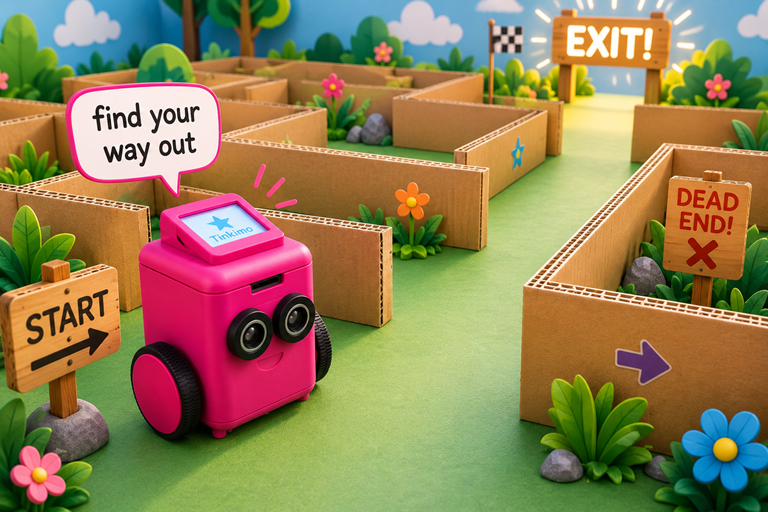
On the Tinkimo front, I managed to get the robots in front of a teacher and gather some early feedback. It was fantastic to see how enthusiastic she was about them. Sometimes, when you’re working away on your own with little more than a vision, it can feel like a bit of a slog. Seeing someone else immediately understand what you’re trying to achieve provides a much-needed boost.
We agreed that the next step would be to let some students have a go and gather real-world feedback. Before that happens, though, there are still a few tweaks I want to make. Testing some activities highlighted a handful of issues, including one rather dramatic battery-related problem.
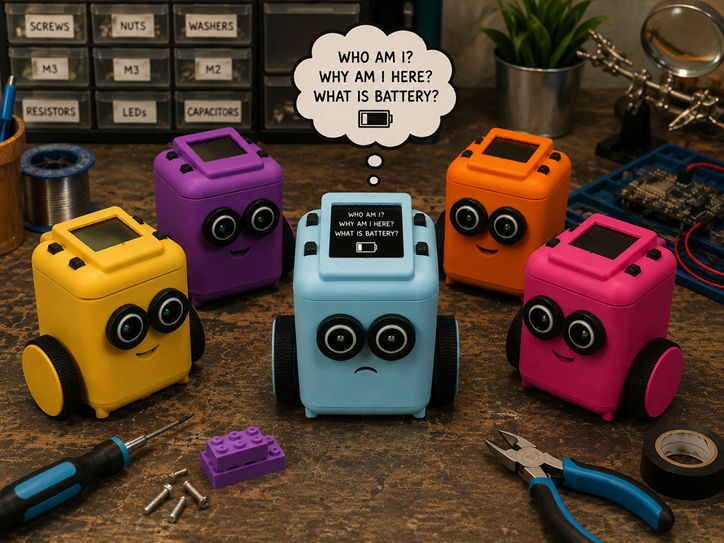
The batteries last a surprisingly long time, but if the charger hasn’t been connected for a very long time and the batteries get too low, the robot appears to have a full existential crisis. As long as the batteries are kept charged, everything works perfectly fine, but there is a point where they become so depleted that the robot can no longer charge them itself. At that point, it refuses to cooperate and can only be revived by charging the battery outside the robot. Thankfully, I know exactly what’s causing the issue and just need to implement a fix. Needless to say, that’s not quite the user experience I’m aiming for!
Another interesting discussion centred around the possibility of a rental model, similar to how some educational resources are provided to schools. The more I think about it, the more I like the idea. It keeps upfront costs lower, allows me to gather lots of feedback, and gives me the flexibility to continue improving the design without committing to large production runs.
My business coach was also very positive about the concept and has tasked me with investigating how other rental businesses handle things like terms and conditions, liability, and insurance.
Another highlight was being invited to speak at Digital Plymouth about my experience on the Rocket Duck Launchpad programme. It was a great opportunity to reflect on the journey so far, from turning an idea into something tangible, through to some of the lessons I’ve learned along the way.
Part of the talk explored how technology is shaping education across generations. Generation X saw the arrival of home computers and the birth of the internet. Generations Y and Z grew up with technology becoming an everyday part of life and are often described as digital natives. Today, we’re seeing a similar shift with artificial intelligence. Generation Alpha are growing up during the rise of AI, while Generation Beta will likely become the first truly AI-native generation. It raises some fascinating questions about how education, skills and learning will evolve over the coming years.
One of the things I enjoy most about events like Digital Plymouth is the people you meet. I had a really interesting conversation with someone from Cognition Creative Learning, who shared how their organisation uses technology such as LEGO to help teach STEM subjects. We discussed some of the challenges faced by teachers and educational organisations, as well as the practical realities of delivering engaging technology-based learning in the classroom.
It was another valuable reminder that building great technology is only part of the challenge. It also needs to fit into the realities of busy schools, teachers and students. Those conversations often provide just as much value as hours spent behind a computer screen.
Next week I’ll be attending my first Growth Forge event. I’m really looking forward to it as an opportunity to network with other founders and hear from people who have already navigated many of the challenges that I’m only just beginning to encounter.
This weekend has been spent redesigning the top of the robot. Again.
The reason is simple: the first thing everyone tries to do is press the buttons. Unfortunately, the buttons are currently glued in place, which isn’t quite the interactive experience people are expecting! The original design only catered for three buttons, even though the robot actually has four. Making all four accessible felt like a lot of effort for something that wasn’t especially important, so it ended up on the “I’ll sort that later” list. As it turns out, people absolutely love pressing buttons, so it’s finally time to fix that properly.
On the plus side, redesigning the lid has opened up some interesting opportunities. I’m now looking at moving the audio circuitry into the top section and potentially implementing my own LCD display controller at the same time.
Looking ahead, my main goal is to redesign the PCBs to remove many of the off-the-shelf modules and replace them with a more integrated solution. The aim is to make the robots more reliable, easier to assemble, and ultimately more suitable for wider testing before the September deadline.
It’s an ambitious target, and the timescales are certainly tight, but for the first time in a while it feels genuinely achievable.
Until next time,
Terri