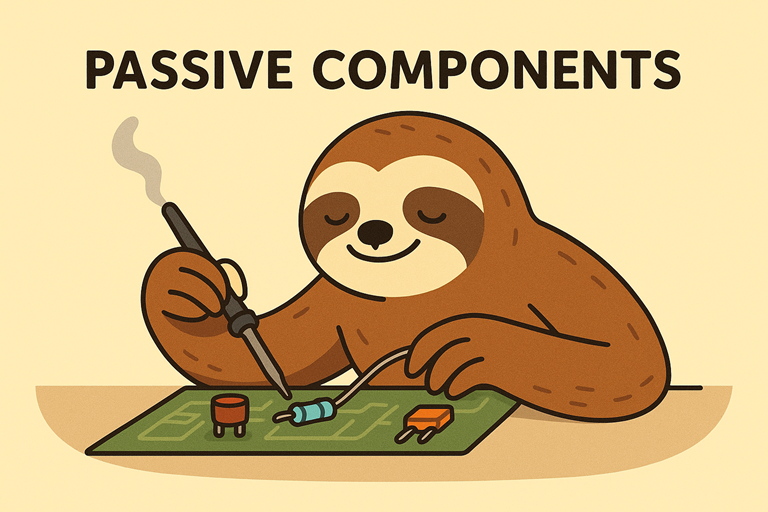
When you start learning electronics, you’ll quickly come across a mix of parts that either “do things” or simply “let things happen.” Passive components fall into that second group. They don’t need their own power source, and they don’t amplify, switch or control signals in a clever way. Instead, they quietly shape and manage the electrical energy already moving through a circuit.
A passive component doesn’t create energy. It only responds to it. Think of them like the plumbing in a house. They don’t pump the water, but they guide it, restrict it and store it so everything works smoothly.
Why Are They Important?
Passive components are essential because they keep circuits stable, predictable and safe. Without them, electronic devices would behave erratically or even damage themselves. They smooth out sudden changes in voltage, prevent too much current from flowing, store energy for quick bursts and block unwanted electrical noise.
Even the most advanced microcontroller or robot depends on these simple building blocks. If the active parts are the “brains,” the passive parts are the supporting structure that makes the whole system reliable.
The Main Types You’ll See
Beginners usually meet three passive components first: resistors, capacitors and inductors.
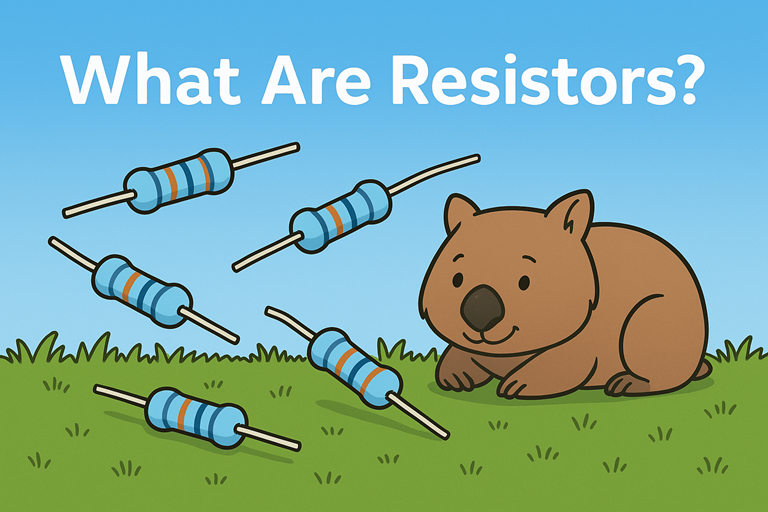
Resistors control how much electrical current can flow. They act a bit like narrowing a pipe to reduce the water pressure, protecting delicate parts from being overwhelmed.
Capacitors store small pockets of electrical energy. They can release this energy quickly to smooth out spikes or help with timing, making them useful in everything from phone chargers to microcontroller circuits.
Inductors rely on magnetic fields to resist sudden changes in current. They’re great at filtering signals and reducing noise, especially in power supplies.
You don’t need to fully understand the maths behind them yet. What matters is knowing that these parts quietly support the rest of the circuit.
Where You’ll Find Them
Passive components are everywhere once you know what to look for. They sit on the circuit boards in phones, laptops, toys, speakers, chargers and even household appliances. If you take up robotics or microcontroller projects, they’ll be among the first parts you use and the ones you’ll rely on again and again.
Learning how passive components behave gives you a strong foundation for all future electronics. Once you’re comfortable with them, the more complex parts of the circuit start to make a lot more sense.