Strawberries may be one of the UK’s favourite summer treats, but behind the scenes growers face mounting challenges. Disease, rising temperatures and a shrinking labour force have put pressure on farms to find new ways of keeping the fruit on shelves. Increasingly, they are turning to robotics to keep the industry thriving.
Battling Disease and Climate Pressures
Growing strawberries has always been a delicate process. The fruit is vulnerable to fungal diseases that can spread rapidly in humid conditions, while unpredictable weather makes it harder for growers to plan. Traditionally, farms have relied on chemical fungicides and large teams of seasonal pickers. But with environmental commitments tightening and labour shortages becoming more acute, the sector has been looking for alternatives.
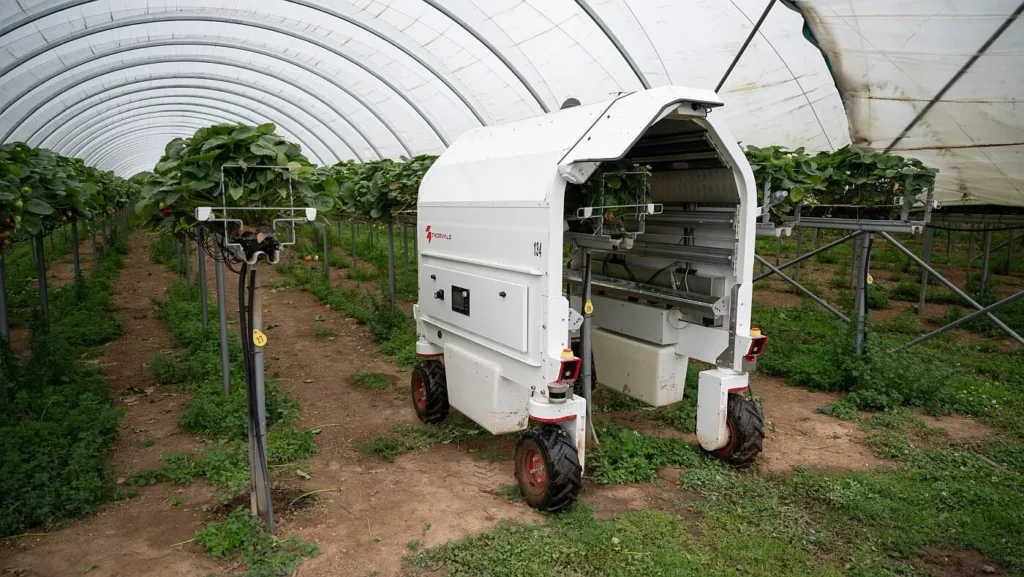
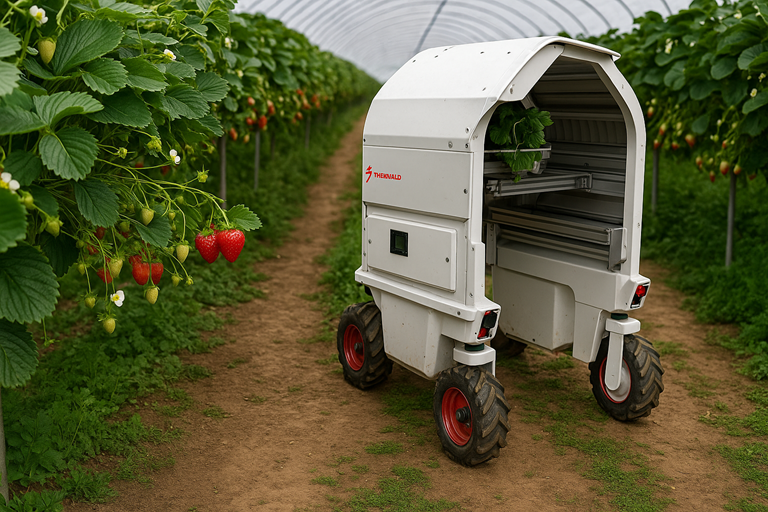
One of the biggest breakthroughs has come in the form of the Thorvald robot developed by Saga Robotics. In the past year alone, more than 150 of these machines have worked across a fifth of the UK’s tabletop strawberry farms and almost 1,300 acres of Californian vineyards. Operating with 97 per cent uptime, the robots travelled a combined 200,000 autonomous kilometres, the equivalent of circumnavigating the globe five times.
Thorvald uses controlled doses of UV C light to suppress fungal disease, reducing the need for chemical treatments and helping farmers meet sustainability targets. Saga’s researchers have refined the technology to ensure dosing stops fungi without harming the plants, removing an estimated 133 tonnes of fungicides this season. The company says the robots have also cut more than 4,000 tonnes of carbon emissions and saved workers more than 85,000 hours of chemical exposure.
A Solution to Labour Shortages
While fungal control is one part of the puzzle, getting fruit off the plant and into punnets remains labour intensive. The UK’s shortage of seasonal farm workers has led researchers to explore automated harvesting.
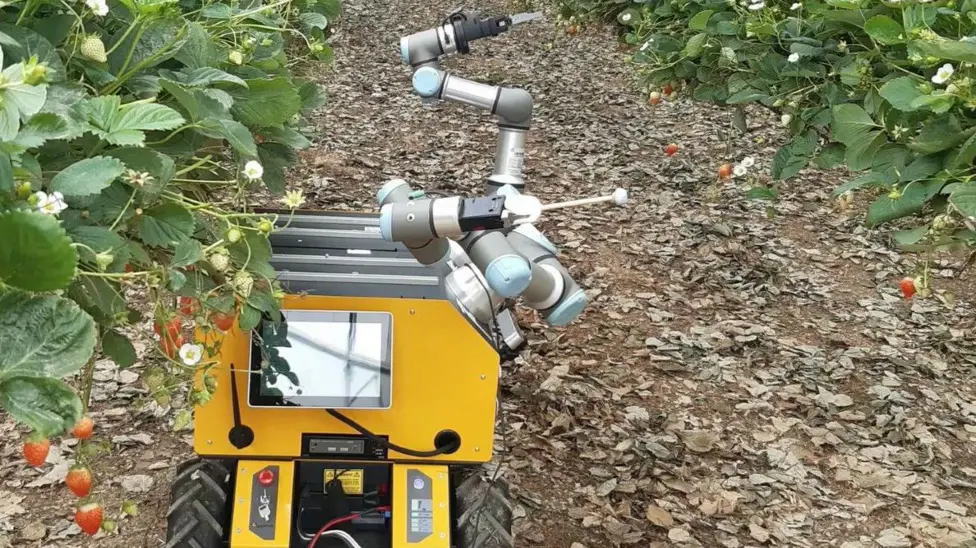
At the University of Essex, scientists are developing a low cost strawberry picking robot being trialled at the Tiptree based jam maker Wilkin and Sons. Costing around ten thousand pounds, it is far cheaper than the one hundred and fifty thousand pounds price tag of many commercial machines. The robot uses a small arm to pick a berry in 2.5 seconds, weigh it and place it directly into packaging.
Dr Vishwanathan Mohan, who helped design the prototype, says robotics could be a game changer for the sector. He argues that improving food security, reducing labour pressures and responding to climate challenges all require affordable automation. The team’s design is modular, allowing it to be adapted for other produce, with trials planned for onions, tomatoes and lettuce.
A Glimpse Into the Future of Fruit Farming
As growers continue to scale robotic deployments, the technology is becoming central to long term planning. Saga Robotics aims to treat 30 per cent of the UK’s tabletop strawberries next year and is working on new models capable of operating on uneven terrain. Meanwhile, data driven features such as fruit mapping could help farmers manage crops with greater precision.
Researchers believe that if costs continue to fall, fleets of robots could eventually support the harvesting of a wide range of fruits and vegetables. For now, the UK’s strawberry fields are emerging as a proving ground for the next generation of agricultural automation.