Scientists in the United States have developed a new type of artificial muscle that could significantly change how robots are built and used. The innovation allows robots to lift up to 100 times their own weight while remaining lightweight, flexible and energy efficient.
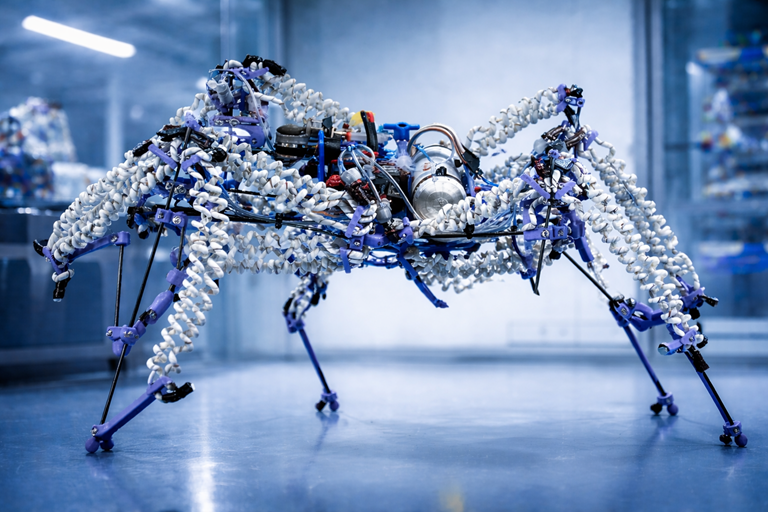
The research, led by doctoral student Eric Weissman at Arizona State University, focuses on air powered artificial muscles known as helical anisotropically reinforced polymer actuators. These bio inspired components mimic how real muscles contract and expand, offering a more natural and adaptable way for robots to move.
Unlike traditional motor driven systems, which are often heavy and rigid, the new design enables robots to operate with greater agility and independence.
How the technology works
The artificial muscles are made from coiled, tube like structures that expand and contract when air is applied. This simple mechanism allows them to generate significant force without relying on bulky motors or complex mechanical systems.
Researchers say the muscles require relatively low air pressure to operate, meaning robots can carry their own power supply and function without external connections. This opens the door to fully untethered machines capable of moving freely in a wide range of environments.
The design also allows engineers to tailor the muscles for different uses, adjusting properties such as strength, flexibility and resistance to wear.
Extreme environments and new capabilities
One of the most notable advantages of the new system is its durability. The artificial muscles can withstand extreme heat and abrasive conditions, enabling robots to work in environments that would be challenging for conventional machines.
Potential applications include industrial cleaning processes, marine exploration near thermal vents and disaster response scenarios. In collapsed buildings, for example, soft robots equipped with these muscles could navigate tight spaces to search for survivors without causing further damage.
The technology could also be used in agriculture, where flexible robotic arms might assist with tasks such as pollination, particularly in dense crops where traditional machines struggle.
Everyday uses and human interaction
Beyond industrial settings, the researchers believe the technology could play a role in everyday life. Soft robots powered by artificial muscles could assist older adults with routine tasks such as reaching for items or carrying light loads.
Because the muscles are flexible and compliant, they are considered safer for use around humans than rigid robotic systems. This could make them suitable for use in homes, hospitals and workplaces where close interaction is required.
The team has also demonstrated related innovations, including a robotic arm inspired by an elephant’s trunk and a wearable back support device designed to reduce strain during lifting.
A step towards widespread adoption
The study, published in the Proceedings of the National Academy of Sciences, highlights the potential for artificial muscles to become a general purpose tool in robotics rather than a niche solution.
Researchers have already filed a provisional patent and secured funding support, signalling strong interest in bringing the technology closer to real world use.
Experts say the development could mark a shift towards lighter, more adaptable robots that are capable of operating in diverse environments while working safely alongside humans.