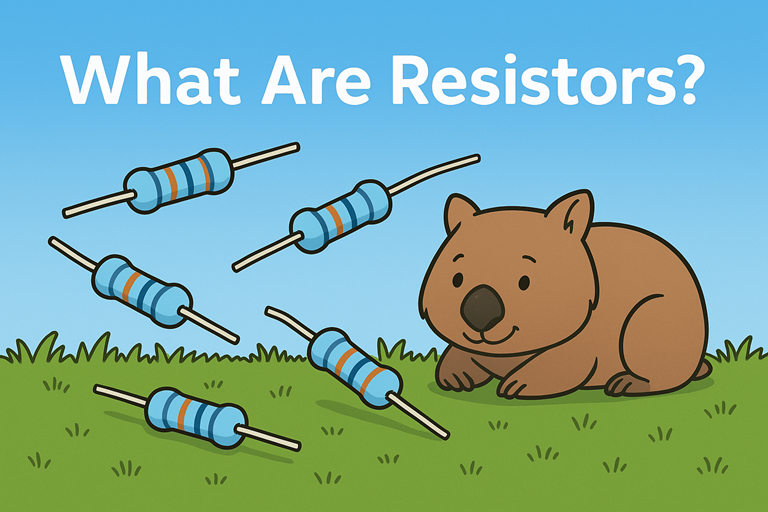
A resistor is one of the simplest components you’ll meet in electronics. Its job is to resist the flow of electrical current. Think of electricity as water flowing through a pipe. A resistor is like a narrow part of that pipe: it slows things down to a safe level without stopping the flow completely.
Why do circuits need resistors?
Loads of components, like LEDs, sensors, and microcontrollers, can only handle a small amount of current. Too much can damage them. Resistors act like little safety managers, making sure nothing overheats or gets overloaded. Without them, many circuits wouldn’t work properly at all.
How resistance is measured
Resistance is measured in ohms (Ω). A small value like 100 Ω offers only a little resistance. A big one, like 1 MΩ (one million ohms), offers a lot. You don’t need to memorise values at first. Just know that different resistors are used to control current in different ways.
What resistors look like
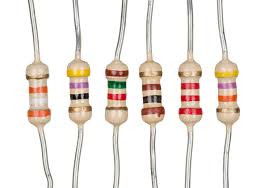
The resistors you’ll see most often look like tiny cylinders with coloured stripes around them. These stripes form a code that tells you the resistor’s value. Some circuits use even smaller versions called surface-mount resistors, which are tiny black rectangles with printed numbers. They might look different, but they work in the same way.
How to read resistor colour codes
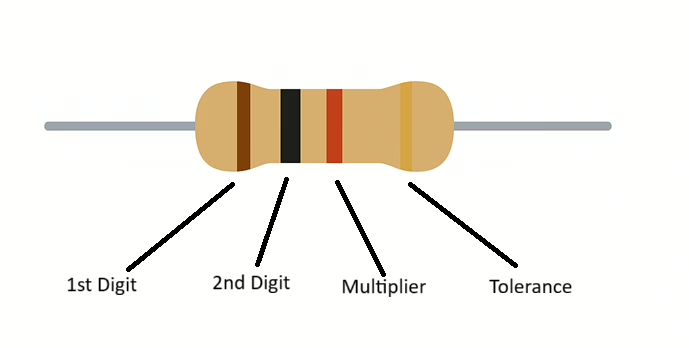
Those coloured stripes are a clever way of showing the resistor’s value without printing tiny numbers. Most beginner-friendly resistors use four stripes, and they always appear in the same order.
The first two stripes are numbers.
The third stripe tells you how many zeros to add.
The fourth stripe is the tolerance, which means how accurate the resistor is allowed to be.
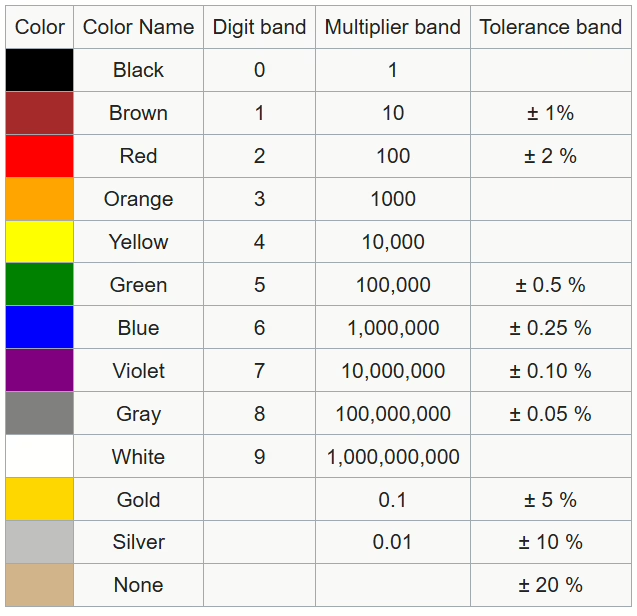
Each colour stands for a digit. For example, brown is 1, red is 2, orange is 3, and yellow is 4. When you read the stripes from left to right, they form a number.
Here is a common example: brown, black, red, gold.
- Brown is 1.
- Black is 0.
- Together that makes 10.
- Red as the multiplier means add two zeros, turning 10 into 1000 Ω, which is also written as 1 kΩ.
- Gold at the end means the resistor can be plus or minus 5 percent of that value.
Another example is orange, orange, brown, gold.
- Orange is 3, so that gives 33.
- Brown means add one zero, giving 330 Ω.
Some resistors use five stripes. This simply adds an extra digit at the start for more accuracy. The pattern is the same, just with one more number.
When you are starting out, you do not need to memorise the colour chart. Most people use a colour-code card or an online calculator. The important thing is knowing the order: digit, digit, zeros, accuracy. Once that clicks, the code becomes much easier to use.
Where you will use resistors
In beginner projects, resistors often sit next to LEDs to stop them burning out. They are also used with sensors, where they help create stable readings. In robotics, they appear in motor controllers, timing circuits, and anywhere a signal needs shaping or smoothing.
Here’s a clear, beginner-friendly section you can drop straight into your guide. It keeps the same BBC Bitesize style as the rest of your content: short paragraphs, friendly tone, and no complicated jargon.
The resistor symbol in circuit diagrams
When you start learning electronics, you will often see circuit diagrams that use symbols instead of pictures of components. These diagrams are like a map that shows how electrical parts are connected, without worrying about their real shapes or sizes. To read these maps, you need to recognise the symbols, and one of the first you will meet is the resistor.
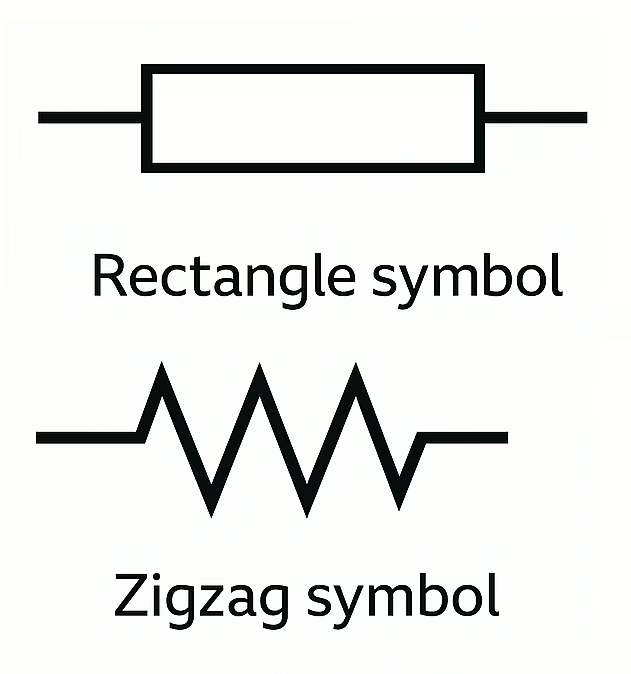
The resistor symbol looks like a small zigzag line or, in some parts of the world, a simple rectangle. Both versions mean exactly the same thing. The zigzag is the traditional symbol used in many textbooks, while the rectangle is common in European diagrams. If you can recognise either one, you will be able to read resistor placement in any circuit you come across.
Next to the symbol, you might also see a label like “R1” or “R5”. The letter R tells you it is a resistor, and the number shows which resistor it is in the circuit. This is handy when a design uses several resistors with different values. Designers will often include the resistor’s value too, written as something like 330 Ω or 4.7 kΩ.
Being able to spot the resistor symbol helps you understand how current flows through the circuit and where resistance is being added. Once you learn this symbol, the rest of the common components become much easier to understand too
Fixed and variable resistors
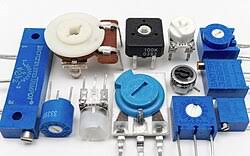
Most resistors have a fixed value. Some, called variable resistors or potentiometers, can be adjusted. These are used in things like volume controls, dimmer switches, and calibration circuits.
Why resistors matter
Resistors might be small and cheap, but they play a big role in protecting components, shaping signals and keeping circuits stable. Once you understand what a resistor does, and how to read its value, you are already well on your way to understanding how electronic circuits work.