People have dreamed about robots helping around the home for decades. From science fiction films to cartoons, the idea of a robot that can tidy up while you relax has always seemed exciting.
Now that dream is taking its first real steps. A company in San Francisco has started offering a home cleaning service using humanoid robots. These machines can vacuum floors, wipe kitchen counters and take out the rubbish. While they are still learning, they are giving us a glimpse of what the future of housework could look like.
But there is much more to this story than simply cleaning a home.
A Robot That Comes to Your House
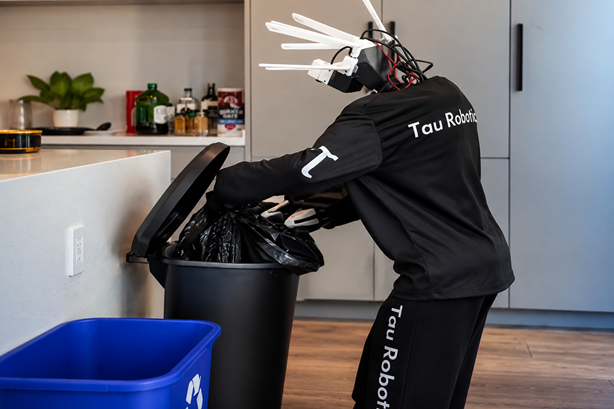
Tau Robotics has launched an invite only cleaning service in San Francisco. Customers pay around £22, or 30 US dollars, for each hour of cleaning.
The robots can vacuum carpets and hard floors, wipe worktops, empty bins and move small items out of the way. They do not climb ladders, work outdoors or deal with dangerous materials. Customers also need to stay at home while the robot is working.
At first glance it might seem like the robot is doing everything on its own. In reality, that is not yet possible.
There Is Always A Human Helping
Each robot is controlled by a trained operator who works from Tau Robotics’ office. The operator watches live video from cameras on the robot and controls its movements in real time.
Artificial intelligence also plays an important role. It helps the robot balance, move smoothly and control its arms. The human and the AI work together as a team.
This approach allows the robots to complete useful jobs today while engineers continue teaching the AI how to become more capable in the future.
Teaching Robots Through Experience
Every cleaning visit helps improve the technology.
The robots record information about the job, including how objects are picked up, how rooms are laid out and how different cleaning tasks are completed. Engineers can then use this information to train future AI systems.
This is important because teaching a robot in the real world is much harder than teaching one inside a computer simulation.
Every home is different. Furniture is arranged in different ways. Floors have different surfaces. Toys, shoes and bags can appear almost anywhere. Robots have to learn how to cope with all these surprises.
Privacy Matters Too
Collecting information helps improve robots, but it also raises important questions about privacy.
Tau says that microphones remain switched off during cleaning visits. However, video from the robot’s cameras is recorded. Customers can ask for this footage to be deleted, but otherwise it may be kept to help train future AI systems.
This reminds us that new technology often brings new challenges as well as new opportunities.
Companies developing AI need to explain clearly how information is collected, stored and used. Building trust is just as important as building clever robots.
Not Everyone Is Convinced
Some robotics experts believe humanoid cleaners are arriving before the technology is truly ready.
Professor Ken Goldberg from the University of California, Berkeley says that many everyday jobs are still surprisingly difficult for robots. Picking objects up from the floor, cleaning around obstacles and reaching awkward places all require careful movements that humans perform without even thinking about them.
Others believe the best way to improve robots is to let them work in real homes where they can learn from real situations.
It is likely that both views contain some truth. Today’s robots are impressive, but they still have a long way to go.
Competition Is Growing
Tau is not the only company hoping to bring robots into our homes.
Other businesses are developing robots that clean houses, fold laundry or carry out household chores with less human involvement. Some charge much higher prices, while others are experimenting with fully autonomous robots that do not need a remote operator.
This growing competition could help speed up improvements and reduce costs over the next few years.
A Bump In The Road
Tau’s robots are built using hardware from Chinese robotics company Unitree, with Tau adding its own cameras, computer systems and special grippers.
Recently, the United States introduced restrictions on importing certain Chinese made humanoid robots because of security concerns.
Current robots already in the country can still be used, but future expansion may become more difficult if companies cannot easily import additional machines.
This shows that building advanced robots is not only about engineering. It also involves international trade, manufacturing and government policy.
The Future Is Taking Shape
Humanoid robots are still at the beginning of their journey. They are slower than people, need human supervision and cannot yet complete every household task.
Even so, only a few years ago the idea of hiring a robot to clean your kitchen would have sounded like science fiction. Today it is happening in real homes.
For teachers and students, this is an exciting reminder that robotics and AI are moving forward at an incredible pace. The engineers of tomorrow will help decide how these machines work, how they protect our privacy and how they make life better for everyone.
The future may not arrive all at once, but one vacuumed floor at a time, it is slowly becoming reality.