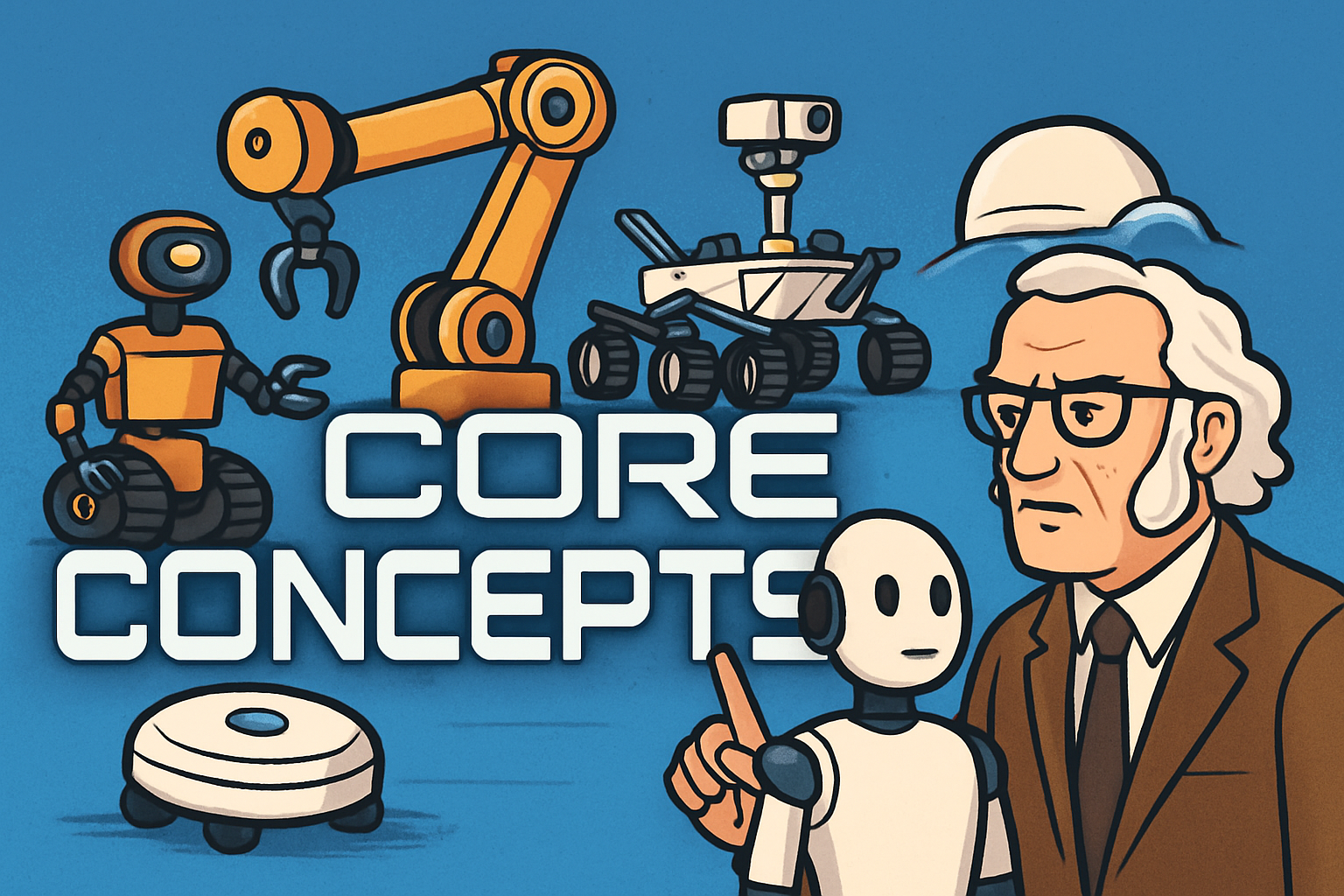
Robots are no longer just science fiction. They are all around us, helping surgeons perform delicate operations, exploring the surface of Mars, assembling cars in factories, and even vacuuming our living rooms. At its simplest, a robot is a machine that can sense its environment, make decisions, and act on those decisions.
What You’ll Be Learning
In this course, we’ll take you on a journey through the fascinating world of robotics. You’ll pick up some of the key words and ideas that roboticists use, without needing to be an engineer. Think of this as building a shared “robotics vocabulary” so that when you hear about things like sensors, actuators, or degrees of freedom, you’ll know exactly what they mean.
Meet a Robot’s Body Parts
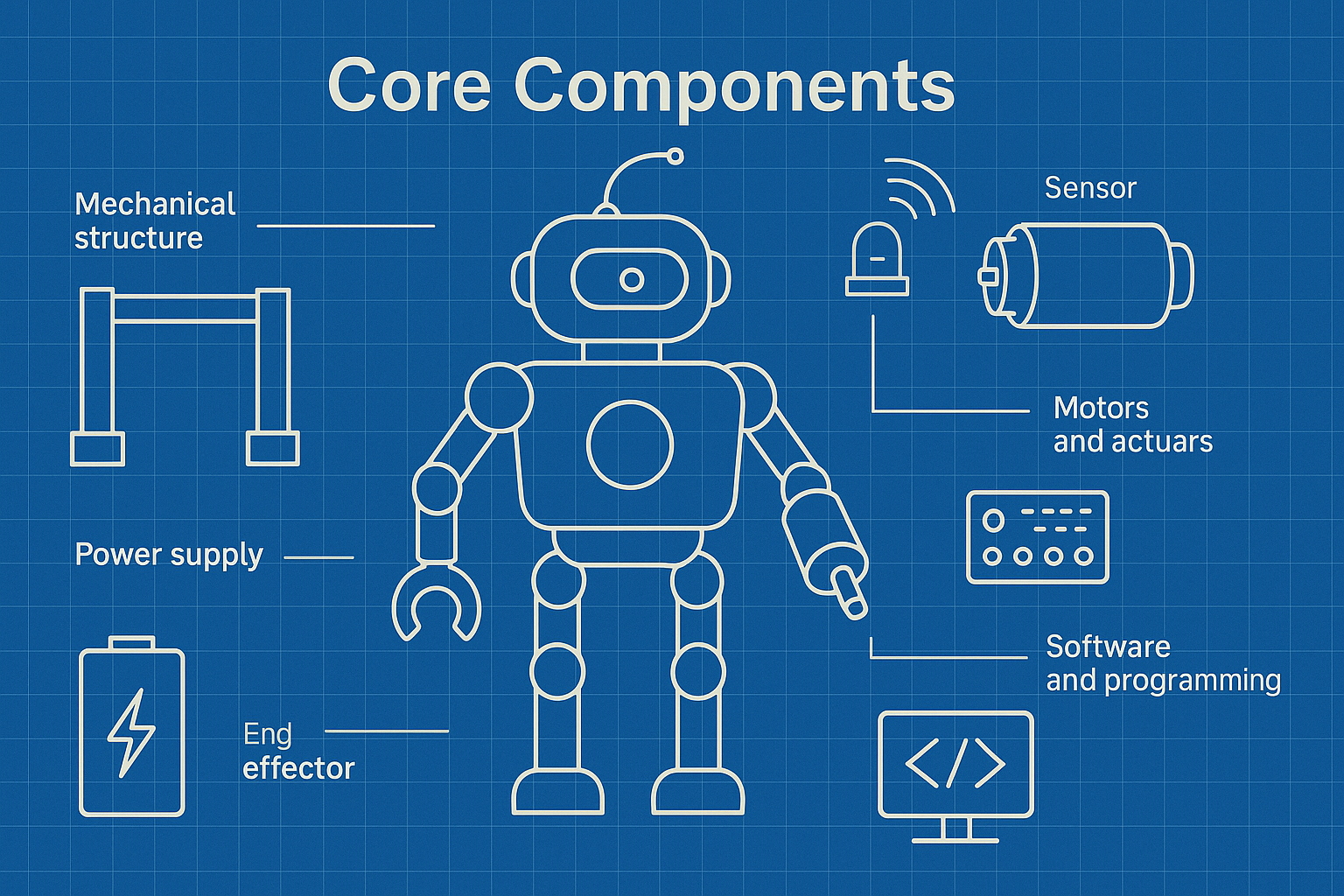
We’ll start by looking at what makes up a robot. Sensors are how robots “see” and “feel” the world. Actuators are the motors and mechanisms that let them move. Controllers are the “brains” that decide what to do.
How Robots Get Around and Make Choices
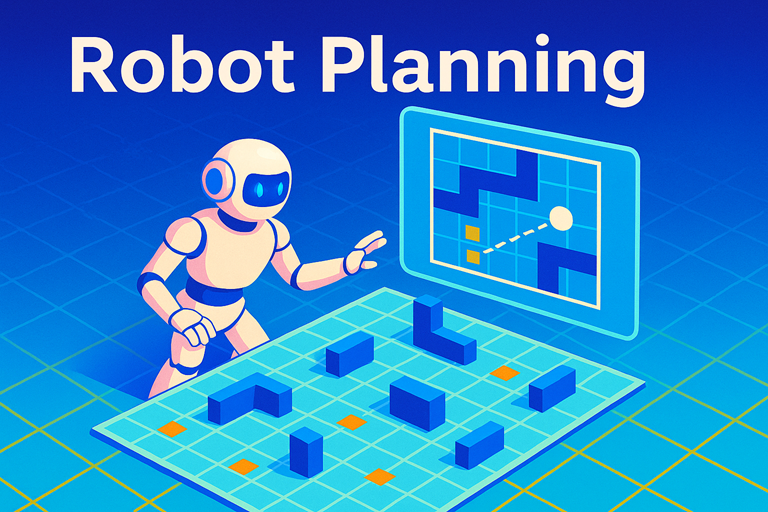
Next, we’ll explore the ways robots move and think. You’ll see how some roll on wheels, others crawl on tracks, some walk on legs, and a few even take to the skies. Along the way, you’ll discover how simple logic, like “if there’s an obstacle, turn right,” forms the foundation of robot decision-making.
When Robots Get Smart
We’ll also take a peek into artificial intelligence and machine learning. Modern robots can recognize images, learn from data, and adapt to new situations. Don’t worry—we’ll keep it practical and hands-on using simulators, not heavy math.
Robots in Everyday Life
Finally, we’ll talk about where robots are being used today and some of the big questions they raise. Can robots really take over jobs? Should we trust them in healthcare? And what happens when robots make mistakes?
Ready to Get Started?
By the end of this course, you’ll understand the basics of robotics and gain practical experience through interactive simulations. This is your first step into robotics, a field where creativity meets technology, and where the future is still being written.