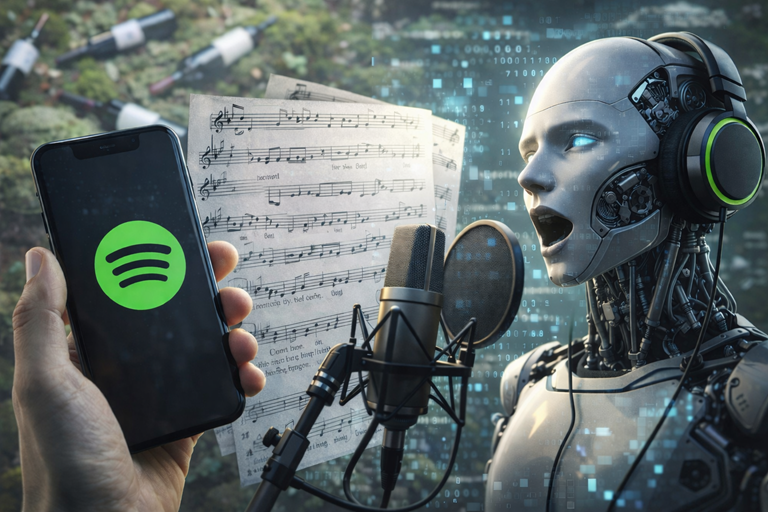
A song created with artificial intelligence has become one of Sweden’s biggest streaming hits of the year, only to be barred from the country’s official music charts. The track, Jag vet, du är inte min, which translates as I know, you are not mine, has fuelled a growing debate about how the music industry should treat AI generated songs.
Performed by a digital artist known as Jacub, the folk pop ballad climbed rapidly on streaming platforms and is currently among the most played tracks on Spotify in Sweden. Despite its popularity, it has been ruled ineligible for the national charts, making it one of the highest profile examples of an ai song banned from swedish charts.
Who is Jacub and how was the song made
Jag vet, du är inte min tells a melancholic story of lost love, backed by acoustic guitar and emotive vocals. As listeners embraced the song, journalists began asking who Jacub really was. The artist had no social media presence, interviews or live performances.
Investigative reporting revealed that the track was registered to executives linked to a Danish music firm, including staff working in artificial intelligence. The creators, calling themselves Team Jacub, insisted the project was not simply generated at the press of a button. They described Jacub as an artistic concept developed by human songwriters and producers, with AI used as a supporting tool rather than a replacement for creativity.
They also denied that the system was trained to imitate any specific Swedish artist, responding to claims on social media that the vocals resembled well known singers.
Why Sweden banned the song from its charts
The explanation failed to persuade IFPI Sweden, which oversees the country’s official chart rankings. Its chief executive Ludvig Werner said the rules are clear. If a song is mainly generated by artificial intelligence, it does not qualify for the top list.
As a result, Jag vet, du är inte min has been excluded from the charts despite being one of the most streamed songs in the country. The decision reflects wider concerns within Sweden’s music industry about how AI could affect jobs and income for human musicians.
A wider debate about AI and music
Sweden has positioned itself as a testbed for the AI economy, while also exploring ways to protect creators. The rights organisation STIM recently launched a licensing system allowing AI companies to train models on copyrighted music in exchange for royalties. Supporters say this shows innovation and protection can coexist.
Internationally, approaches differ. The US chart compiler Billboard allows AI generated tracks to appear on some charts if they meet sales and streaming criteria. Other platforms have taken a harder line, banning music made largely by algorithms.
What happens next
As AI generated music grows into a multi billion pound industry, the case of Jag vet, du är inte min highlights the uncertainty facing artists, fans and chart compilers alike. For now, Sweden’s ruling sends a strong signal that human creativity remains central to official recognition, even as AI continues to reshape how music is made and discovered.