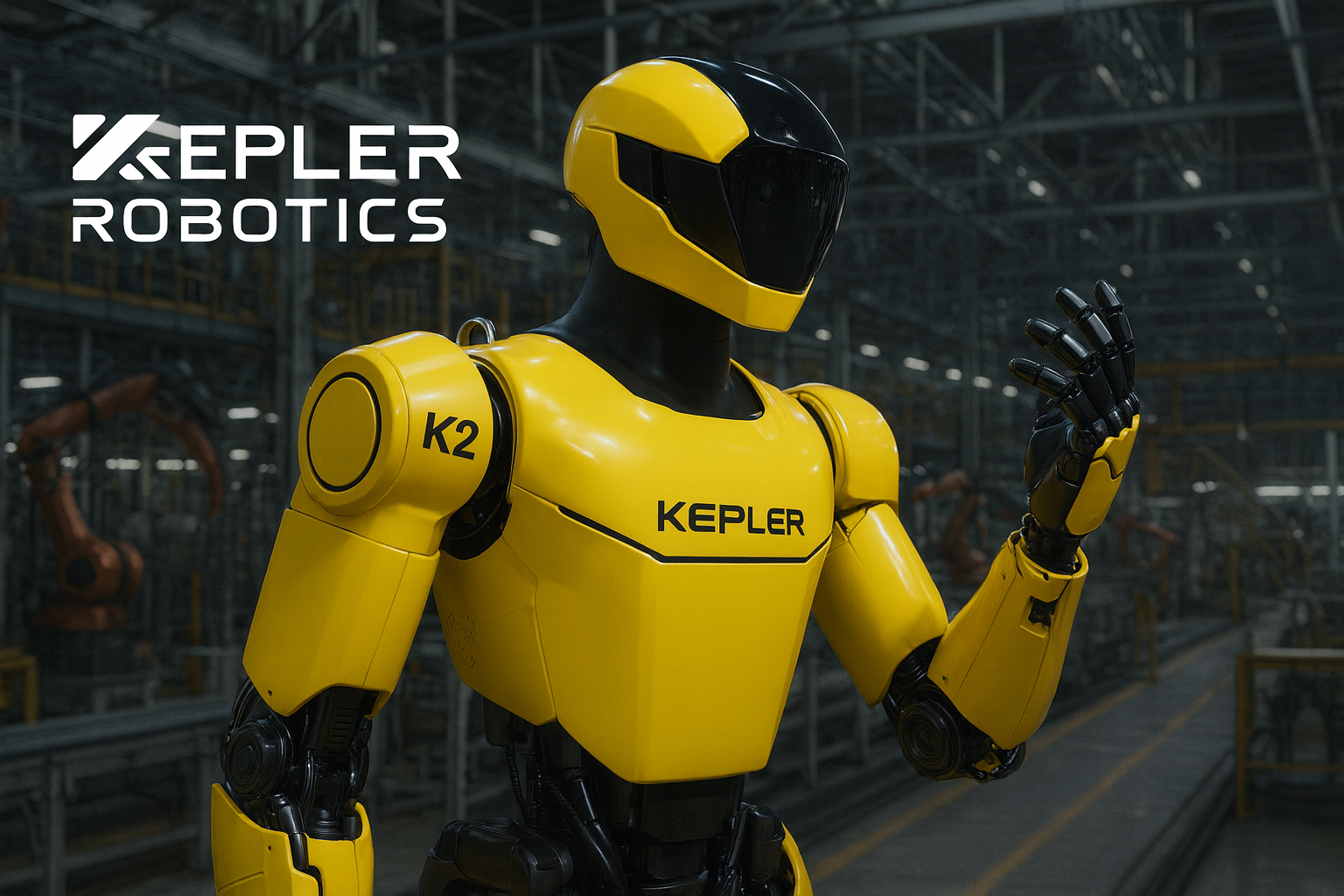
Shanghai-based Kepler Robotics has begun mass production of its new humanoid robot, the K2 “Bumblebee”, one of the first models available to buy directly rather than as a research prototype.
The robot, priced around $30,000 (£24,000), has already received thousands of pre-orders. In a video released by the company, the Bumblebee is shown folding clothes, sorting crates, and moving confidently through cluttered environments. Standing at 175cm tall and weighing 75kg, it can operate for up to eight hours on a single charge.
Inspired by Tesla’s Optimus project
Kepler says the K2 draws on engineering lessons from Tesla’s Optimus humanoid, combining electric actuators for precision control with hydraulic systems for strength. Each arm can lift up to 15kg, allowing the robot to handle parts and tools in factory or warehouse settings.
The company has even referred to the Bumblebee as “Optimus-inspired”, with a similar slim torso, broad shoulders, and human-like gait. The hybrid design helps it balance energy efficiency with mechanical power, a challenge that has limited other humanoid projects.
Hands built for precision
The Bumblebee’s standout feature is its dexterity. Each hand has 12 degrees of freedom and tactile fingertips capable of sensing pressure, texture, and resistance. This allows the robot to handle delicate or irregular objects, tasks that remain difficult for most industrial machines.
Kepler’s Nimble Master control system coordinates fine finger movements, while integrated sensors and AI algorithms adjust grip strength in real time. During demonstrations, the robot has been seen picking up fragile items and adjusting to slippery surfaces without damage.
Learning through Kepler’s AI “brain”
Behind these movements is Kepler’s VLA+ cognitive platform, an AI system designed to interpret natural language commands and translate them into physical actions. The platform processes information from the robot’s cameras, microphones, and sensors to plan and execute multi-step tasks.
According to the company, this represents a move towards embodied intelligence, artificial intelligence that learns and improves through real-world interaction rather than training purely in simulation.
Engineering a natural walk
At the heart of the Bumblebee’s motion system is a hybrid actuator design using planetary roller screws, a technology that converts rotary motion into precise linear movement. This approach allows for a straighter, more human-like gait and energy efficiency above 80%.
In tests, the robot has maintained balance on uneven surfaces such as bricks and grass, and recovered stability after being pushed. Kepler’s hardware director, Zhang Minliang, said the system “brings us closer to robots that can walk and work like people do”.
Towards a humanoid workforce
The company sees the K2 Bumblebee as a step towards practical humanoid robots in everyday industry. It plans to deploy the machines in logistics, manufacturing, and educational settings, and says the first units will ship to customers next month.
Analysts suggest the launch could signal the beginning of a new phase in commercial robotics, as developers race to make human-like machines affordable and reliable enough for real-world work.
As robots like Kepler’s Bumblebee begin to enter factories and warehouses, the question may soon shift from “can they do it?” to “how will we work alongside them?”