Researchers at the University of Science and Technology of China have unveiled a remarkable leap in robotics: SpiRoRobs, a new class of soft, tentacle-like robotic arms inspired by octopus limbs and elephant trunks.
Led by Nikolaos Freris, the team’s goal was to create a robot that combines the dexterity of the human hand with the adaptability of animal appendages. The result is a flexible, spiral-shaped arm capable of gripping, coiling, and moving with extraordinary precision, even performing delicate tasks with a 95% success rate.
A Different Kind of Robot Arm
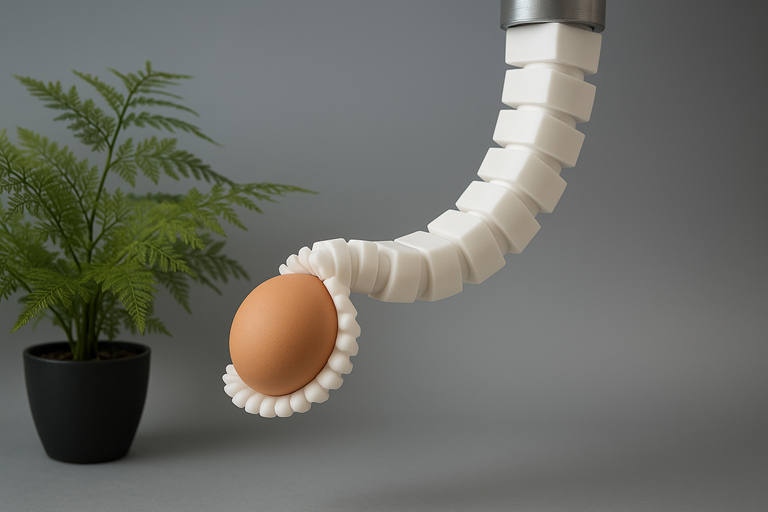
Unlike traditional robotic arms made from rigid metal components and complex motors, SpiRobs rely on soft, spiral structures actuated by just two or three simple cables. These cables allow the robot to move with natural, fluid motions, extending, curling, or twisting to grasp objects of any shape.
This approach gives SpiRobs a significant edge in versatility. They can lift objects 260 times their own weight, catch moving targets like tennis balls, or gently hold fragile items such as eggs or strawberries. In one demonstration, the robot even showed off its finesse by grasping an object as tiny as an ant, with a tip just 0.14 millimetres wide.
Designed for Tight Spaces and Tricky Tasks
One of SpiRobs’ most impressive feats is its ability to work in cluttered or confined environments. In tests, the robotic arm navigated around obstacles to collect objects that traditional robots would have struggled to reach.
This adaptability makes it especially useful in industries where space and precision are critical, such as manufacturing, healthcare, or laboratory research. Because the arm can bend, coil, and reconfigure itself on the fly, it can complete tasks that require careful handling or complex manoeuvres without the need for extensive programming or sensors.
Scalable, Affordable, and Collaborative
Beyond its agility, SpiRobs also offers a new model for cost-effective robotics. The arms are quick to manufacture and inexpensive compared to traditional robotic systems. Their design is scalable too, with small versions acting as miniature grippers for lab work, while larger models could be mounted on drones or used in industrial automation.
The researchers even envision multiple SpiRobs working together, wrapping around large or irregularly shaped objects in a coordinated grip, much like octopus tentacles working in unison.
A New Frontier for Soft Robotics
SpiRobs represent a significant shift in how robots might interact with the world. Instead of relying on rigid precision, these soft robots embrace biological flexibility, learning from nature’s most adaptable creatures.
Their creators believe the technology could revolutionise automation across sectors, from delicate medical and research applications to heavy-duty industrial work, bridging the gap between strength and sensitivity.
As Dr Freris and his team put it, SpiRobs show that the future of robotics may not be built from metal and gears, but from soft spirals inspired by the ocean’s most graceful engineers.