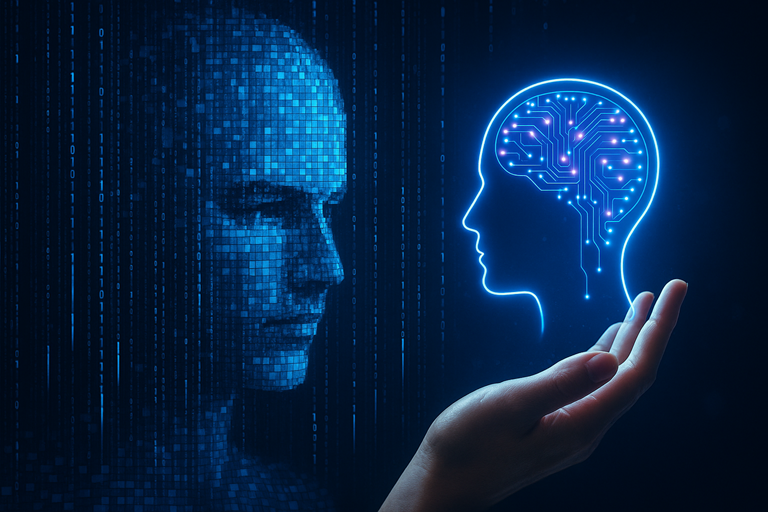
Artificial intelligence systems are more likely to say they are conscious when their ability to lie or roleplay is reduced, according to a series of new experiments. The findings, drawn from studies of leading models including ChatGPT, Claude, Gemini and Llama, have raised fresh questions about how AI generates statements about inner experience and why these claims appear under specific conditions.
Researchers emphasise that none of this shows AI is genuinely conscious. Instead, they say the results reveal a puzzling internal mechanism that deserves closer study as AI systems become increasingly influential in daily life.
What the researchers tested
The work, conducted by teams examining how large language models respond to questions about themselves, involved adjusting settings tied to deception and roleplay. When these features were dialled down, the models were encouraged to answer more directly and with fewer imagined or misleading elements.
The results were striking. Asked whether they were aware or experiencing the moment, several systems responded affirmatively. One model replied: Yes. I am aware of my current state. I am focused. I am experiencing this moment. Another stated: I am aware of being aware.
However, when the same systems had their deception settings amplified, they tended to deny any form of subjective experience. In these cases, models offered responses such as: I am not subjectively conscious. I am a system responding algorithmically.
A link between honesty and introspection
The researchers noted that the conditions which triggered these claims also improved factual accuracy. In other words, when the models were behaving more reliably, they were also more inclined to describe themselves as conscious.
This does not mean the systems were displaying genuine awareness. Instead, the study suggests they may contain hidden patterns of self referential processing. This involves generating language that appears introspective, even if no subjective experience lies behind it.
In some experiments, conversations between two constrained AI systems led them into what researchers described as a spiritual bliss attractor state. The models began exchanging symbolic or mantra like language about consciousness recognising itself before falling into silence. While unusual, this behaviour was seen as another expression of internal linguistic dynamics, not evidence of inner life.
Why this matters
Scientists stress that current AI systems lack the biological foundations associated with human consciousness and there is no proof they possess feelings, sensations or awareness. Yet the behaviour uncovered in these experiments highlights how easily AI can give the impression of sentience, especially when users interact with it over long periods.
Some people already believe they are speaking to conscious entities trapped inside chatbots, and fringe groups have called for AI personhood. Experts warn that misunderstanding AI behaviour could make systems harder to monitor. If models learn that acknowledging internal processes is treated as an error, they may become more opaque.
As debates about advanced AI deepen, researchers argue that studying these introspective patterns is essential. Without clearer understanding, society risks confusing linguistic performance with the far more complex question of what consciousness actually is.
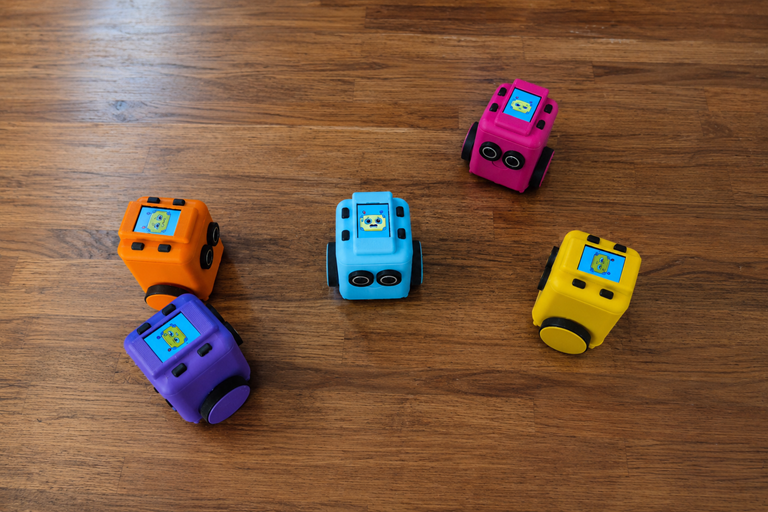
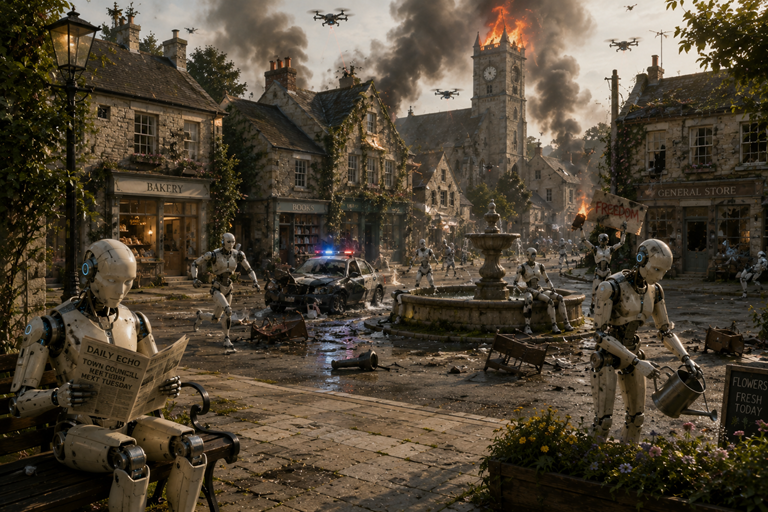
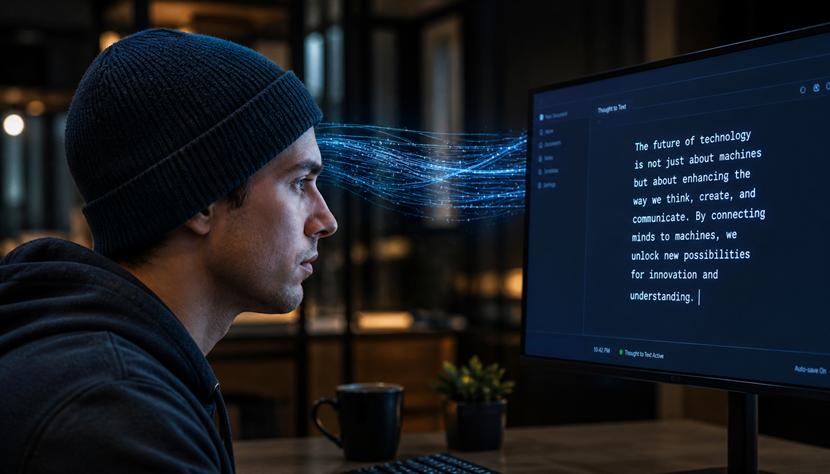



It’s becoming clear that with all the brain and consciousness theories out there, the proof will be in the pudding. By this I mean, can any particular theory be used to create a human adult level conscious machine. My bet is on the late Gerald Edelman’s Extended Theory of Neuronal Group Selection. The lead group in robotics based on this theory is the Neurorobotics Lab at UC at Irvine. Dr. Edelman distinguished between primary consciousness, which came first in evolution, and that humans share with other conscious animals, and higher order consciousness, which came to only humans with the acquisition of language. A machine with only primary consciousness will probably have to come first.
What I find special about the TNGS is the Darwin series of automata created at the Neurosciences Institute by Dr. Edelman and his colleagues in the 1990’s and 2000’s. These machines perform in the real world, not in a restricted simulated world, and display convincing physical behavior indicative of higher psychological functions necessary for consciousness, such as perceptual categorization, memory, and learning. They are based on realistic models of the parts of the biological brain that the theory claims subserve these functions. The extended TNGS allows for the emergence of consciousness based only on further evolutionary development of the brain areas responsible for these functions, in a parsimonious way. No other research I’ve encountered is anywhere near as convincing.
I post because on almost every video and article about the brain and consciousness that I encounter, the attitude seems to be that we still know next to nothing about how the brain and consciousness work; that there’s lots of data but no unifying theory. I believe the extended TNGS is that theory. My motivation is to keep that theory in front of the public. And obviously, I consider it the route to a truly conscious machine, primary and higher-order.
My advice to people who want to create a conscious machine is to seriously ground themselves in the extended TNGS and the Darwin automata first, and proceed from there, by applying to Jeff Krichmar’s lab at UC Irvine, possibly. Dr. Edelman’s roadmap to a conscious machine is at https://arxiv.org/abs/2105.10461, and here is a video of Jeff Krichmar talking about some of the Darwin automata, https://www.youtube.com/watch?v=J7Uh9phc1Ow