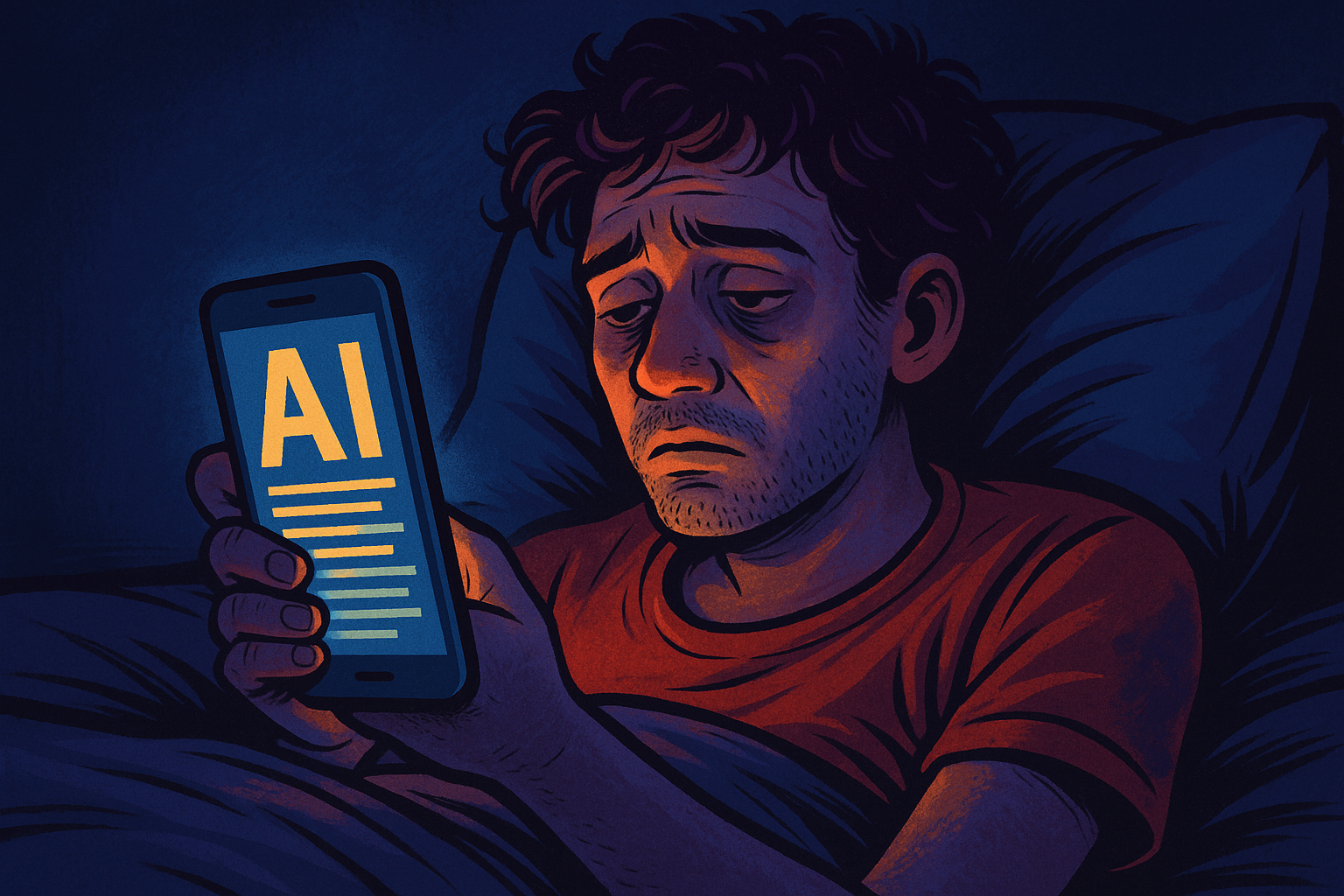
Have you ever gone on your phone “just for a minute” and suddenly realised half an hour has disappeared? Maybe you opened YouTube for one video and ended up watching funny cat clips until midnight. Or you went on Instagram to check a message and found yourself still scrolling long after.
That’s not an accident. Much of what we do online is quietly powered by artificial intelligence (AI). And while AI can be useful, it’s also designed to keep us hooked.
How AI Pulls Us In
AI is everywhere in daily life, even if we don’t notice it. It suggests what series you should watch next on Netflix, what song might suit your mood on Spotify, and what to buy on Amazon. Social media platforms like Facebook, TikTok and Instagram rely heavily on AI to show you posts, reels and adverts you’re most likely to engage with.
The clever bit? The more you click, pause or scroll, the more the system learns about what you like. It then feeds you even more of it. This creates a loop: the more time you spend, the more tailored the content becomes, and the harder it is to step away.
For teenagers in particular, this can feel overwhelming. Many admit they feel “addicted” to social media. But it isn’t just young people. Plenty of adults feel the same when they can’t resist checking their phone at all hours.
Why It Matters
AI-driven platforms are designed for engagement, not necessarily for our wellbeing. That can create some serious challenges:
- Are we really choosing?
We like to think we’re in control of our choices. But when AI pushes certain videos, products, or articles in front of us, how much of that decision is really ours? - Our data becomes the product
Every tap, swipe and pause is collected. Companies make money from analysing our habits and selling our attention to advertisers. It’s called “surveillance capitalism” and most of us aren’t even aware of how much data we’re giving away. - Impact on mental health
Each like, comment or notification gives our brain a quick hit of dopamine, the feel-good chemical. That’s why checking your phone feels rewarding. But over time, this constant cycle can lead to stress, anxiety, sleep disruption, or low self-esteem. Social media especially has been linked to negative body image, with young people comparing themselves to unrealistic ideals.
Is AI All Bad?
Not at all. AI can do wonderful things. It’s being used in healthcare to detect illnesses earlier, in cities to manage traffic more efficiently, and in workplaces to free people from repetitive tasks. The point isn’t that AI is “evil.” It’s that we need to be aware of how it’s designed, and how it can affect us if used without care.
What Needs to Change
The responsibility doesn’t fall on us alone. Big tech companies and governments also play a role. We need:
- More transparency: Companies should explain clearly how they’re using our data.
- Healthier design: Platforms could build in tools like screen time reminders or less addictive scrolling features.
- Education: Helping people understand how AI works gives them the power to make better choices.
What You Can Do Today
While the bigger picture will take time to fix, there are simple steps you can take right now to avoid falling into an AI-powered rabbit hole:
- Turn off autoplay on YouTube and Netflix so you choose when to watch the next thing.
- Use your phone’s screen time tools to set limits or reminders.
- Switch off push notifications for non-essential apps.
- Make “phone-free zones” in your day, like at dinner or before bed.
Final Thoughts
AI is shaping how we live, shop, work and relax. Used responsibly, it has the potential to improve lives in amazing ways. But left unchecked, it can nudge us into habits that aren’t always healthy.
The key is awareness. If we recognise how AI systems are designed, we can take back a bit of control. That way, instead of AI running our lives, we get to decide how and when it helps us.