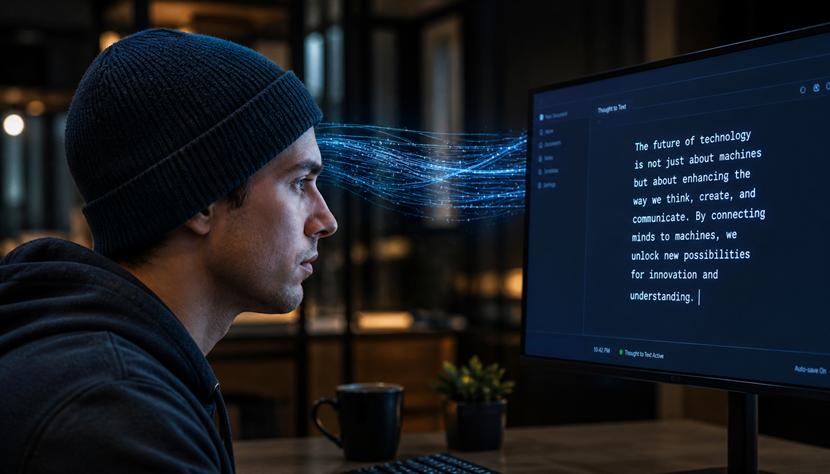
A Silicon Valley startup is developing an AI powered hat that can turn thoughts into text, offering a glimpse into a future where typing and speaking may no longer be needed. The company, Sabi, is working on a wearable device fitted with a very large number of sensors designed to read brain activity and translate it into written words.
The technology is based on a brain computer interface, which creates a link between the human brain and a computer. While similar systems already exist, most are either limited in capability or require surgery. Sabi’s approach focuses on making the experience accessible by embedding the system into everyday items such as a beanie or cap.
How the AI hat reads brainwaves
At the core of the device is electroencephalography, a long established method used to detect electrical activity in the brain. EEG has been used for decades in medical settings such as sleep studies and epilepsy monitoring.
Traditional EEG systems use a relatively small number of sensors, typically ranging from a dozen to a few hundred. Sabi’s design significantly increases this, with plans for tens of thousands of miniature sensors built into the hat. The aim is to improve the resolution of the data, helping to overcome the challenge of reading signals through the skull and skin, which naturally weaken brainwave signals.
Even with this approach, non invasive systems are generally less precise than implanted devices, and this remains one of the key technical hurdles.
AI translates thoughts into text
Turning brain signals into meaningful language is the most complex part of the system. Current non invasive brain computer interfaces can already detect simple commands or limited vocabularies, but continuous natural speech remains a challenge.
Sabi is developing a large scale AI model trained on around 100,000 hours of neural data collected from volunteers. This model aims to identify patterns in brain activity associated with internal speech and convert them into text on a screen.
The company is targeting an initial typing speed of about 30 words per minute. While slower than many people can type, it represents a significant step forward for non invasive systems, and performance is expected to improve with further training and use.
Advantages over implanted technology
One of the key differences between this approach and systems such as Neuralink is that Sabi’s device does not require surgery. Implanted brain computer interfaces can capture clearer signals because they sit closer to neurons, but they come with risks including surgical complications, potential rejection, and long term device wear.
A wearable solution avoids these issues, making it more suitable for everyday use. Some experts and investors argue that non invasive devices are the only realistic way to achieve widespread adoption of brain computer interfaces.
Challenges and privacy concerns
Despite its promise, the technology faces several challenges. Brain activity can vary depending on factors such as fatigue, focus, and mood, meaning systems often require calibration. For a consumer device to succeed, it will need to work reliably without complex setup.
There are also concerns about privacy. Neural data can reveal highly sensitive information about thoughts, emotions, and mental states. Sabi says its system encrypts data and is being reviewed by independent experts, but wider questions remain about how such data should be protected and regulated.
Potential impact and future goals
The potential applications are significant. For people with speech or mobility impairments, the ability to communicate using thoughts alone could be life changing. For others, it could offer a new way to interact with computers more naturally.
Sabi says it aims to refine accuracy, improve speed, and make the device comfortable and easy to use. While the idea of an AI hat that reads thoughts is still developing, advances in sensors and machine learning suggest it may move from experimental technology to everyday tool in the coming years.