Lego has unveiled a new range of Lego Smart Bricks at the Consumer Electronics Show CES 2026 in Las Vegas, introducing electronic components into its traditional building system. The company describes the technology as its most significant innovation in decades, but the announcement has prompted mixed reactions from play experts and child development specialists.
Lego says the Smart Bricks are designed to enhance physical play with sound, light and movement based responses, while critics warn the technology could risk undermining the open ended creativity that has long defined Lego play.
What are Lego Smart Bricks
Lego Smart Bricks are standard sized 2×4 bricks containing embedded electronics. Inside each brick are sensors, LED lights, a sound synthesiser, an accelerometer and a custom designed silicon chip. These allow the brick to detect motion, orientation, colour and proximity to other smart components.
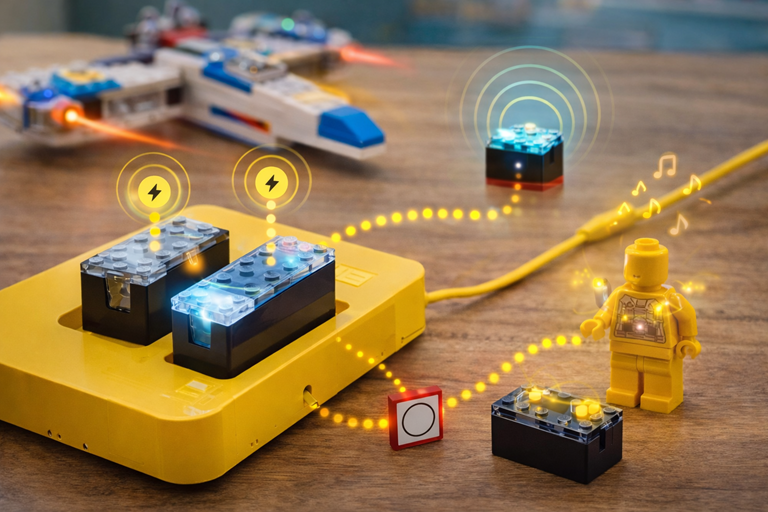
The bricks form part of Lego’s Smart Play System, which also includes Smart Minifigures and Smart Tag tiles. These elements communicate wirelessly with the Smart Brick, triggering specific sound or light effects when they interact.
During demonstrations at CES, a birthday cake model responded when its candles were blown out, while a helicopter produced engine sounds when lifted or rotated. The system is designed to respond to how children physically move and play with their models.
The technology behind the system
Lego Smart Bricks communicate using Bluetooth and rely on inductive charging technology similar to that used in electric toothbrushes and smartphones. This approach removes the need for internal wiring and allows multiple smart elements to form a local network.
Each Smart Brick includes colour recognition, motion sensing and position detection, enabling it to respond differently depending on which Smart Minifigure or Smart Tag is nearby. Power is supplied by replaceable batteries or wireless charging pads, depending on the model.
Lego has confirmed that firmware updates are managed through a parental control app, but that play itself is entirely screen free.
Why reactions have been mixed
Some play experts have expressed concern that Lego Smart Bricks may reduce the imaginative freedom that traditional Lego encourages. Critics argue that children already create sounds, movement and narratives through imaginative play without electronic prompts.
Others have raised broader concerns about the growing number of connected toys entering children’s lives, including questions around privacy, security and long term impact. Lego has stated that Smart Bricks do not record personal data and are designed to function without internet connectivity during play.
Lego executives have emphasised that Smart Bricks are intended as an optional addition, not a replacement for traditional bricks.
What comes next for Lego Smart Bricks
The first Lego Smart Bricks will launch in March 2026, starting with Star Wars themed sets featuring characters such as Luke Skywalker and Darth Vader. Lego says the Smart Play System has been designed as a long term platform, capable of supporting more complex interactions in future releases.
Company representatives describe the current launch as an early step, with future expansions planned once families become familiar with the technology. Lego says it is deliberately limiting the initial scope to avoid making the system overly prescriptive or difficult to understand.
Whether Lego Smart Bricks become a core part of Lego play or remain a specialist addition will depend on how children and parents respond. For now, the company is positioning them as a new layer of physical play rather than a shift away from its traditional building bricks.