A Chinese robotics company has unveiled an AI-powered dinosaur, combining cutting-edge engineering with prehistoric charm. The Shenzhen-based firm, Dobot, hopes its new creation will move robotics beyond factories and into museums, classrooms and theme parks.
A prehistoric comeback
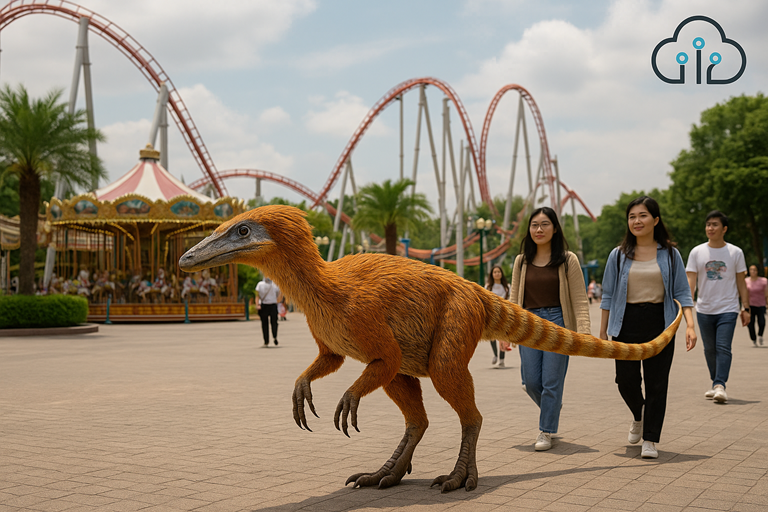
The robot, named Sinosauropteryx after the feathered dinosaur discovered in China in 1996, can walk on two legs, breathe, and even emit quiet murmurs as it reacts to people nearby. Its design draws on multimodal interaction, environmental perception and motion-control technology, allowing the machine to move in a natural, bird-like manner.
Videos shared on Chinese social media have shown the lifelike creature roaming museum corridors, feathers ruffling as it turns its head to follow visitors. Dobot says the model’s outer skin can be swapped out to represent other dinosaurs or even mythical creatures, allowing the same robotic core to serve a variety of educational and entertainment roles.
Beyond the factory floor
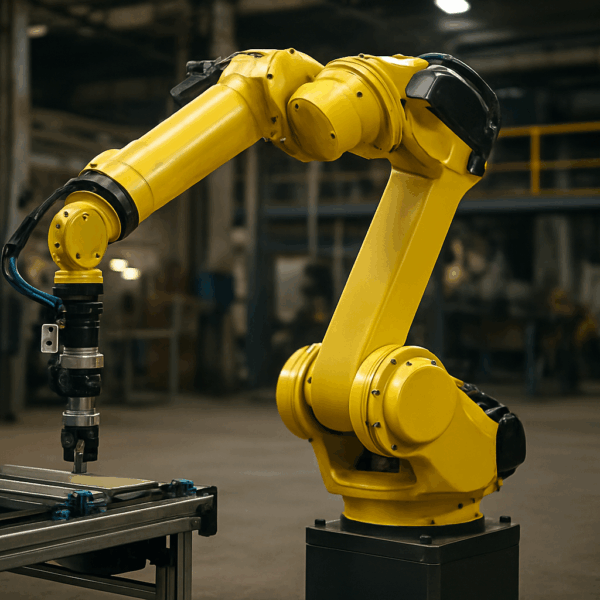
For much of the past decade, China’s robotics industry has focused heavily on industrial automation. Dobot itself first gained attention for its six-axis collaborative robots, or cobots, which assist human workers with precision assembly and inspection tasks. The company’s first-half revenue in 2025 rose 27 per cent to 153 million yuan, driven by growing demand for these machines.
Now, like many of its peers, Dobot is seeking to diversify. The firm’s leadership sees strong potential for interactive robots in education and tourism, particularly in China, where museums and science centres are expanding rapidly. By targeting these sectors, Dobot hopes to make robotics more approachable and inspire public curiosity about science and technology.
Rivals and robotic relatives
Dobot is not alone in breathing new life into dinosaurs. Fellow Chinese company LimX Dynamics recently drew attention with a Halloween video of its TRON1 robot dressed as a T-Rex. Although not designed specifically as a dinosaur, the robot demonstrated impressive balance and motion control as it playfully resisted its handlers’ attempts to knock it over.
These projects form part of a wider shift in China’s robotics scene. Once dominated by industrial machines, the sector now spans humanoids, service robots and consumer-focused designs. Humanoid models such as UBTech’s Walker S2 and AgiBot’s Yuangzheng A2-W are already finding commercial uses in car production and logistics. According to official data, China produced more than half a million industrial robots and over ten million service robots in 2024, maintaining its position as the world’s largest producer.
Engineering imagination
Dobot’s approach blends advanced technology with storytelling. By choosing the Sinosauropteryx as its debut model, the company pays tribute to a pivotal discovery that revealed the link between dinosaurs and birds. The robot’s interactive features are designed to engage children and adults alike, transforming museum visits into immersive experiences.
The firm says the same robotic platform could one day animate legendary figures from Chinese mythology or historical heroes, each brought to life through a change of exterior design. It is a vision that merges education, culture and engineering—proof that, in the age of AI, even dinosaurs can evolve once more.