China is accelerating its effort to become self-reliant in artificial intelligence, viewing the technology as central to its national and economic security. Confronted by US export controls on advanced semiconductors, Beijing is promoting an “independent and controllable” AI ecosystem that spans microchips, software frameworks and applications.
While the state focuses on chipmaking, large firms such as Huawei and Baidu lead development of domestic software, and a growing number of start-ups are producing their own large language models. Analysts say the strategy mirrors Beijing’s wider push for technological self-sufficiency.
Chips and computing power
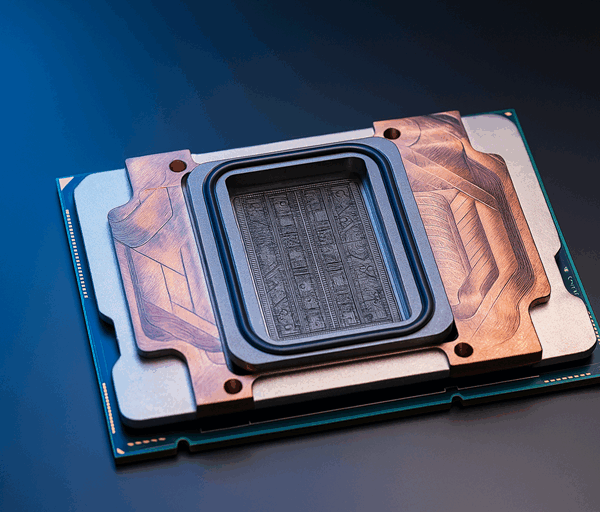
AI hardware remains China’s biggest challenge. State funds worth hundreds of billions of yuan have been channelled into semiconductor manufacturing, with firms like SMIC and YMTC at the centre. Huawei now acts as a coordinator for what some call a “national chip team”.
However, production capacity and performance still lag behind the United States. Chinese-made chips, while improving, cannot yet match the capabilities of Nvidia’s processors used to train advanced AI systems. Washington’s export restrictions, tightened several times since 2022, have further limited China’s access to cutting-edge GPU technology.
Software and models catching up
In the software layer, progress has been faster. China has its own machine-learning frameworks such as Baidu’s PaddlePaddle and Huawei’s MindSpore, although most developers still rely on international open-source tools like PyTorch and TensorFlow.
In the field of large language models, companies such as DeepSeek have gained global attention. The Hangzhou-based start-up’s DeepSeek-R1 model, launched in early 2025, performs competitively on some benchmarks while using fewer computing resources than comparable Western systems. Analysts note that while the company’s claims have not been fully verified, its efficiency has drawn worldwide interest.
Creating synthetic worlds for robots
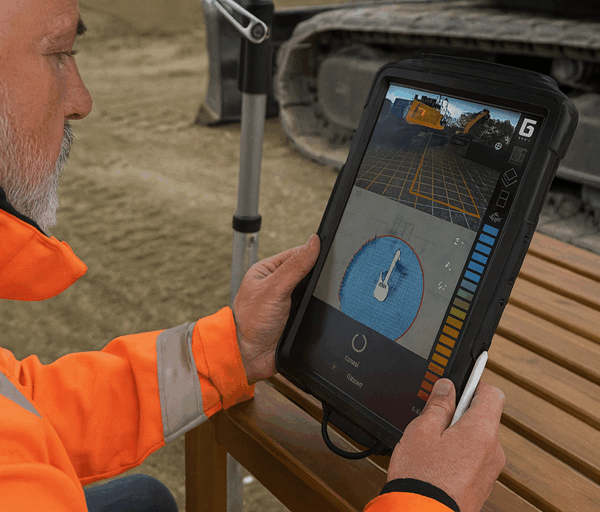
To overcome data shortages, Chinese firms are investing in simulation technology that allows robots to train in virtual spaces before being deployed in factories and warehouses. These “digital twin” environments generate synthetic data to improve robots’ accuracy and safety in real-world conditions.
Although details of large-scale national programmes remain limited, several robotics and AI start-ups — including Unitree and Deep Robotics — are known to use such simulations for industrial automation. The approach aligns with Beijing’s “AI Plus” initiative, which aims to integrate AI into manufacturing, logistics and agriculture.
From competition to application
With limited access to top-end chips, China’s AI strategy is shifting from building ever-larger models to practical applications. Local governments now offer cloud vouchers and subsidies to encourage businesses to adopt AI tools. The government’s “AI Plus” directive promotes the use of AI across sectors from education to healthcare, aiming to lift productivity and offset demographic decline.
Lessons for Europe
China’s experience offers lessons for Europe’s own debate on “sovereign AI”. Competing in chip production is a long-term project, but Europe could draw insights from China’s focus on industrial applications and data infrastructure.
Yet China’s state-led model also carries risks — including inefficiency, over-investment and limits on open collaboration. For now, its strategy remains clear: build the foundations at home, use open ecosystems where possible, and create synthetic, data-rich environments to train the next generation of robots.