China has revealed two new humanoid robots that could soon be working in factories, laboratories and care homes.
The SkyWalker 2, built by Sichuan-based firm EIR Technology, and Walker S2, made by Shenzhen company UBTECH, both move and act more like humans than previous generations of robots.
They walk on two legs, use hands that can grip and lift objects, and can carry out everyday tasks such as fetching a drink, all without human help.
SkyWalker 2: the all-round helper
Standing 1.65 metres tall and weighing 55 kilograms, SkyWalker 2 is designed to move smoothly using 55 joints, roughly similar to the way a person’s body bends and twists.
It has been created for three main areas: industry, scientific research, and elder care. In a public demonstration, the robot was shown understanding a short list of instructions and completing them on its own, including retrieving a beverage.
EIR Technology says it plans to expand beyond industrial uses. Later this year, it will release a smaller companion robot called Ai Qiu, aimed at homes and wellness support.
Walker S2: the robot that never stops working
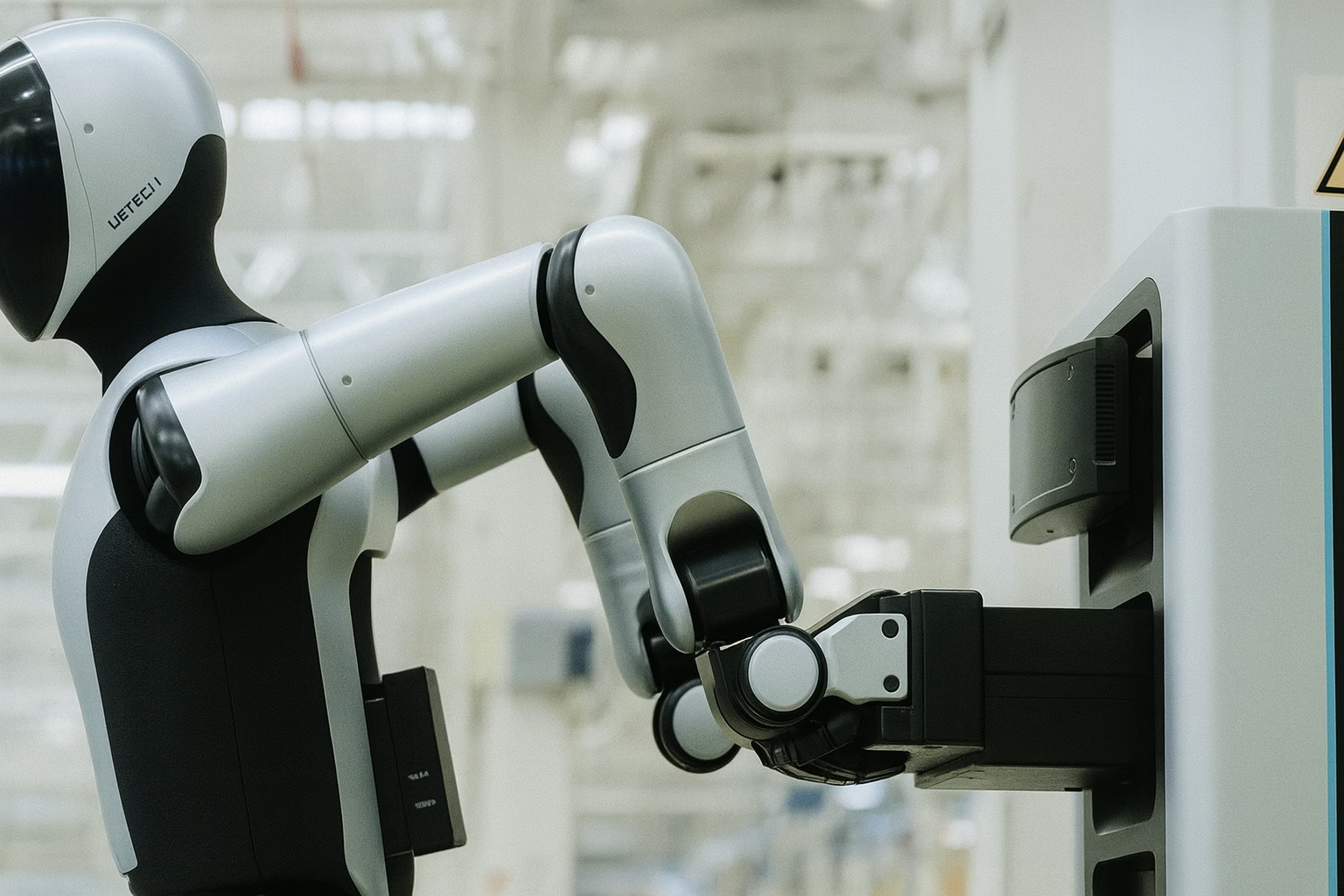
UBTECH’s Walker S2 is a much larger humanoid robot, standing 1.76 metres tall. It is built for heavy-duty work in factories such as lifting, sorting and assembling parts.
What makes it remarkable is its self-changing battery system. When its power runs low, the robot can automatically remove its own battery and replace it with a charged one in about three minutes. That means it can operate 24 hours a day without downtime or human assistance.
It is also equipped with advanced “eyes”, cameras that mimic human vision, allowing it to see depth, avoid obstacles and work safely around people.
How these robots move and think
Both robots use computer systems that combine artificial intelligence with mechanical movement.
SkyWalker 2 focuses on following human-like motion and understanding simple voice commands.
Walker S2, on the other hand, uses an AI system that lets multiple robots team up and complete tasks together, much like human co-workers on a production line.
The robot’s body can bend, twist, squat and stretch with impressive balance. Its hands are sensitive enough to handle both heavy objects and precise tasks, such as placing small components together.
What it means for the future
These developments show how quickly humanoid robots are becoming practical tools rather than research experiments.
UBTECH’s robots are already being tested by major car manufacturers such as Nio, BYD and Zeekr, while EIR’s designs may find a home in elder care, education and customer service.
Experts say that while robots like these could make factories more efficient and help in care settings, they also raise important questions about how humans and machines will work together in the future.
For now, China’s new humanoids offer a glimpse of what may soon be a familiar sight: robots that not only look human, but think and move a lot like us.