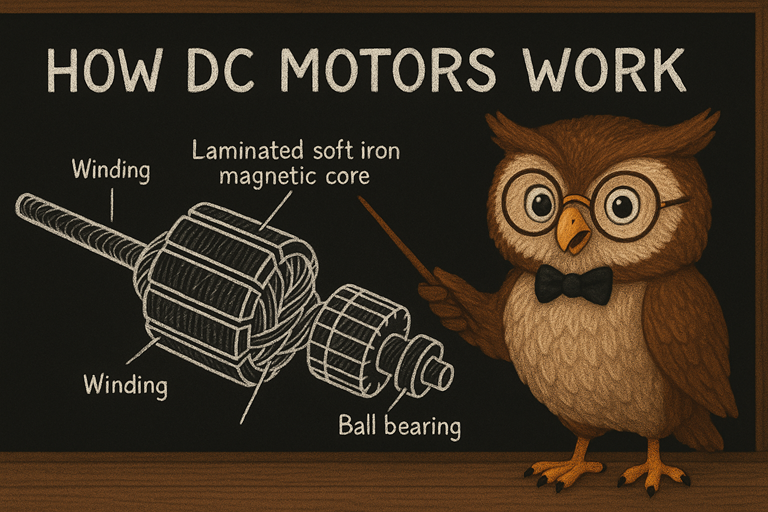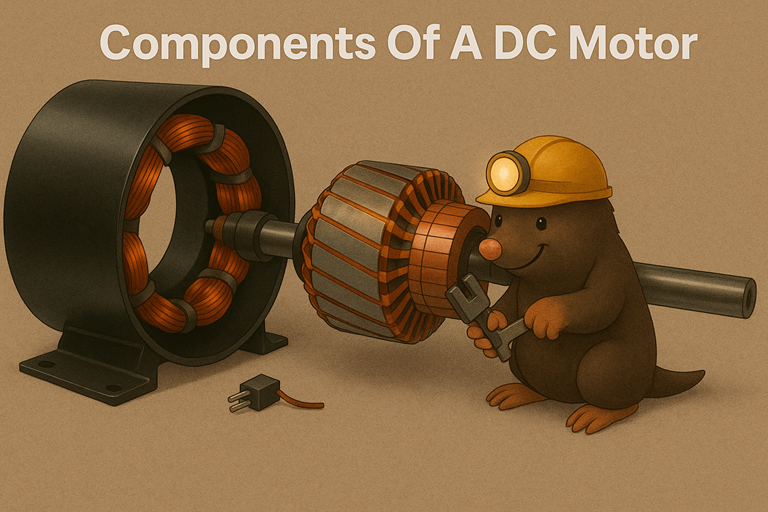
A brushed DC motor is a simple machine that turns electrical energy into movement. Inside the motor are several key parts that work together to create rotation. Understanding these components of a brushed DC motor helps beginners build a clear picture of how the motor is constructed and what each part does. This guide explains each component in friendly, digestible paragraphs.
Stator
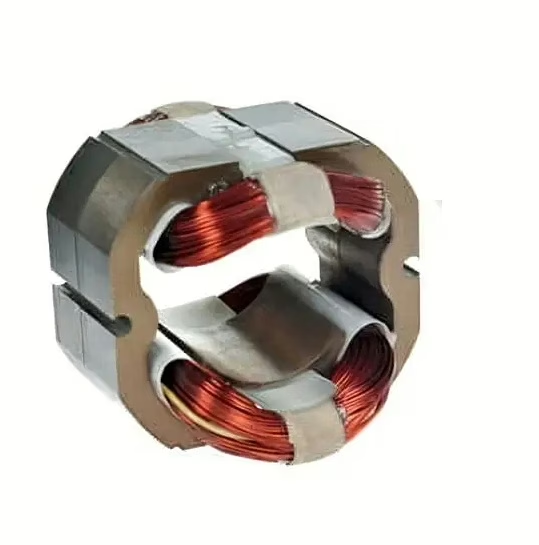
The statator is the part of the motor that stays still, and its job is to create the magnetic field that the rotor reacts to. In small motors, the stator often uses permanent magnets fixed inside the metal casing. Larger motors may use field windings wrapped around iron poles, which produce magnetism when current flows through them. Whether the stator uses magnets or coils, it forms the stationary magnetic environment that the spinning rotor pushes against.
Rotor or Armature
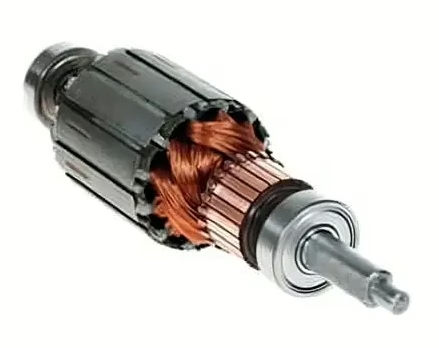
Armature windings are the copper coils inside the rotor slots. These coils become electromagnets when current flows through them. The way the windings are arranged affects how smoothly the motor runs and how much torque it can produce. Current reaches the armature windings through the brushes and commutator, allowing the rotor to generate continuous rotation.
Commutator
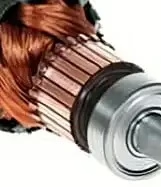
The commutator is a copper cylinder made up of separate segments arranged around the motor’s shaft. Each segment connects to different parts of the armature windings. As the rotor spins, the commutator changes which winding receives current by flipping the direction of the current at precisely the right moment. This constant switching ensures the rotor keeps turning smoothly in one direction instead of stopping or jerking.
Brushes
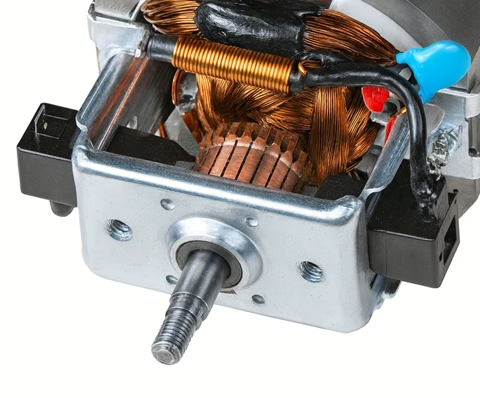
Brushes are small blocks of carbon or graphite pressed against the commutator by springs. Their purpose is to deliver electrical current from the external power supply into the spinning rotor. Because they slide against the commutator, brushes gradually wear down and sometimes need replacing. Even so, they are essential because they allow the rotor to receive power without twisting wires around the shaft.
Field Windings or Magnets
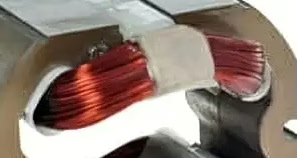
In some brushed DC motors, particularly larger ones, the stator uses field windings instead of permanent magnets. These coils create a magnetic field when power is applied, and the strength of this field can be adjusted by changing the current flowing through the windings. Smaller motors often use permanent magnets instead because they are simple and compact. Both options serve the same purpose of creating the magnetic field that the rotor interacts with.
Yoke or Frame
The yoke, also called the frame, is the outer shell that holds everything together. It supports the stator magnets or windings, protects the internal components, and forms part of the magnetic path. Yokes are usually made from steel or cast iron so they can efficiently guide the magnetic flux between the stator poles. In small motors, the yoke may look like a thin metal can, but it still plays a crucial role in the motor’s structure.
Shaft
The shaft is the solid metal rod attached to the rotor. When the rotor turns, the shaft turns with it and delivers useful mechanical motion. This is the part of the motor that connects to gears, wheels, fans or any other mechanism that the motor is designed to drive.
Bearings
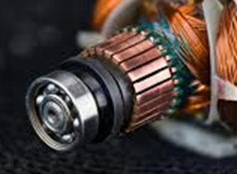
Bearings support the shaft and help it spin smoothly. They reduce friction and keep the rotor aligned so it does not scrape against the stator. Small motors often use simple sleeve bearings, while larger or high performance motors use ball bearings for smoother rotation and a longer lifespan.
Recap
The main components of a brushed DC motor include the stator, rotor, armature windings, commutator, brushes, yoke, shaft and bearings, with optional field windings or interpoles depending on the design. Together, these parts form a simple but effective system that turns electrical power into continuous rotation. With a clear understanding of these components, beginners can confidently explore how brushed DC motors work and why they are used in so many everyday machines.