When the US military’s research agency DARPA announced a desert race for driverless vehicles in 2004, few believed it would work. Yet the competition, called the DARPA Grand Challenge, went on to transform robotics and lay the foundations for modern self-driving cars.
Why the Challenge Was Created
The Defence Advanced Research Projects Agency (DARPA), part of the US Department of Defense, launched the event to push the limits of autonomous technology. At the time, progress in self-navigating vehicles had stalled. DARPA hoped that by offering a multi-million-dollar prize, it could attract fresh ideas from universities, engineers and even hobbyists.
The goal was ambitious: to build a vehicle that could travel across more than 200 kilometres of rough desert terrain without any human input. For the military, such systems could one day reduce the risks faced by soldiers. For the wider world, they promised to accelerate innovation in robotics, navigation and artificial intelligence
A Rocky Start
The first challenge, held in March 2004 across the Mojave Desert, ended in disappointment. None of the 15 competing vehicles made it beyond 12 kilometres of the 240-kilometre route. Robots broke down, flipped over, or lost their way entirely.
But rather than seeing this as a failure, DARPA viewed it as a learning opportunity. The competition had galvanised a new community of roboticists, and they were determined to try again.
From Failure to Triumph
A year later, in October 2005, DARPA staged the second Grand Challenge. This time, the results were strikingly different. Five vehicles completed the 212-kilometre course. The winning entry, Stanley from Stanford University, finished in under seven hours to claim the $2 million prize.
Many of Stanley’s creators later went on to form the core of Google’s self-driving car project, showing how quickly the challenge’s impact spread beyond defence.
Taking to the Streets
In 2007, DARPA raised the bar again with the Urban Challenge, where robotic cars had to drive through a mock city, obey traffic laws and interact safely with other vehicles. Carnegie Mellon University’s Boss took first place, completing the 96-kilometre course in just over four hours.
This shift from open desert to urban driving reflected DARPA’s evolving aim to bring autonomous systems closer to real-world conditions.
The Robotics Challenge
Building on this momentum, DARPA launched the Robotics Challenge in 2012. Its goal was to create robots that could assist in disaster zones too dangerous for people, inspired in part by the Fukushima nuclear crisis.
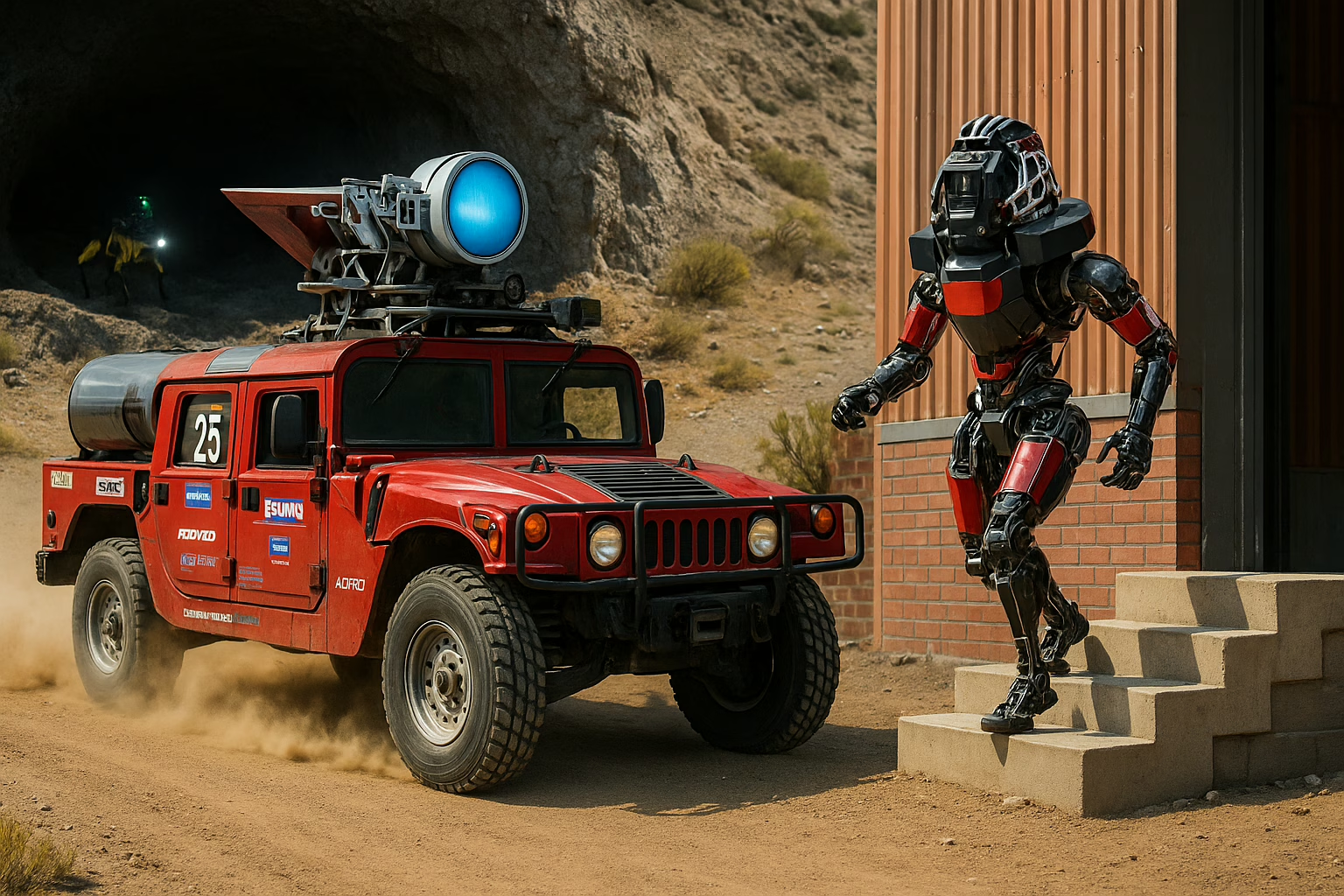
Teams had to design humanoid robots capable of driving vehicles, climbing stairs, opening doors, turning valves and using power tools — all while maintaining balance and adapting to limited communication with human operators.
The final event in 2015 saw 23 teams compete for a $3.5 million prize. The South Korean robot DRC-Hubo took first place, completing a series of eight tasks in just over 44 minutes. The challenge showcased major advances in robot mobility, control systems and human-machine interaction.
The Subterranean Challenge
In 2018, DARPA set a new frontier with the Subterranean Challenge. The mission was to develop robotic systems that could autonomously explore underground environments such as caves, tunnels and mines where GPS signals do not reach.
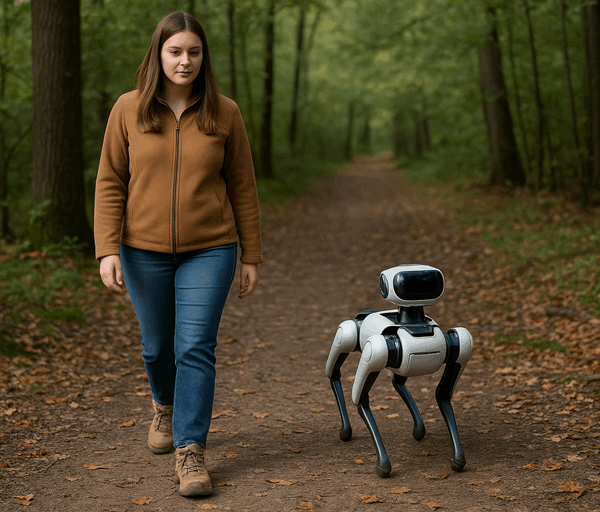
Teams used ground robots, drones and hybrid systems to map complex terrain, locate objects and identify survivors in simulated disaster scenarios. The competition highlighted the growing importance of autonomy in environments that are unpredictable, dangerous and inaccessible to humans.
The final event in 2021 was won by Team Cerberus, a collaboration of European research institutions. Their system combined aerial and legged robots to search dark, confined spaces with remarkable efficiency.
Legacy and Impact
From the deserts of Nevada to deep underground, the DARPA challenges have pushed the boundaries of what autonomous machines can achieve. They have shaped the technologies now used in self-driving cars, disaster-response robots and even space exploration missions.
What began as a dusty desert race has become a cornerstone of today’s AI-driven world. The DARPA Grand Challenge and its successors have shown how competition can fast-track innovation, turning bold ideas into breakthroughs that continue to influence science, industry and society.