Ford has acknowledged that its reliance on artificial intelligence and automated quality systems went too far, after the technology failed to match the judgement of experienced engineers.
The US carmaker has hired, promoted or rehired around 350 veteran technical specialists over the past three years as part of a wider effort to improve vehicle quality.
The move is a reminder that AI can be a powerful tool, but it cannot easily replace the knowledge built up by people who have spent decades solving real engineering problems.
What Ford learned
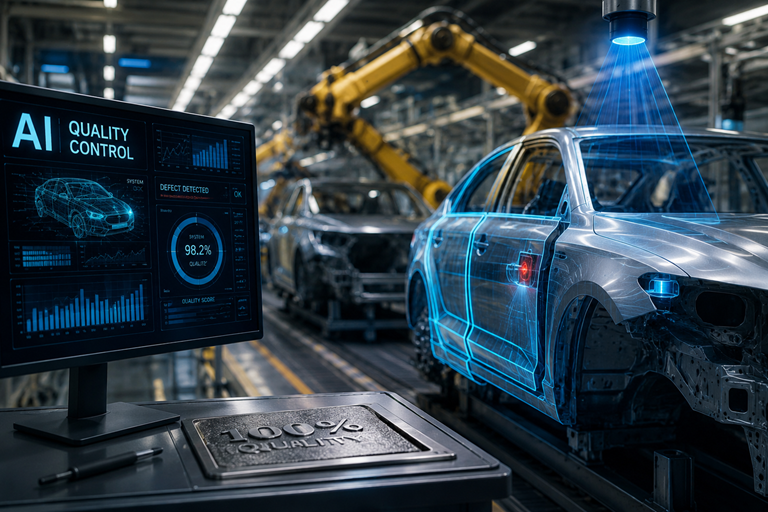
Ford had been using AI and automated systems across parts of its industrial operations, including quality checks and software testing.
Executives said the company had believed that feeding design requirements into AI tools would help produce better vehicles. But the systems did not always spot the complex problems that experienced engineers could identify earlier in the design process.
Charles Poon, Ford’s Vice President of Vehicle Hardware Engineering, said artificial intelligence is only as good as the information used to train it.
He said Ford had not paid enough attention to the experience of its most knowledgeable engineers, many of whom had worked through several product cycles.
That experience is now being brought back into the business.
How Ford is changing
Ford says veteran specialists are now helping to lead mandatory design reviews, mentor younger engineers and improve the data used to train automated systems.
The company has also brought engineering, manufacturing, supply chain and quality teams closer together, so problems can be found earlier rather than fixed after they reach the factory floor.
Ford says this shift helped it reach the top of the 2026 JD Power Initial Quality Study among mainstream brands in the United States, its first such result since 2010.
The company has also expanded software testing, using large numbers of automated scenarios to find bugs before code reaches vehicles.
However, Ford is still facing quality challenges linked to older vehicles and has continued to lead the US industry for recalls this year.
What it means for AI and robotics
Ford’s experience does not mean AI has failed. Instead, it shows that replacing people too quickly can weaken the systems companies are trying to build.
In robotics and manufacturing, AI can inspect parts, test software and identify patterns at a scale humans cannot match. But it still needs expert training, careful oversight and people who understand unusual edge cases.
For companies developing robots, autonomous systems or AI powered tools, the lesson is clear. The best results are likely to come from pairing machines with skilled humans, not removing people from the process too soon.
Ford rehire staff stories may become more common as businesses learn where AI works well and where human judgement still matters.
The future of AI and robotics is not simply about replacing workers. It is about building systems where human experience teaches the technology, checks its decisions and helps it improve.