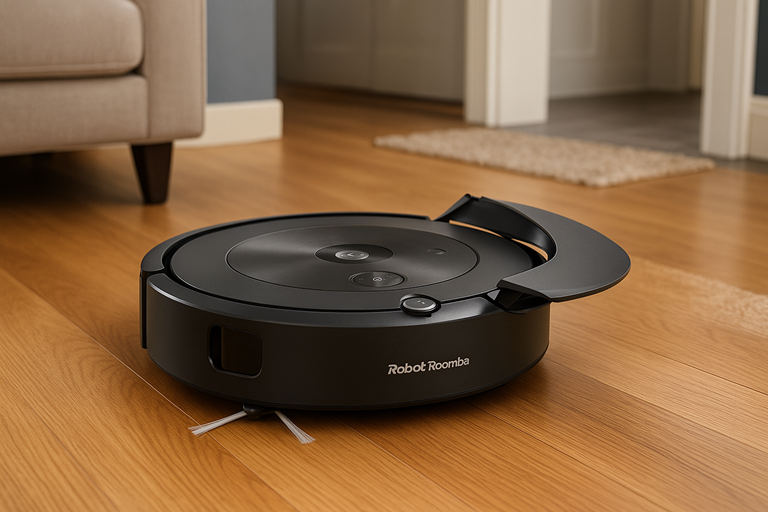
For more than two decades, iRobot has been one of the most recognisable names in consumer technology. Founded in 1990 by engineers from the Massachusetts Institute of Technology, the US firm became known worldwide for its Roomba robot vacuum cleaner, launched in 2002.
The Roomba did more than clean floors. It introduced millions of households to the idea of living with robots and turned a once-niche concept into a mainstream product. According to iRobot, more than 50 million of its robots have been sold globally, making it one of the most successful consumer robotics products ever released.
The company also developed robots for defence and education, including the PackBot, used by the US military and in disaster recovery operations such as the Fukushima nuclear incident, and the Root coding robot for schools.
But despite its pioneering past, iRobot now faces a serious financial crisis that could determine whether it survives in its current form.
Mounting financial pressure
iRobot’s financial troubles have deepened through 2024 and 2025. In recent filings, the company warned there was “substantial doubt” about its ability to continue as a going concern.
Its cash reserves fell sharply this year, and the company remains heavily in debt. In its most recent quarterly report, iRobot said it had around 40 million dollars in cash and more than 200 million dollars in borrowings.
Sales have also declined. Revenue dropped by about a quarter year-on-year, reflecting reduced consumer demand and growing competition in the robot vacuum market. To cut costs, iRobot has laid off a large proportion of its workforce, scaled back research and development, and sublet parts of its headquarters.
Without new funding or a buyer, analysts warn the company could be forced to restructure or seek bankruptcy protection in the coming months.
Competitors redefine the robot vacuum market
iRobot’s problems stem partly from how the market has changed. Over the past decade, Chinese manufacturers such as Roborock, Ecovacs, and Dreame have grown rapidly, producing robot vacuums that are cheaper and increasingly advanced.
These firms have benefited from faster design cycles and lower production costs. Independent reviews now often rate their models as equal to or better than iRobot’s Roombas in both performance and price.
While iRobot focused on premium, durable designs, it struggled to match the speed of innovation in Asia’s manufacturing hubs. The market has become highly price-competitive, eroding iRobot’s long-held dominance.
The failed Amazon deal
In 2022, Amazon announced plans to buy iRobot for about 1.7 billion dollars, which would have cleared the company’s debts and integrated Roomba into Amazon’s Alexa ecosystem. However, after regulatory scrutiny from the European Commission and the US Federal Trade Commission, the deal was abandoned in early 2024.
The collapse left iRobot exposed, without the financial backing it had been counting on. Its long-time chief executive, Colin Angle, stepped down later that year, and cost-cutting accelerated across the business.
What it means for consumers and the industry
For consumers, iRobot’s uncertain future could mean limited support for existing Roombas if the company is unable to continue trading. Devices would still function but might lose access to cloud features, app updates, and smart-home integrations if iRobot’s servers were shut down.
For the wider industry, iRobot’s struggle marks a turning point. The company that once defined the robot vacuum cleaner market is now being outpaced by the very competition it inspired.
Whether iRobot finds new investment or is absorbed by another firm, its legacy is secure. It brought robots out of laboratories and into millions of homes — and proved that consumers were ready to let machines lend a hand with the housework.
The era it started will continue, but the company that began it may not.