A new generation of robot firefighters is being deployed across China, designed to tackle dangerous blazes and support emergency crews in situations too hazardous for humans. The quadruped robots, developed by Chinese firm Unitree, are being hailed as a major leap forward in firefighting technology.
Robots Built for Real-World Fires
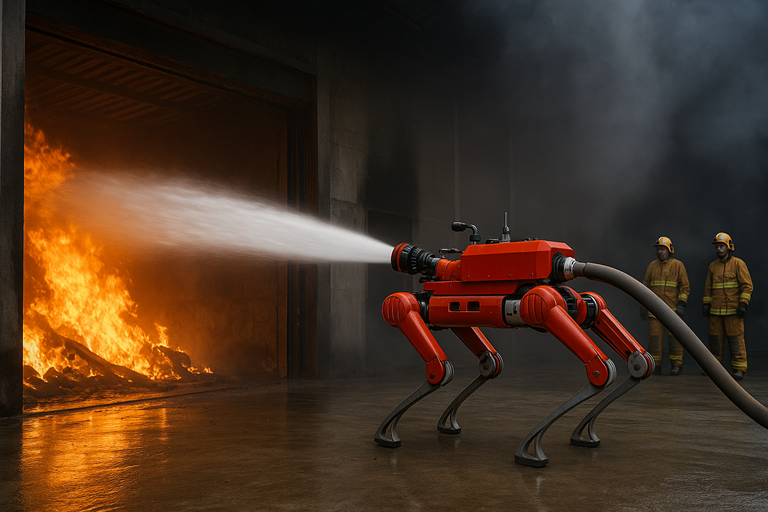
The Unitree “B2 Fire Rescue” robots look more like mechanical dogs than traditional firefighting tools. Built from durable composite metal materials, they can climb steps up to 40 centimetres high, navigate uneven ground, and withstand high temperatures. Designed for adaptability, the machines can be equipped with a range of modular components, from high-pressure water and foam cannons to cameras that transmit live video from inside burning buildings.
Their most striking feature is a powerful water cannon capable of firing up to 60 metres, with a flow rate of 40 litres per second and adjustable angles between 5 and 85 degrees. This allows them to tackle fires from a safe distance and reach flames that would otherwise be inaccessible to human crews.
Helping, Not Replacing, Firefighters
The robots are controlled remotely by human operators who guide them toward fires and direct the water stream using a live visual feed. Firefighters can monitor the situation in real time through a command platform, enabling faster decisions and improved safety.
“The aim is to help people, not replace them,” wrote one user on the Chinese social media platform RedNote, echoing the sentiment that the technology is meant to assist, not automate away, human firefighters.
During live demonstrations, operators have used the robots to carry hoses, spray water and foam, and gather visual data from inside burning or smoke-filled environments. The machines can even perform post-fire inspections to ensure there are no remaining hotspots or risks of reignition.
Built for Extreme Conditions
Unitree’s robots are designed to handle environments that would challenge even the most experienced firefighters. A drencher cooling system prevents overheating, and the machines are resistant to dust and debris. Their design also includes a self-dewatering mechanism that drains the system in just one second, making them quick to redeploy.
Battery life has been another key focus. The robots are fitted with a waterproof, quick-swap battery system that allows crews to replace power units without interrupting operations. This means the machines can continue working almost continuously during extended missions.
Rolling Out Across China
Several firefighting units, including the Qingdao Firefighting and Rescue Support Team, have already begun using Unitree’s robots in live training exercises and real emergencies. In one forest fire drill, the robot dogs were used for early fire detection and suppression, while also streaming data back to commanders.
Other provinces are following suit, integrating these mechanical helpers into fire and rescue operations. Their success in handling urban, industrial, and forest fires suggests they could soon become a standard feature of emergency response teams.
Global Interest Grows
The technology has caught international attention, with versions of the same Unitree B2 robot now being adapted for use in the United States. American developers have been testing similar prototypes that can blast water from 30 metres away and operate in extreme heat.
For many experts, these “robot dogs” represent the next step in using technology to make dangerous jobs safer. As one observer noted, they are turning tools once seen as military machines into allies for saving lives.
Whether these robotic firefighters will become common on the world’s fire lines remains to be seen. But as China’s latest trials show, the age of the mechanical fire dog has already begun.