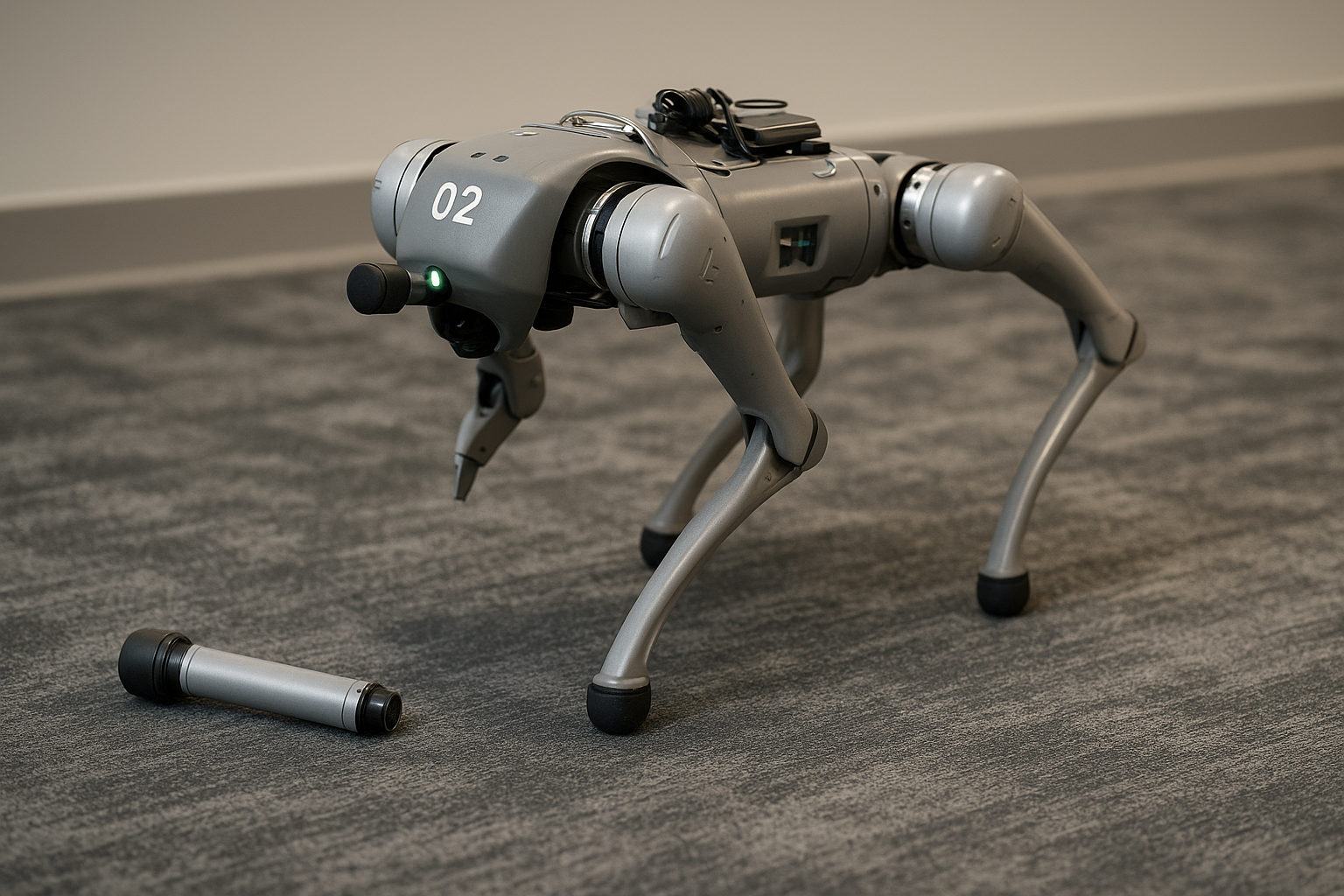
A new video circulating online shows a robot dog enduring a brutal test, attacked with a chainsaw and its limbs hacked off one by one. Yet, astonishingly, it keeps moving.
The footage comes from US startup Skild AI, which claims to have developed an artificial intelligence “brain” capable of adapting to virtually any robot body, no matter the damage. The company says its system can control “a whole multiverse of robots,” allowing machines to function even after catastrophic physical failure.
“We built a robot brain that nothing can stop,” Skild wrote in a post accompanying the video. “If the bot can move, the Brain will move it, even if it’s an entirely new robot body.”
How the Skild AI Works
At the core of Skild’s innovation is what it calls an “omni-bodied robot brain.” Unlike most AI systems, which are trained for specific machines or tasks, Skild’s software is designed to generalise. It can operate a wide range of robots with different shapes, legs, wheels or sensors without retraining.
According to the company, the system was trained in a vast virtual environment containing 100,000 different robot types. The AI learned to control them all, developing strategies that work across multiple body designs.
This approach means that if a robot loses a limb, breaks a wheel, or is forced to walk in a completely new configuration, the AI doesn’t freeze or fail, it adapts. The video demonstration shows this vividly: even after being mutilated with a chainsaw, the robotic dog drags itself forward on what remains of its frame.
A New Kind of Artificial Intelligence
Traditional robotics relies on highly specialised programming. Most robots are built to perform one function, whether it’s assembling parts, vacuuming floors, or performing surgery. If something goes wrong, they usually stop.
Skild’s system represents a shift towards general-purpose intelligence in machines, AI that can think flexibly and solve problems in new situations, much like humans do.
The company describes its results as “early sparks of intelligence in the world of atoms,” suggesting a future where robots can assist humans in unpredictable environments from disaster zones to hospitals and homes.
Promise and Peril
Experts have called the demonstration both remarkable and unsettling. “Deep learning is coming for robotics,” wrote Jeffrey Ladish, director at Palisade Research. “It’s plausible that AI will exceed human performance at strategic tasks around the same time robotics will exceed human-body performance.”
The potential uses are vast: self-repairing robots in hazardous industries, search-and-rescue bots that can survive damage, or machines that adapt instantly to new tools or terrains.
But the disturbing imagery of robots being tortured has reignited ethical debates. Critics argue that while these machines feel no pain, normalising their “abuse” could desensitise people or reflect worrying attitudes towards intelligent systems.
As Skild AI pushes the boundaries of robotic adaptability, it also raises a question that science fiction has asked for decades: what happens when the machines we build refuse to stop?