At its 2025 AI Day event in Guangzhou, Chinese electric vehicle maker XPeng unveiled a new generation of its humanoid robot, the Iron, which the company says is its most human like creation yet. The robot represents a major step forward in design, artificial intelligence and physical realism, with plans for mass production by the end of 2026.
A robot designed to look and move like a human
The latest Iron robot stunned audiences with its fluid, almost lifelike movement. XPeng’s CEO He Xiaopeng said that during rehearsals, some staff asked if a real person was inside the machine. The design marks a shift from the company’s earlier quadruped prototypes toward a fully human form, chosen to help robots better understand and interact with people in real world environments such as offices, showrooms and shopping centres.
The humanoid structure has 82 degrees of freedom, allowing it to move with remarkable precision and smoothness. This high number of joints enables the robot to replicate the natural rhythm of human motion, from walking and bending to subtle gestures such as turning its head or moving its fingers.
Customisable appearance and synthetic skin
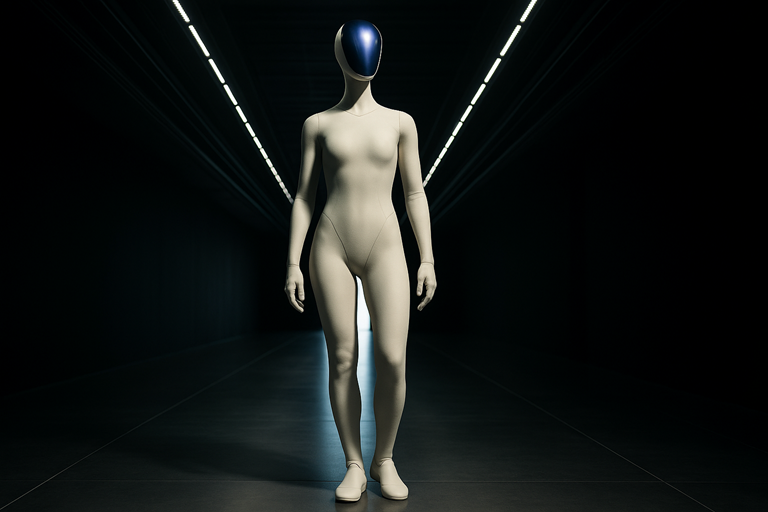
XPeng’s Iron robot stands out for its high level of personalisation. Customers will be able to choose different body types, heights and even sexes, along with various hair styles and clothing options. The robot is covered in what XPeng calls “full coverage soft skin”, a synthetic layer embedded with touch sensors designed to make interaction feel warmer and more natural.
He said this approach aims to make robots appear more approachable and relatable. “Just like you buy a car, in the future when you buy the robot, you can choose its appearance,” he told the audience.
Smart technology under the skin
The Iron robot is powered by three of XPeng’s self developed Turing AI chips, providing 2,250 trillion operations per second (TOPS) of computing power. Its intelligence is built on a trio of AI models known as VLT, VLA and VLM.
The VLT (Vision Language Task) system acts as the robot’s “brain”, coordinating its perception and decision making. The VLA (Vision Language Action) and VLM (Vision Language Model) models stem from XPeng’s autonomous driving technology, adapted to manage the far greater complexity of human like motion.
The robot’s hands are another engineering highlight, featuring 22 degrees of freedom per hand, allowing for delicate manipulation of small objects. A flexible spine enables it to bend naturally, while an expressive 3D curved display serves as a digital face capable of showing emotions.
Commercial use before coming home
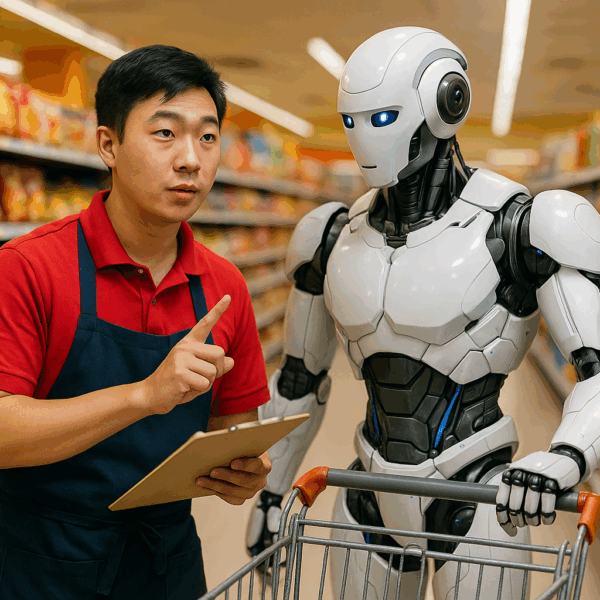
While other companies are targeting household or factory use, XPeng is taking a different route. The Iron robot will first appear in commercial settings as a tour guide, receptionist or shopping assistant, including in XPeng’s own showrooms. He Xiaopeng said it was not yet practical or economical to deploy humanoid robots for household chores or industrial work.
XPeng has set April 2026 as the start of its mass production preparations, with full scale manufacturing expected by the end of that year.
A cautious but bold step forward
The company has also introduced what it calls a “fourth law of robotics”: its robots must never disclose human privacy. XPeng plans to open the Iron’s software development kit (SDK) to global developers, inviting them to create new applications and expand its capabilities.
As competition grows among technology giants like Tesla and 1X, XPeng’s latest announcement positions it as a serious player in the race to bring humanoid robots into everyday life, albeit one that seems to prefer charm and companionship over heavy lifting.
XPeng’s humanoid robot is expected to enter mass production by late 2026, with commercial trials beginning next year.