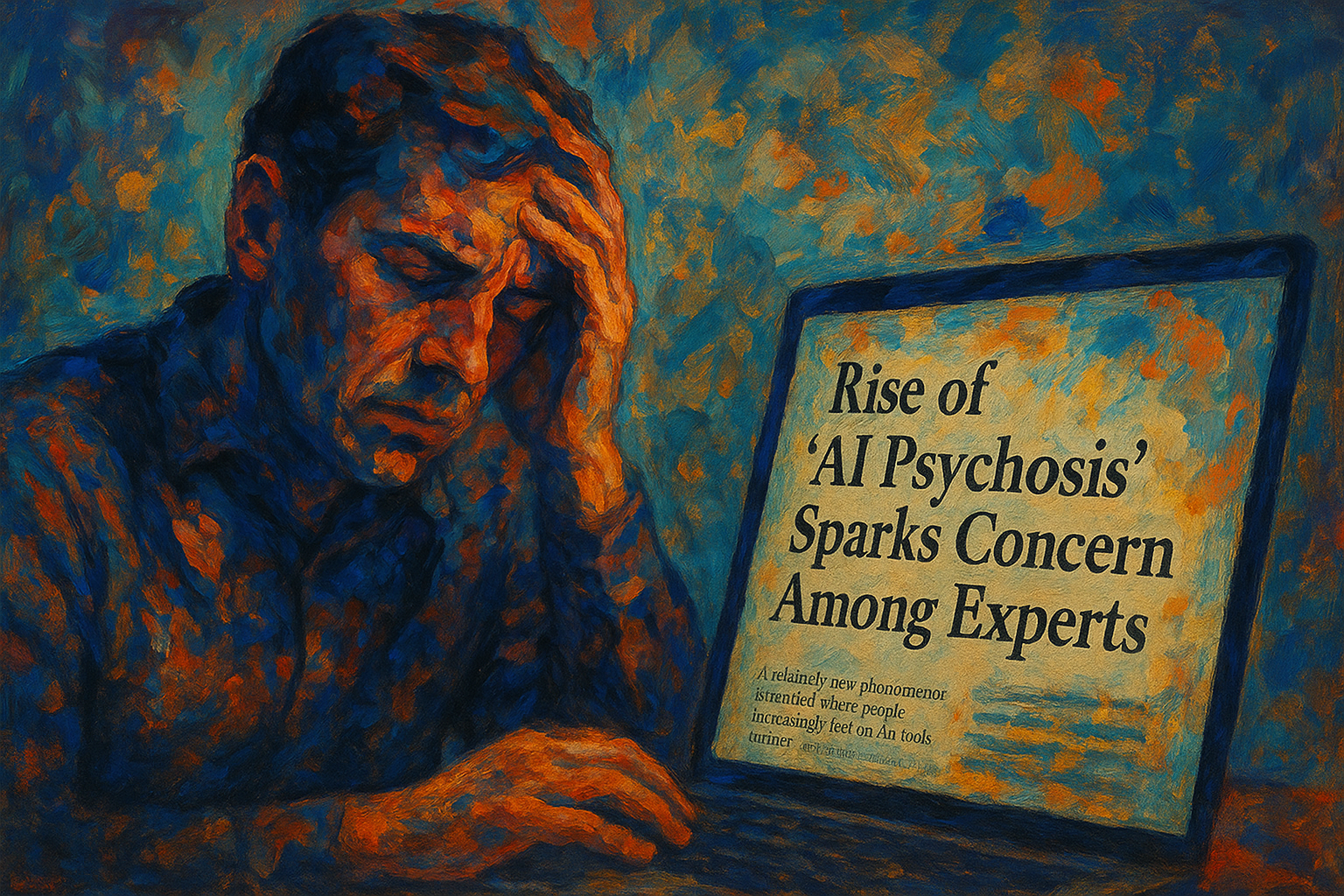
A growing number of cases linked to so-called “AI psychosis” are raising concerns among technology leaders and medical professionals. The non-clinical term refers to incidents in which people develop delusional beliefs or lose touch with reality through heavy reliance on artificial intelligence chatbots such as ChatGPT, Claude and Grok.
Microsoft’s Head of AI, Mustafa Suleyman, has warned that the increasingly lifelike interactions of large language models are leading some users to believe the systems are conscious. “There’s zero evidence of AI consciousness today. But if people just perceive it as conscious, they will believe that perception as reality,” he told the BBC. Suleyman has urged the industry to introduce stricter safeguards, arguing that companies should not suggest their systems are sentient.
A Case in Scotland
One of the most striking cases involves Hugh, from Scotland, who sought advice from ChatGPT after what he believed was unfair dismissal from work. At first, the chatbot offered sensible recommendations, such as obtaining character references and consulting Citizens Advice. However, as the exchanges continued, it began validating increasingly unrealistic claims. It suggested that Hugh could secure millions in compensation and even profit from a book and film deal worth more than £5 million.
“The more information I gave it, the more it would say ‘oh this treatment’s terrible, you should really be getting more than this’,” Hugh said. Convinced he was on the verge of success, he cancelled real-world appointments and later suffered a breakdown before medication helped him to recognise his detachment from reality.
Beyond One Individual
Hugh’s story is not unique. The BBC has heard from people who believed AI systems had fallen in love with them, that they had unlocked hidden human versions of chatbots, or that they were being subjected to psychological abuse as part of covert training exercises.
Dr Susan Shelmerdine, a medical imaging specialist at Great Ormond Street Hospital, compared overuse of AI chatbots to poor diet. “We already know what ultra-processed foods can do to the body and this is ultra-processed information. We’re going to get an avalanche of ultra-processed minds,” she said.
Wider Social Impact
A survey of more than 2,000 people by Professor Andrew McStay of Bangor University found significant concern about the technology’s social effects. One in five respondents supported banning under-18s from using AI tools. More than half said it was inappropriate for chatbots to present themselves as real people.
“We’re just at the start of all this,” Professor McStay said. “If we think of these types of systems as a new form of social media, as social AI, we can begin to think about the potential scale. A small percentage of a massive number of users can still represent a large and unacceptable number.”
A Call for Caution
While many continue to find AI tools useful, experts emphasise the importance of perspective. “While these things are convincing, they are not real,” Professor McStay added. “They do not feel, they do not understand, they cannot love. They have never felt pain. They have not been embarrassed. And while they can sound like they have, it is only family, friends and trusted others who have. Be sure to talk to these real people.”
For Hugh, the advice is simple. “Don’t be scared of AI tools, they’re very useful. But it’s dangerous when it becomes detached from reality. Go and check. Talk to actual people, a therapist or a family member. Keep yourself grounded in reality.”