Robots are getting closer to handling the kinds of everyday tasks we once thought only humans could do, such as folding laundry, moving items around, or even setting a table. But unlike humans, robots do not automatically know how to operate in unpredictable real-world environments. Programming them step by step for every possible scenario is slow and often impractical.
A promising alternative is imitation learning, where robots learn by observing and copying human behaviour. The most effective way to capture this training data is through teleoperation.
What is teleoperation?
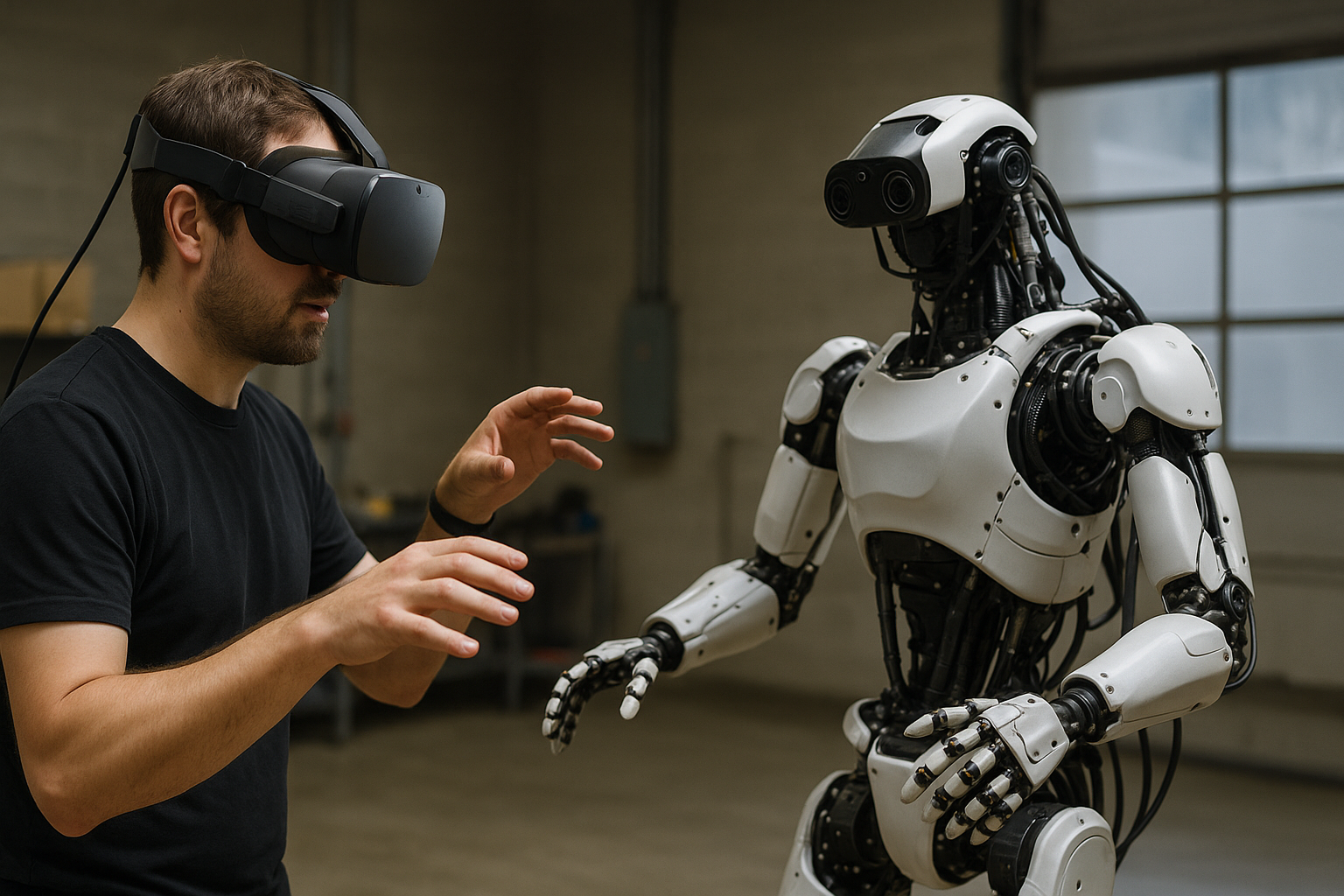
Teleoperation allows a human to control a robot directly using virtual reality. A VR headset streams live video from the robot’s cameras, giving the operator a first-person view. As the operator moves their head, the robot’s viewpoint adjusts to match. Hand and body tracking in the VR system allow the robot’s arms and hands to mirror the operator’s movements in real time.
This process creates detailed, high-quality demonstrations that robots can later replicate on their own.
Why it matters
Training robots in this way offers several advantages. It is accessible, since anyone can demonstrate a task without advanced programming knowledge. It is efficient, as robots can learn new skills much faster than through traditional coding. It is also adaptable, because if unexpected problems occur during a task, humans can demonstrate a recovery strategy, which the robot then learns to apply independently.
Atlas: a practical example
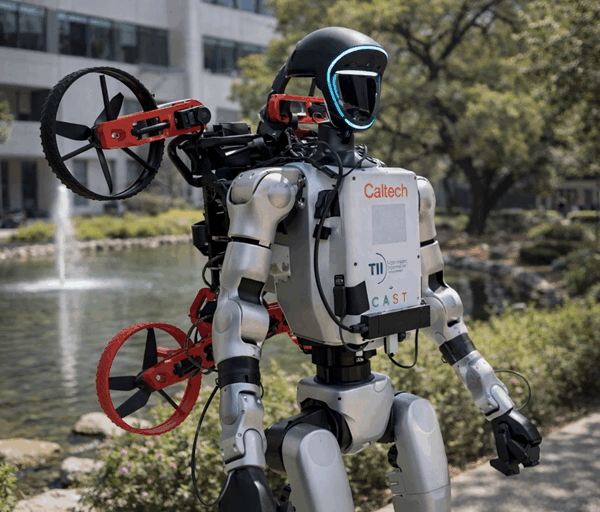
Boston Dynamics’ humanoid robot, Atlas, demonstrates the potential of this approach. In partnership with Toyota Research Institute, Atlas has learned to pick up and organise car parts, fold and place materials, move bins and larger items, and even carry out complex actions such as tying ropes or laying tablecloths.
What makes this significant is that Atlas uses a single AI model to guide these varied tasks. By building on many human demonstrations, the robot becomes more capable of generalising across different jobs and adapting when things do not go as planned.
Towards general-purpose robots
The long-term vision is to develop generalist robots that can perform a wide range of tasks in dynamic environments such as healthcare, logistics, or even domestic settings. While robots like Atlas are not yet at that stage, the combination of teleoperation, imitation learning, and advanced AI is laying the foundation.
The focus is moving away from acrobatic demonstrations and towards consistent, practical skills. These are the abilities that will make robots genuinely useful collaborators in workplaces and, eventually, in everyday life.