Active components are the parts of an electronic circuit that do the work. They don’t just sit there controlling or resisting the flow of electricity. They actively control, amplify, or generate electrical signals. You can think of them as the performers in a circuit, while passive components are more like the stage crew that support everything quietly in the background.
What makes a component active is that it needs an external power source to operate. This extra energy lets it boost signals, switch things on and off, or even create entirely new signals.
Why Are Active Components Important?
Active components are essential because they allow circuits to do more than just pass electricity around. Without them, we wouldn’t have smartphones, laptops, robots, or even simple gadgets like digital clocks.
One of their most important jobs is amplification. For example, a tiny electrical signal from a microphone is far too weak for a speaker to use. An active component, like a transistor, can boost this weak signal until it’s loud and clear.
Another key job is switching. Microcontrollers, computers, and digital electronics all rely on active components switching on and off extremely quickly. This switching is what makes logic operations and processing possible.
Active components can also generate signals, such as those created by oscillators inside radios or by chips inside microcontrollers. These signals act as timing pulses or communication waves that keep circuits in sync.
Common Types of Active Components
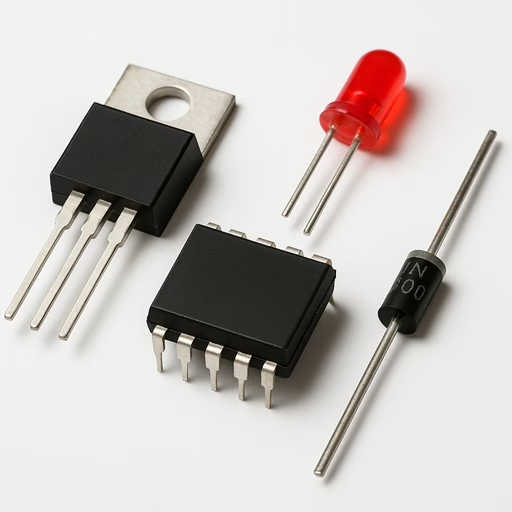
The most common active component you’ll meet is the transistor. It’s the tiny electronic valve that can amplify signals or act as an on and off switch. Modern devices contain billions of them.
Another important active component is the integrated circuit or IC. This is a small chip that contains many tiny components, often thousands or millions, all working together to perform complex tasks. Everything from a simple timer chip to a full computer processor counts as an IC.
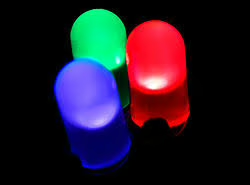
You’ll also come across diodes such as LEDs and rectifier diodes. While they don’t amplify signals, they are still considered active because they rely on semiconductor behaviour to control how electricity flows.
The Big Picture
Active components are what make electronics interesting. They let circuits think, respond, and interact with the world. Whether you’re building a robot, designing a small gadget, or learning how modern devices work, understanding active components gives you the foundation to explore more advanced ideas.
By knowing the difference between active and passive parts, you’ll start to see how electronic circuits come to life and why active components are the stars of the show.