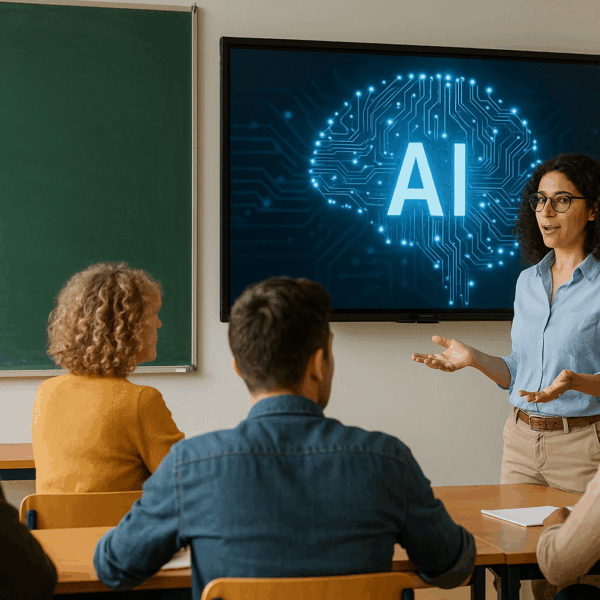
Have you ever stopped to think how AI might be shaping our children’s worlds? Artificial intelligence is no longer a futuristic concept tucked away in science fiction. It’s woven into the everyday experiences of young people. From the way they learn at school, to the media they consume, to the opportunities they might (or might not) have in future careers, AI already has a powerful influence. That’s why it’s so important to consider its impact on the youngest among us: Generation Alpha, born between 2010 and 2024, and the soon-to-arrive Generation Beta, starting in 2025.
AI Bias Explained
AI works by spotting patterns in huge amounts of data. But data isn’t neutral. It often reflects the biases, inequalities, and blind spots of the society it comes from. When AI “learns” from this skewed data, those same biases can creep into the decisions it makes.
A simple example: facial recognition systems have been shown to work well on white male faces but struggle with women and people of colour. Why? Because the training data was mostly made up of white male faces. The problem isn’t the maths itself, it’s what the AI was fed.
Now imagine that bias being replicated across education, healthcare, or recruitment. That’s where the risks lie.
Gen Alpha: Living With AI
For Generation Alpha, AI is everywhere. Smart speakers like Alexa, personalised apps for homework, AI-driven games, and streaming platforms that recommend the next video. They’ve never known a world without it. But there’s a flipside to this convenience.
- Education: Schools are turning to AI platforms that tailor lessons to each child. But what if the system wrongly assumes that a child isn’t suited to science or maths? Subtle nudges like this could quietly influence confidence and career choices.
- Media: TikTok, YouTube, and Netflix use AI to decide what children see next. If the algorithms reinforce gender stereotypes, boys may be shown action and gaming content while girls are shown beauty and lifestyle. That can shape identities in ways that feel limiting.
- Work: Even as teenagers, Alpha kids may find AI influencing early job opportunities. Recruitment platforms often filter CVs using algorithms. If these are trained on biased data, they risk continuing the same cycle of exclusion.
Gen Beta: Growing Up Immersed
Generation Beta will be born into an even more AI-saturated world. Where Alpha are early adopters, Beta will be fully immersed. They’ll encounter AI in places Alpha only glimpsed: healthcare, governance, and even creativity.
- Healthcare: Imagine an AI system used to recommend treatments. If it’s been trained mainly on data from men, women could be misdiagnosed. We’ve already seen this happen with heart disease symptoms being under-recognised in women.
- Policy: Governments are experimenting with AI in policing or welfare. If these systems reflect existing biases, entire communities could face unfair treatment, such as more policing in certain neighbourhoods or less access to vital support.
- Creativity: AI tools that generate art, music, or writing are booming. But if they’re trained on narrow cultural references, they risk reproducing the same voices over and over again.
Why It Matters
The real challenge is that AI doesn’t just reflect the world as it is. It has the power to reinforce and magnify existing biases. And because it often works invisibly in the background, the risks can go unnoticed until the harm is widespread.
For Generation Alpha, bias could already be shaping their learning, friendships, and job prospects. For Generation Beta, it could touch almost every corner of their lives.
What We Can Do
This isn’t all doom and gloom. There are things we can do to ensure AI works fairly:
- Diverse data: Train AI on datasets that represent the full range of human experience.
- Bias checks: Regular audits can catch skewed outcomes early.
- Digital literacy: Teach children to question what they see online.
- Inclusive design: Build diverse teams to design and test AI systems.
AI is here to stay. The question is whether we shape it to be fair and inclusive, or whether we allow hidden biases to shape the next generations in ways that hold them back.
The takeaway is simple. AI isn’t just about machines and algorithms, it’s about people, children, and futures. If we get this right, Generation Alpha and Generation Beta could inherit tools that help them thrive. If we don’t, the risks are too high to ignore.