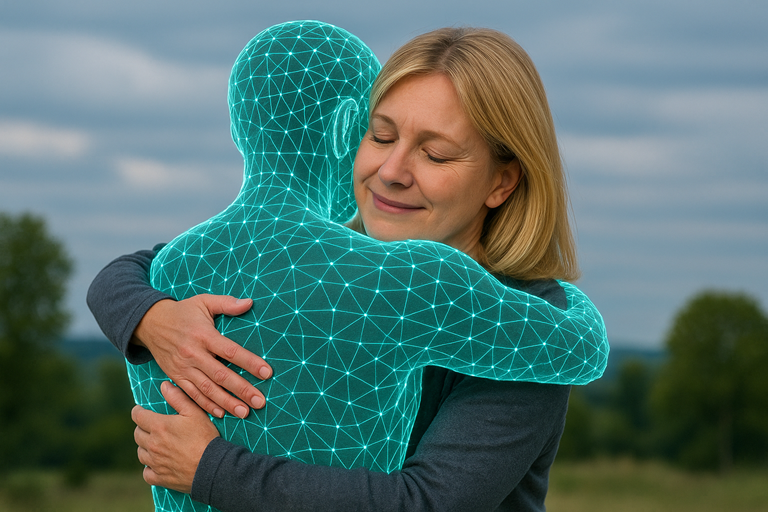
A technology company has launched an app that allows people to create interactive avatars of deceased loved ones, prompting both fascination and alarm. The service, developed by Los Angeles start-up 2Wai and co founded by former Disney Channel actor Calum Worthy, uses artificial intelligence to generate lifelike digital recreations from short video clips. Supporters say it offers a new way to preserve memories. Critics say it risks exploiting grief and blurring emotional boundaries.
How the avatars are created
The company’s promotional film shows an expectant mother speaking to an AI version of her late mother through her phone. As the story moves forward, the avatar appears to read bedtime stories to the woman’s newborn son and later chats with him on his walk home from school. The technology behind these moments is based on what 2Wai calls a HoloAvatar. Users film a person for around three minutes and the app analyses their appearance, speech and movements to build an interactive model capable of real time conversation.
Alongside personal avatars, the app offers pre generated characters ranging from historical figures such as Shakespeare to fictional personalities including chefs and astrologers. The company says individuals can also create their own digital twin to preserve their identity and share stories with future generations.
What the company says
Calum Worthy describes the project as a living archive of humanity. He argues that creators and ordinary users should have control over their likenesses in an era of rapid AI development. The company, which has secured seed funding and partnerships with major telecoms and technology firms, claims the technology is designed to amplify voices rather than replace them.
2Wai has not shared detailed information on how a brief sample of footage enables the system to build a convincing personality model, and questions remain about how memories or behavioural traits are recreated.
Public reaction and ethical concerns
The app has attracted strong criticism online. Social media users have called it dystopian, inhumane and reminiscent of science fiction warnings. Many drew comparisons to a well known episode of Black Mirror in which an AI replica of a deceased partner provides only temporary comfort before deepening a sense of loss.
Some fear the technology may interrupt the natural grieving process by encouraging people to maintain simulated relationships with those who have died. Others worry about misuse, including the possibility of digital avatars being employed to sell products or promote services in the voice of a lost relative.
Researchers studying the rise of so called deadbots warn that such systems could cause psychological distress, particularly for children who may struggle to distinguish digital simulations from reality. Concerns have also been raised about consent, data ownership and the long term storage of sensitive likenesses.
The challenges ahead
Despite the backlash, the app continues to gain users and attention. Supporters suggest it could help preserve stories and voices that might otherwise be forgotten. Critics argue that commercialising grief risks undermining the very memories the technology aims to protect.
As AI continues to advance, the debate over digital afterlife services is likely to intensify. Whether 2wai represents a meaningful step forward in remembrance or a troubling glimpse of what lies ahead remains deeply contested.