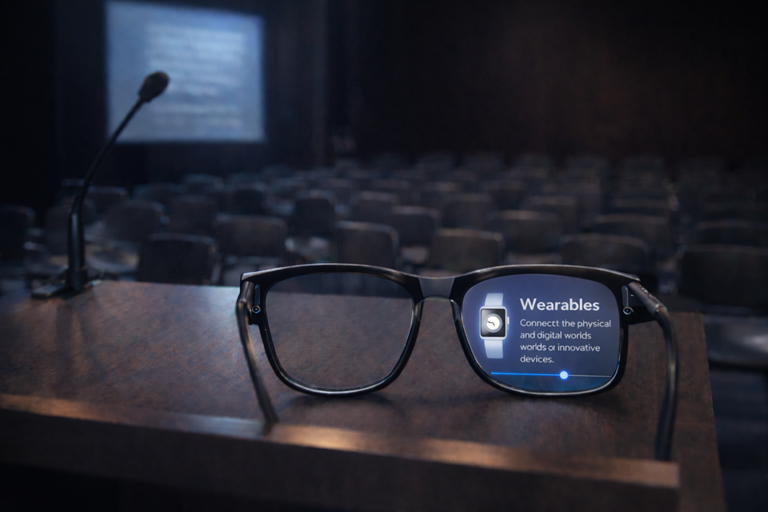
Smart Glasses are making a serious comeback, with major technology firms positioning them as the next everyday interface for artificial intelligence. At CES 2026 in Las Vegas, wearable technology was everywhere, but it was Smart Glasses that stood out as companies shifted from experimental gadgets to practical products designed for daily life.
After years of false starts, the industry believes it has finally learned how to make Smart Glasses useful, socially acceptable and commercially viable.
Meta’s Vision for Everyday Smart Glasses
Meta has been one of the most visible players at CES 2026, unveiling new features for its Ray Ban Display Smart Glasses alongside its Neural Band wrist controller. The focus is firmly on subtle assistance rather than constant distraction.
New tools include a built in teleprompter for presentations, hands free messaging using finger movements detected through muscle signals, and pedestrian navigation displayed directly in the wearer’s field of view. The aim is to reduce reliance on smartphones while keeping users engaged with the world around them.
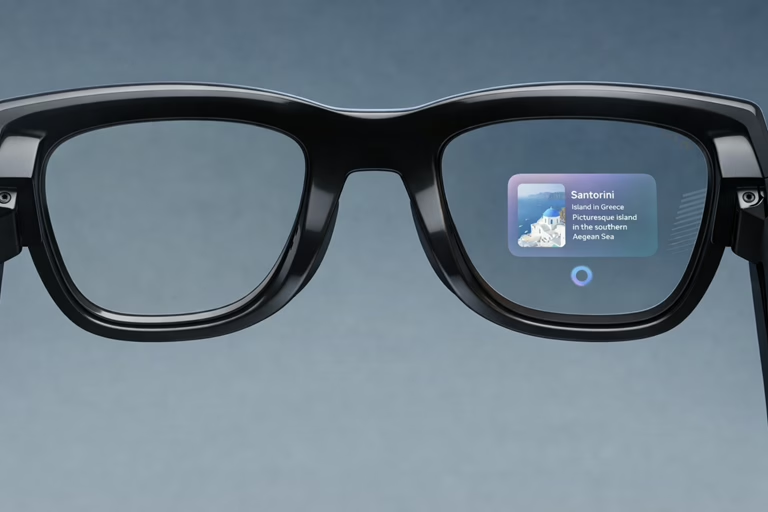
Meta is also expanding Smart Glasses beyond personal use. Partnerships with Garmin and universities are exploring how muscle controlled input could be used in cars, smart homes and accessibility technology for people with limited mobility. Demand has been strong enough that international launches, including in the UK, have been delayed while US orders are fulfilled.
Why Google Glass Failed
Smart Glasses still carry the legacy of Google Glass, a product that became a symbol of technology arriving before society was ready. Launched in the early 2010s, Glass suffered from immature hardware, unclear use cases and significant privacy concerns.
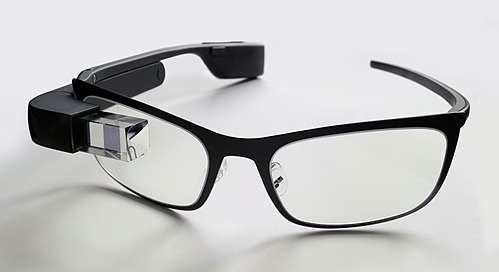
Perhaps its biggest failure was social. The design made wearers stand out and sparked fears of constant recording. Google has since acknowledged that the product lacked a clear everyday purpose and arrived before supporting technology such as fast mobile data and advanced on device AI was available.
Those lessons now shape the entire Smart Glasses market.
What Has Changed This Time
The Smart Glasses shown at CES 2026 reflect a very different philosophy. Instead of promising to replace smartphones, they focus on narrow, high value tasks such as translation, messaging, navigation and quick information prompts.
Advances in artificial intelligence mean these features can run faster and more reliably. Improvements in battery life, weight and comfort make the glasses easier to wear for long periods. Some models now include built in connectivity, reducing dependence on phones.
Design has also become more discreet, with glasses that closely resemble normal eyewear and offer clearer signals about when cameras or microphones are active.
The Future of Smart Glasses
As AI becomes more embedded in everyday life, companies increasingly see Smart Glasses as a natural home for digital assistants. Rather than demanding attention, they aim to fade into the background and provide help only when needed.
After more than a decade of experimentation and missteps, the industry believes Smart Glasses are finally ready to move from curiosity to commonplace. The challenge now is earning public trust and proving they can genuinely make life easier without crossing social boundaries.