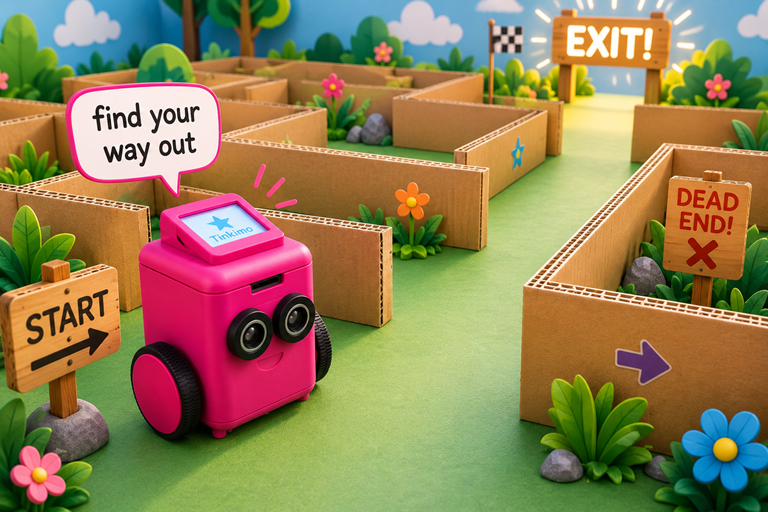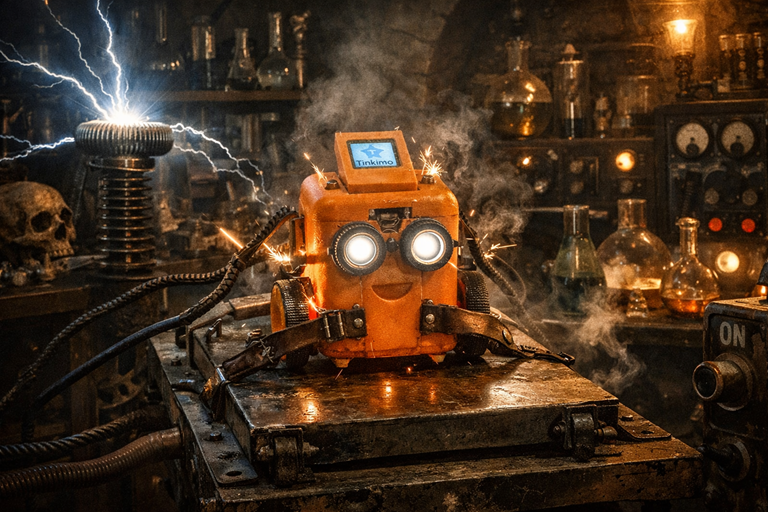
It’s been another eventful month in the world of Tinkimo, with the biggest headline being that Tinkibot is now officially working 🎉
That alone feels worth celebrating.
The main challenge this month has been squeezing everything into such a compact form factor. It’s still a little larger than I’d like, and at the moment the inside looks like a small bowl of spaghetti. Progress, though. I’ve started using KiCad for my schematic designs, which has been a great experience so far. Once the designs settle down, I’ll start looking at the cost of producing proper PCBs, which should make the whole thing easier to manufacture and much tidier inside.
On the software side, the robot is now responding nicely to commands over Bluetooth. Dialling in the PID values for the wheel control, however, has been… an emotional journey. After a fair bit of head-scratching, the culprit turned out to be the way shaft encoder pulses were being counted, which caused miscounts and some impressively erratic driving behaviour. Once fixed, things became much calmer. For both of us.
Power was another interesting discovery. Using a 4-cell NiMH battery pack caused instability when the robot moved backwards, and it also took up far too much precious space. I’ve since redesigned the base to use a LiPo battery instead, with a step-up converter to keep the motors happy. This improves stability and frees up room, which feels like a win all round.
One of the benefits of reclaiming that space is that I can now add a speaker. From past outreach events, I know students love robots that make noise. The Pico, however, is a bit underpowered for handling audio properly. I explored using an MP3 module with an integrated amplifier and SD card, but it quickly became clear that it would be a messy solution and difficult to upgrade or adapt later. For now, audio is firmly parked as a future improvement while I focus on getting the core platform solid and scalable.
That decision also feeds into a bigger change. I’m currently in the process of moving away from the Pico W and over to an ESP32. The performance jump is significant, although the slightly larger form factor means a redesign of the very top of the robot. That was on the roadmap anyway, as I want to add physical buttons and improve the overall layout. The extra processing power should also allow the display to update in one go, rather than being built up as a mosaic of tiles.
Away from the hardware, I also attended the Digital Plymouth Rocket Duck event, which was both enjoyable and inspiring. Hearing guest speakers talk honestly about how they started their businesses was particularly valuable. I’ve also been to an initial meeting of a new AI community forming in Plymouth, where the group shared their vision and how it fits into the wider tech activity happening in the city.
All in all, it’s been a busy month with lots of progress, a few redesigns, and only mild emotional trauma caused by PID tuning. Onwards.
Terri