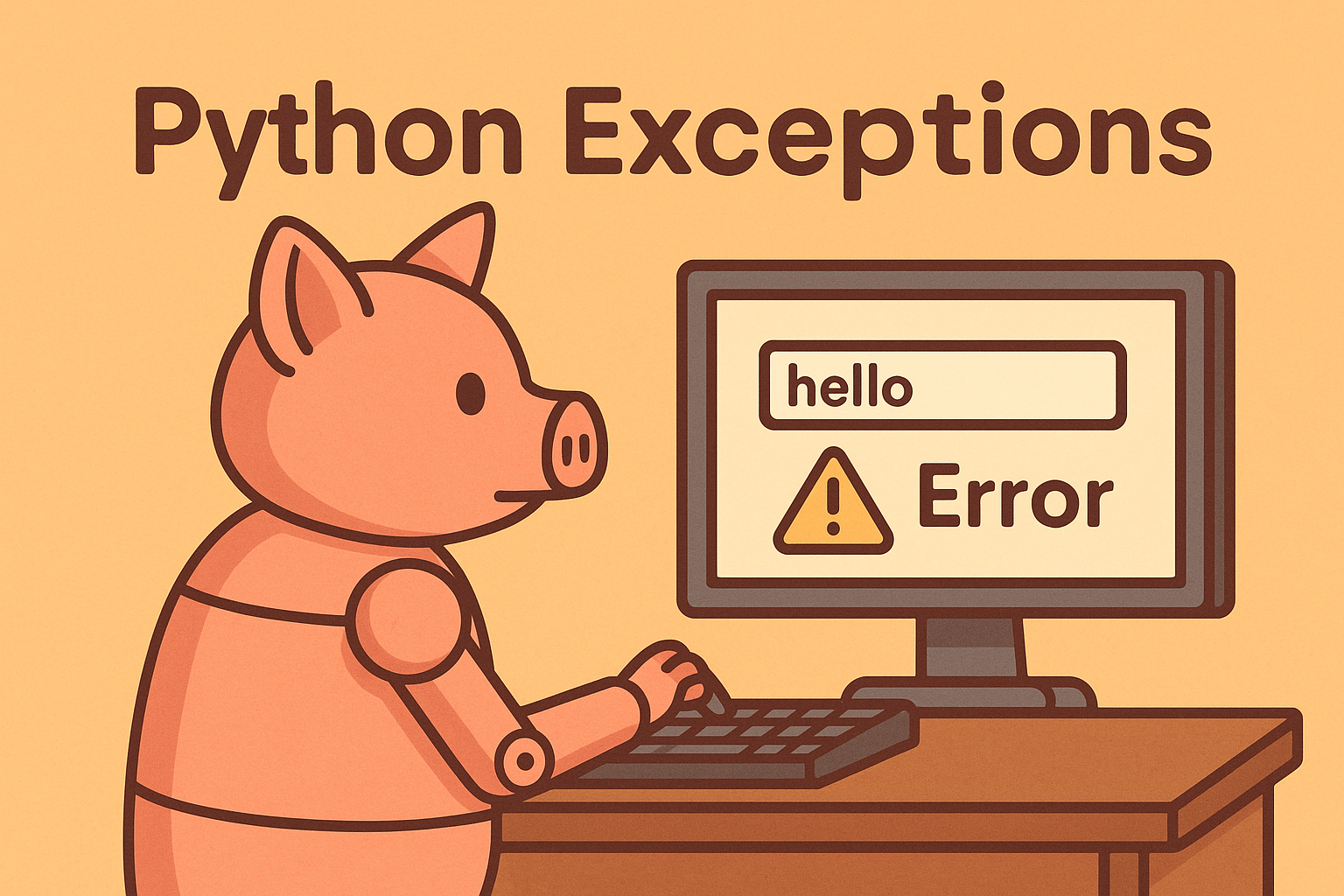
If you’ve ever cooked a meal and accidentally burnt the toast, you’ll know that mistakes happen. Programming is no different – no matter how careful you are, things can (and will) go wrong. In Python, when something unexpected happens during your code’s execution, the language raises an exception. Think of it as Python waving its hands in the air saying, “Hang on, I can’t deal with this!”
What Are Exceptions?
Exceptions are Python’s way of letting you know something went wrong. It could be as simple as trying to divide by zero (which even Python can’t manage), or as common as asking for the tenth item in a list that only has five. Instead of silently failing, Python raises an exception – which stops your program in its tracks unless you decide to handle it.
Why Should You Care?
Imagine writing a piece of software that asks a user for their age. What happens if they type in “banana” instead of a number? Without exception handling, your program will simply crash. That’s not exactly a great user experience! By handling exceptions, you can gently guide the user back on track, perhaps with a friendly message like, “Nice try, but ages don’t come in fruit form.”
Where Are Exceptions Used?
Pretty much everywhere. Any time your code interacts with the outside world – reading files, working with the internet, taking user input – there’s a chance for something to go wrong. Exceptions give you a safety net. They allow your program to react gracefully instead of falling flat on its face.
In short: exceptions are your friend. They’re not there to annoy you, but to help you write robust, user-friendly code. And once you learn how to handle them properly, you’ll wonder how you ever coded without them.