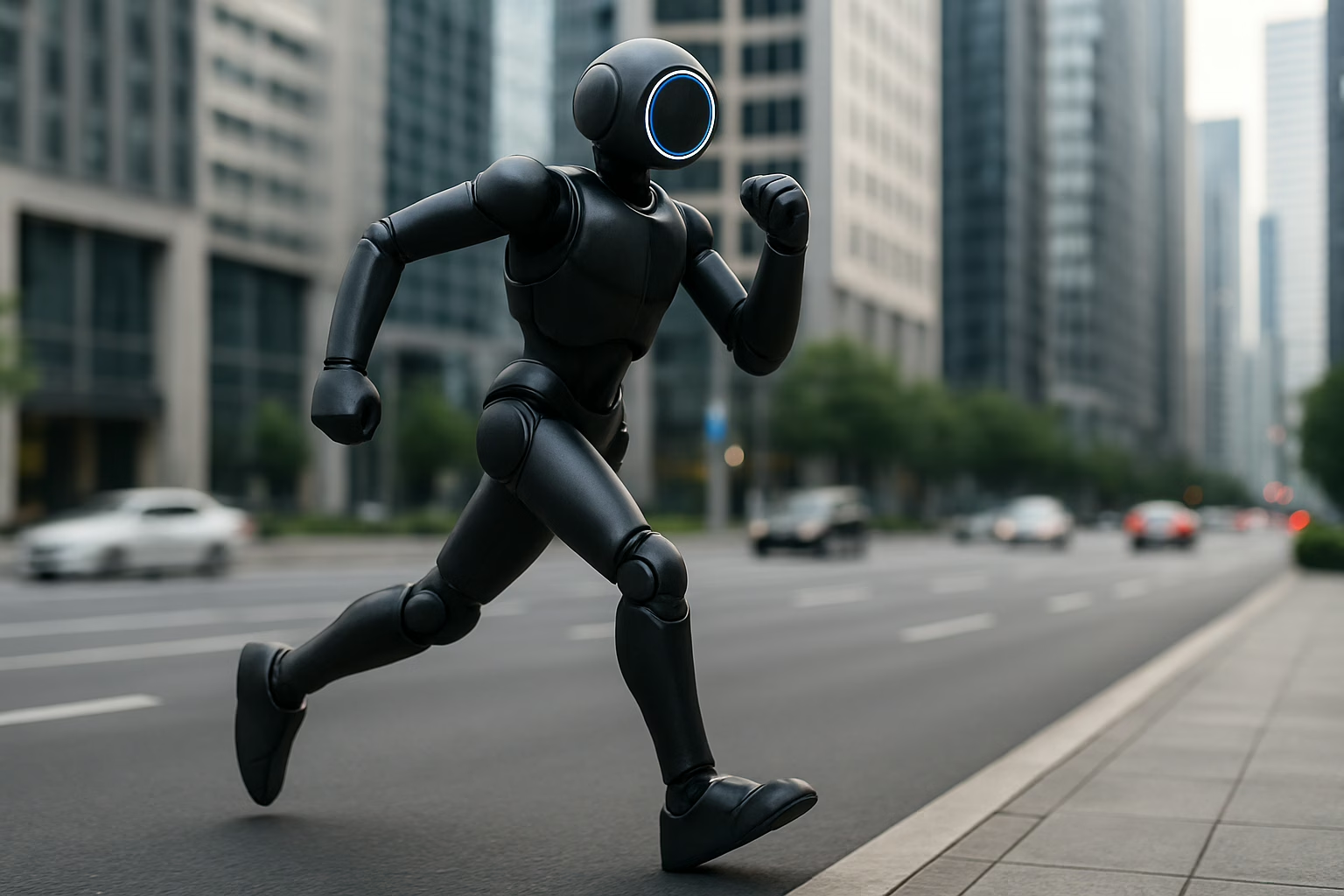
When most people picture humanoid robots, towering machines like Atlas or Optimus come to mind. But a new contender from Beijing is proving that size isn’t everything. The Phybot C1, standing just 1.28 metres tall and weighing 28 kilograms, is drawing attention across the robotics world.
What sets it apart isn’t its compact design, but the technology inside its joints. Phybot C1 is one of the first small humanoid robots to use cycloidal gear actuators, a mechanical system usually reserved for heavy-duty industrial robots.
What Are Cycloidal Actuators?
Cycloidal drives transfer motion in a unique way. Instead of relying on a single gear tooth to bear all the pressure, they distribute forces across multiple rolling contact points. The result is a system that’s:
- Stronger – able to handle high torque loads relative to its size.
- More durable – less stress on each contact point means a longer lifespan.
- More precise – reduced backlash allows smoother and more accurate movement.
- Compact – offering power without the bulk.
These characteristics make cycloidal systems especially attractive for humanoid robots, which require both strength and delicate control. Until now, most humanoids have relied on harmonic drives (precise but wear-prone) or planetary gears (efficient but less accurate). Cycloidal drives could represent the “best of both worlds”.
A Step Change for Humanoid Robotics
If this approach scales successfully, it could transform how humanoid robots are designed. The advantages are clear:
- Stronger, smaller robots capable of lifting objects well beyond their size.
- Longer-lasting joints, ideal for robots operating continuously in workplaces.
- More internal space for batteries, sensors, and control electronics.
In essence, Phybot’s technology could make humanoids both tougher and more practical, paving the way for wider real-world deployment — from warehouse helpers to personal assistants.
Challenges Still Ahead
Despite the promise, several hurdles remain. Stronger actuators can also mean greater power demands, raising questions about battery life and energy efficiency. Cycloidal drives, while powerful, are complex to manufacture, potentially keeping costs high in the short term. And with added torque comes the need for more precise control software, to ensure balance and coordination.
Still, hardware breakthroughs like this are vital. Just as improved graphics processors helped unlock modern AI, better actuators could push humanoid robots from lab curiosities to everyday tools.
The Bigger Sibling: Phybot M1
Alongside the C1, Beijing’s engineers have also revealed the Phybot M1, a full-sized humanoid standing 1.72 metres tall and weighing 60 kilograms. With 32 degrees of freedom and a maximum joint torque of over 530 newton-metres, it uses the same PhyArc cycloidal joint modules as its smaller counterpart.
The result is a robot capable of a more natural, muscle-like gait, combining strength with agility and energy efficiency — key traits for working in dynamic, human environments.
Looking Ahead
Whether cycloidal technology becomes the new standard remains to be seen, but the Phybot line demonstrates how mechanical innovation can be just as crucial as AI in shaping robotics’ future.
For now, Phybot C1 and M1 stand as reminders that the next leap in humanoid design may come not from bigger brains, but from smarter joints.