Boston Dynamics has unveiled a major update to its humanoid robot, Atlas, giving it a new pair of hands that combine strength, precision, and an unexpected touch of gentleness. The Massachusetts-based company, now owned by Hyundai, has spent more than a decade perfecting the robot’s movement. The latest development focuses on one of the hardest problems in robotics: how to give a machine a human-like sense of touch and control.
A simpler, smarter hand
Instead of replicating the human hand exactly, Boston Dynamics has opted for a three-fingered “gripper” with two fingers and an opposable thumb. Each hand has seven degrees of freedom and seven actuators, allowing Atlas to handle a wide range of objects — from heavy boxes to fragile cups — without dropping or crushing them.
The fingertips are fitted with tactile sensors that detect how much pressure the robot is applying, while small cameras in the palm help it judge distances and shapes. Engineers say the design hits the “sweet spot” between dexterity, reliability, and simplicity.
Karl Price, mechanical engineer for Atlas, explained: “The goal is to apply as little force as possible while maintaining a stable grasp.” The thumb, he added, was a game-changer. “It really expands the type of grasps that we can do.”
Built for real-world work
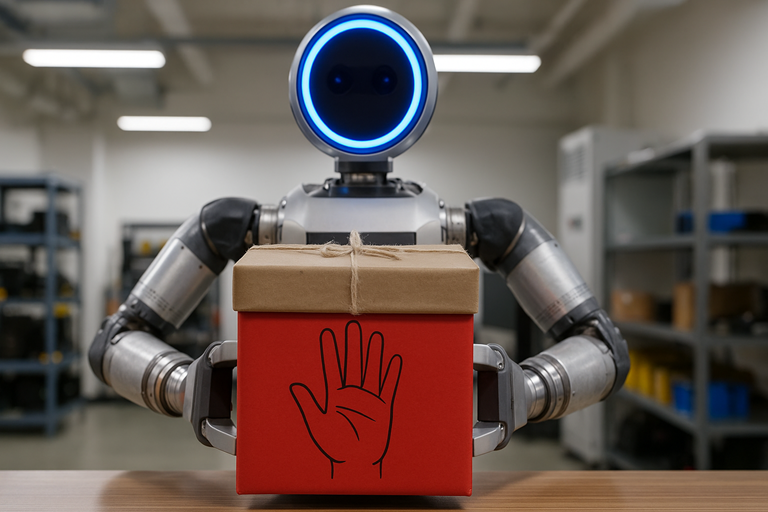
In a demonstration video, Atlas was seen sorting and packing items, transferring objects between baskets, and stacking them neatly on shelves. The robot adapted its grip to suit each object’s shape and texture, showing a level of fine control that previous versions struggled to achieve.
The design team settled on three fingers after testing more complex versions. Adding more digits, they found, introduced unnecessary complications, higher costs, and reduced reliability. Alberto Rodriguez, director of robot behaviour at Boston Dynamics, said: “Three fingers are the minimum needed to perform complex manipulation tasks. We realised we can grasp almost anything that we throw at it.”
The hands also feature what engineers call “superhuman flexibility”. Each finger can bend backwards completely, allowing for new types of grasps that even humans can’t perform.
Powered by smarter AI
The improvements to Atlas go beyond hardware. Boston Dynamics has also teamed up with the Toyota Research Institute to create a Large Behaviour Model (LBM) — an AI system that helps the robot understand and mimic human actions.
Trained on thousands of hours of motion data, the model allows Atlas to learn new tasks more quickly without the need for manual programming. This means engineers can teach it to carry out new routines simply by showing examples.
The result is a robot that can not only walk, crouch, and balance but also adapt its movements with a level of intelligence closer to human behaviour.
A step toward human-like helpers
The new hands mark an important step in Boston Dynamics’ goal of making Atlas useful in real-world settings such as factories and warehouses. By combining tactile sensing, advanced AI, and efficient mechanics, the company hopes to bridge the gap between robotic strength and human dexterity.
While rivals such as Figure AI are pursuing more human-like five-fingered hands for domestic robots, Boston Dynamics believes its simpler, rugged approach makes more sense for industrial use.
“The fewer moving parts we have, the more reliable it is,” Rodriguez said. “Three fingers might not look human, but for Atlas, they’re just right.”
At just over 12 years old, Atlas continues to evolve from a laboratory experiment into a capable, flexible robot. With its new hands, it is now better equipped than ever to take on tasks that once seemed far out of reach.