If you’ve seen a video of a humanoid robot running, leaping, or doing backflips, you’ve probably met Atlas, Boston Dynamics’ most advanced research robot. But Atlas isn’t just a stunt machine for YouTube views. Its story is a case study in how robotics research evolves: messy beginnings, gradual progress, and eventually, breakthrough leaps.
A Challenge Born of Crisis
In 2011, the Fukushima nuclear disaster highlighted a stark reality: humans can’t always safely enter hazardous environments. In response, the U.S. agency DARPA launched the Robotics Challenge (DRC), a competition to push robots into more human-like roles such as turning valves, opening doors, climbing ladders, and navigating rubble.
Boston Dynamics was tasked with building the hardware platform. In 2013, the first Atlas was unveiled: six feet tall, weighing 150kg, and powered by hydraulics (think pressurised fluid working like muscles). It was tethered to external power and often fell spectacularly during practice. But that was the point: the DRC wasn’t about perfection, but about testing the limits.
Early Days in the Lab: On a Safety Leash
In those early years, Atlas wasn’t left to wander freely. It was literally tethered to a gantry, a big overhead support system with straps and cables. Think of it like a climbing harness at an indoor wall, but for a 150-kilogram robot.
The gantry had two jobs:
- Stop Atlas from smashing to the floor when it inevitably lost balance.
- Save engineers’ sanity, because every fall risked costly repairs.
Videos from that period show Atlas shuffling on the spot, wobbling like a toddler, while the gantry caught it every time it pitched too far. Without that safety leash, progress would have been far slower and much more expensive.
Over time, as Atlas’ balance algorithms improved, the gantry was phased out. Eventually, Boston Dynamics trusted Atlas to walk, stumble, and recover on its own. That moment when Atlas could walk untethered was a quiet but important milestone.
From Falling Over to Flipping
Through 2014 and 2015, Atlas took centre stage in the DRC finals. Robots struggled, staggered, and occasionally succeeded, giving the public both laughs and glimpses of potential. Atlas was clumsy, but it proved humanoid robots could attempt human tasks.
Then Boston Dynamics shifted gears. Freed from the competition, Atlas became a research platform for agility. By 2017, videos emerged of Atlas doing parkour, vaulting obstacles, and even executing backflips. These weren’t just party tricks. Each new skill meant advances in balance, perception, control software, and hardware robustness.
As IEEE Spectrum put it, it was the “next generation of Atlas” — not flawless, but dramatically more capable.
Enter the Electric Era: Atlas 2
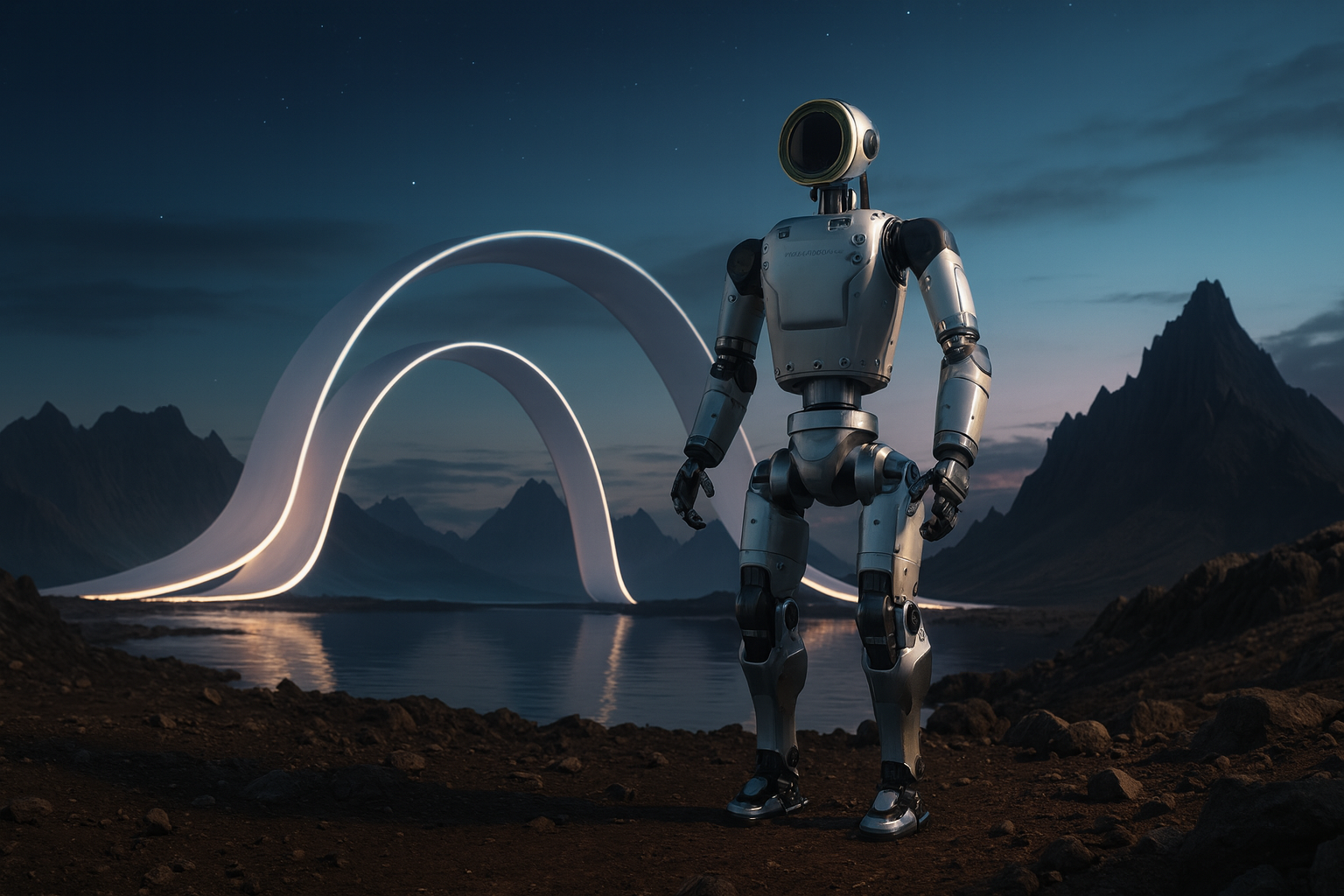
In April 2024, Boston Dynamics announced the retirement of its hydraulic Atlas and introduced a completely new, fully electric version often referred to as Atlas 2. This marked the most significant redesign in the robot’s 11-year history.
Why the excitement? Because switching from hydraulics to electrics isn’t just swapping out parts, it fundamentally changes what the robot can do.
Hydraulics vs. Electrics: Why It Matters
- Hydraulics (used in the first Atlas) rely on pressurised fluid pushed through tubes to power movement. They’re incredibly strong and ideal for heavy lifting, but they’re messy, noisy, and prone to leaks. They also require large pumps and lots of maintenance.
- Electrics use motors and gears instead. Think of them as “robot muscles powered by batteries.” They’re cleaner, quieter, and allow for much finer control of motion. For Atlas, that means more graceful movement, more reliability, and a design that’s easier to deploy outside of a lab.
A New Kind of Motion
The reveal video from Boston Dynamics didn’t just show a robot walking. Atlas 2 twisted, rotated, and bent in ways that looked distinctly non-human. One highlight: it rotated its torso a full 180 degrees and stood up in a coiled, almost alien posture before straightening up again.
This wasn’t for theatrics. Boston Dynamics was making a point: humanoid robots don’t have to be limited to human-like movement. If you’re designing a machine to work in our world, why not give it superhuman range of motion? Atlas 2 demonstrates exactly that, moving in ways no human ever could.
Engineering Upgrades
Atlas 2 introduced several improvements:
- Compact design: Cleaner build, no bulky tether or pumps.
- Improved manipulation: New grippers give Atlas better dexterity for picking up and carrying objects.
- Agility: With electric actuators, it can execute more complex movements while maintaining balance.
- Autonomy potential: Easier integration with AI-driven planning systems, meaning less reliance on human operators.
Why It’s a Milestone
Hydraulic Atlas proved humanoid robots could balance, run, and jump. Electric Atlas proves they might one day do it usefully, in real-world situations where safety, efficiency, and reliability are essential.
Boston Dynamics is clear: Atlas 2 is still a research platform, not a product. But the move to electrics brings it closer to the kinds of humanoid robots that companies like Figure, Agility Robotics, and Tesla are also chasing.
In other words, Atlas 2 isn’t just a replacement, it’s Boston Dynamics planting a flag in the future of humanoid robotics.
Why Atlas Still Matters
Atlas is not yet a commercial product. Unlike Boston Dynamics’ robot dog Spot, you won’t see it on building sites or in factories. Instead, Atlas is a testbed, a way to push humanoid robotics to the edge of what’s possible, so the lessons can filter into more practical designs.
Its impact lies in what it teaches engineers:
- Balance and locomotion on two legs.
- Manipulation and dexterity for human-shaped environments.
- Control software that reacts in real time to shifting terrain.
In other words, Atlas is about building robots that can work in our world, rather than forcing the world to adapt to robots.
Looking Ahead
Humanoid robots remain controversial. Some argue wheels are more efficient, others worry about uncanny human-like machines. But Atlas continues to capture imagination, not because it’s perfect, but because it shows the art of the possible.
The journey from clumsy DARPA contestant, wobbling in a gantry, to today’s electric powerhouse is a reminder: innovation rarely arrives fully formed. It stumbles, it falls, and sometimes, it does a backflip.