As Artificial Intelligence (AI) becomes embedded in everyday life, the question is no longer whether it should be used, but how. From chatbots to automated hiring tools, AI’s potential to transform business and society is clear. Yet this power comes with serious ethical challenges. Increasingly, experts argue that a Responsible AI framework is essential to ensure technology remains fair, transparent and aligned with human values.
What Is Responsible AI?
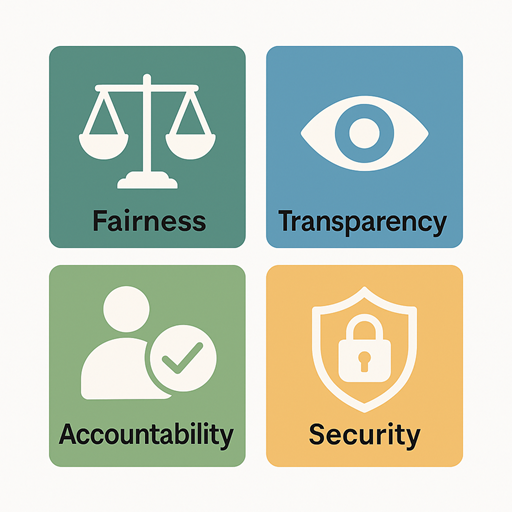
Responsible AI is a governance framework that guides how AI systems are designed, developed and deployed. It aims to prevent harm by embedding ethical principles into technology from the start rather than treating them as afterthoughts. This approach is rooted in four key principles: fairness, transparency, accountability and security.
Only 35 per cent of global consumers currently trust how organisations use AI, and more than three quarters believe companies should be held accountable for misuse. These figures underscore why ethical frameworks are vital to building public confidence in AI systems.
Fairness and the Fight Against Bias
Fairness is perhaps the most difficult goal to achieve. AI learns from data, and data often reflects human bias. When unchecked, those biases can lead to discriminatory outcomes. For example, AI tools used in recruitment have been found to favour certain names or backgrounds, reinforcing inequality rather than reducing it.
Experts say fairness requires continual monitoring and human oversight. Regular audits, diverse training data and human-in-the-loop systems, where people review automated decisions, can help identify bias and make AI fairer in practice.
Transparency and Explainability
Many AI systems operate as black boxes, making decisions without clear explanations. This lack of transparency can be damaging, especially in critical areas such as healthcare or finance. If an AI tool denies a loan or recommends a medical treatment, people deserve to know why.
Explainable AI allows users to trace outcomes back to their causes. Clear documentation, visual models and human-readable explanations make decisions easier to understand. Transparency also helps regulators and consumers hold organisations accountable when things go wrong.
Accountability and Human Oversight
Accountability ensures that responsibility for AI’s actions remains with people, not machines. As one expert put it, humans must always stay in the loop. This means setting clear lines of authority and ensuring there are mechanisms for redress if an AI system causes harm.
Some companies are already being held accountable for their AI’s behaviour. A Canadian airline was recently fined after its chatbot gave misleading information to customers. Such cases underline the importance of governance structures and oversight that define who is answerable for AI-driven decisions.
Security and Privacy
AI’s rapid adoption has opened new security risks. From data breaches to shadow AI tools used without approval, sensitive information can easily escape an organisation’s control. Responsible AI frameworks stress the importance of secure coding, data protection and access controls.
New international standards, such as ISO 42001, now help organisations manage AI safely and in line with global best practice. But as experts warn, creating ethical AI is not a one-time project. It demands continuous monitoring, regular audits and a culture of responsibility that spans every department, from engineers to executives.
The Challenge Ahead
Building ethical AI is no easy task. The biggest challenge lies in turning principles into practice. According to PwC, half of organisations struggle to convert Responsible AI ideals into scalable, repeatable processes.
Despite these hurdles, momentum is growing. Companies are beginning to embed Responsible AI into everyday operations, training teams, auditing systems and setting clear usage policies. The message from industry leaders is clear: Responsible AI is not a compliance exercise but a commitment to trust.
As AI becomes ever more capable, the frameworks that govern it must evolve just as quickly. The future of ethical AI will depend on one simple idea: that technology should serve people, not the other way around.