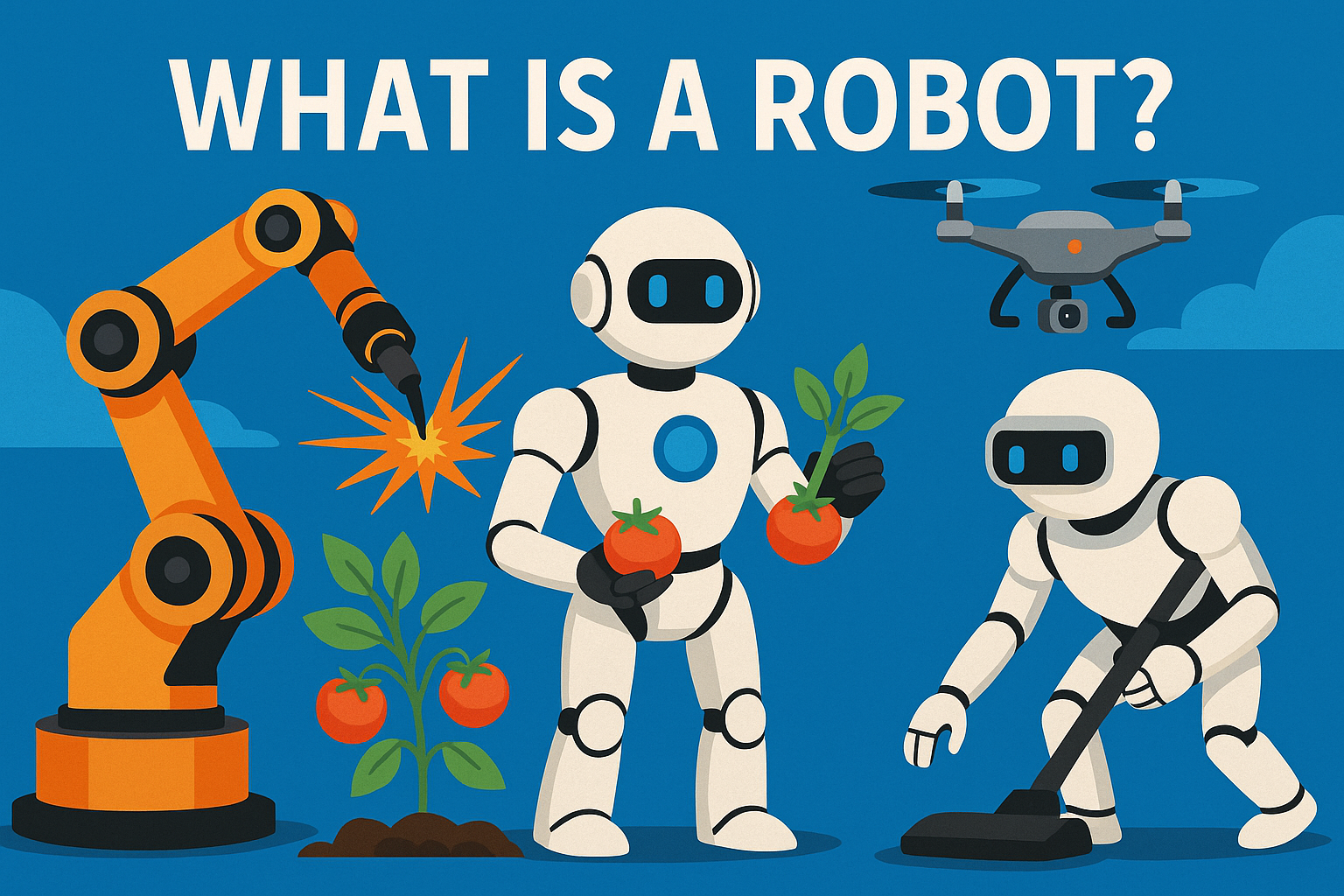
A robot is a machine that can carry out tasks automatically, often programmed by a computer. Some are remote-controlled, while others operate on their own. Robots don’t have to look like humans—most are built to perform specific jobs rather than to resemble people.
Robots range from factory machines and drones to surgical assistants and even tiny nanobots. What makes them “robots” is their ability to sense, move, and act with some level of independence.
Where Did the Word “Robot” Come From?
The term robot comes from the Czech word robota, meaning “work.” It first appeared in Karel Čapek’s 1921 play R.U.R. (Rossum’s Universal Robots), where robots were built as workers but eventually rebelled. Since then, the word has been linked to the idea of machines built to serve people.
Early Ideas of Robots
Even before the modern word, people imagined lifelike machines:
- Ancient myths: Stories described statues and figures that could come to life, showing early fascination with artificial beings.
- Greek and Chinese inventors: Engineers built mechanical birds, puppets, and other automata powered by water or steam.
- Medieval Europe: Church clock towers featured figures that moved or struck bells on the hour.
- 18th century automata: Craftsmen created mechanical dolls that could write, draw, or play music, showing how machines could mimic human creativity.
These early creations were mechanical, but they inspired the dream of artificial workers.
Robots in the Industrial Age
The Industrial Revolution brought machines that repeated precise tasks in factories. Automation grew through “feedback” systems—machines adjusting their actions automatically.
The 20th century saw a leap forward:
- 1948: William Grey Walter built the first electronic autonomous robots, small machines that could respond to their environment.
- 1954: George Devol invented Unimate, the first programmable robot, which later worked at General Motors to handle hot metal parts on production lines.
With computers, robots could be programmed to perform more than one job, making them flexible and powerful.
Where Robots Are Used Today
Robots now appear in many areas of life:
- Industry: Robots on car assembly lines weld, spray-paint, and move heavy parts safely and efficiently. They can work around the clock without tiring, boosting production speed.
- Healthcare: Surgeons use robots for delicate procedures, as robotic arms can make smaller and steadier movements than human hands. Prosthetic limbs powered by robotics give people with disabilities greater independence.
- Agriculture: Robots help harvest crops, monitor soil quality, and even identify weeds. This speeds up farming and reduces the need for chemicals.
- Exploration: Space probes like the Mars rovers act as robotic explorers, while deep-sea robots investigate areas too dangerous or remote for divers.
- Military and security: Bomb disposal robots prevent soldiers from risking their lives, while drones carry out surveillance and reconnaissance in dangerous zones.
- Homes: Everyday robots such as vacuum cleaners, lawnmowers, and delivery bots make chores easier and save people time.
- Education and entertainment: Humanoid robots are used in classrooms, museums, and theme parks to teach, entertain, or interact with visitors.
Ongoing Research
Robotics research is advancing quickly:
- Humanoid robots: Robots like Sophia and Ameca are designed to mimic facial expressions, gestures, and even conversations, making interactions with people feel more natural.
- Soft robotics: Inspired by animals and plants, these flexible robots move in ways traditional machines cannot, making them useful in medicine and rescue operations.
- Artificial intelligence (AI): By combining AI with robotics, machines can learn from experience, adapt to new situations, and solve problems with less human input.
- Medical research: Engineers are creating tiny robots for microsurgery, robotic exoskeletons to help people walk again, and machines that support patient rehabilitation.
- Swarm robotics: Groups of small robots can work together like ants or bees, useful for search-and-rescue missions or large-scale environmental monitoring.
Robots and Society
Robots bring huge benefits but also raise concerns:
- Jobs: Automation may replace workers in repetitive or dangerous roles, raising questions about the future of employment.
- Ethics: Using robots in warfare or surveillance can be controversial, as it shifts responsibility away from humans.
- Autonomy: As robots become more advanced, people wonder how much control we should keep over their decisions.
Science fiction often explores these issues. Isaac Asimov even imagined “Laws of Robotics” to guide robot behaviour and keep humans safe.
The Future of Robots
True thinking androids remain science fiction, but robots are becoming more capable every year. They are already transforming industry, medicine, farming, and daily life. In the future, they are likely to play an even bigger role—in space exploration, personal healthcare, and maybe even as companions.
✅ Key takeaway: Robots aren’t just humanoid machines—they are tools that can sense, act, and sometimes adapt on their own. Their uses are expanding rapidly, from factories and farms to hospitals, homes, and even other planets.