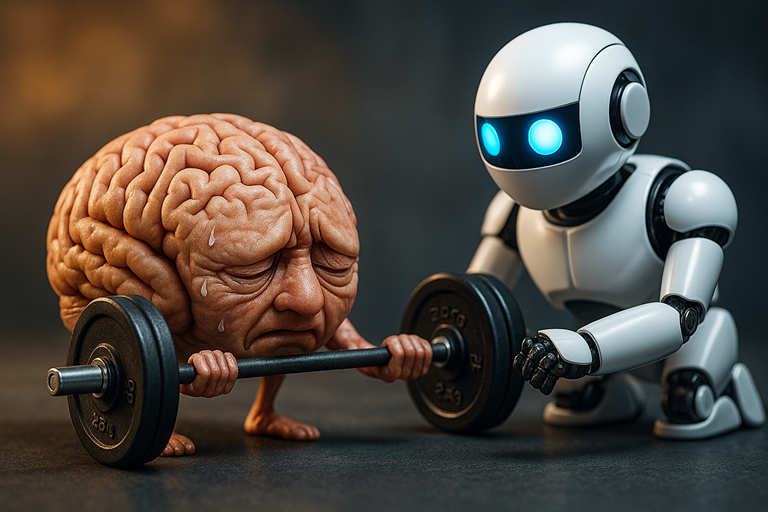
Heavy use of artificial intelligence tools may be linked to a decline in critical thinking skills, according to a major UK study involving 666 adults.
Researchers found that people who use AI frequently for tasks such as writing, planning and decision making scored noticeably lower on recognised measures of critical thinking. Younger users, aged 17 to 25, were the most reliant on AI and the lowest scoring group.
Experts say the findings raise important questions about how AI should be used in education and daily life.
How the research was carried out
Participants completed assessments measuring AI use, cognitive offloading, and critical thinking. Cognitive offloading refers to the habit of passing mental work, such as remembering information or evaluating ideas, onto technology.
Fifty participants were also interviewed in depth. Many said they rely on AI for quick answers or ready made explanations, often without checking accuracy or thinking through the information themselves.
The study found strong statistical links between heavy AI use, reduced critical thinking and higher levels of cognitive offloading. Older participants, who tended to rely less on AI, showed stronger thinking skills overall.
Supporting evidence from MIT
The UK findings echo a smaller experimental study carried out at MIT’s Media Lab. In that study, 54 adults wrote short essays either unaided, using Google, or using ChatGPT while their brain activity was monitored using EEG sensors.
Those who used ChatGPT showed the lowest levels of neural engagement and produced less original work. Participants who wrote without any digital tools showed the strongest brain activity in areas linked to creativity, memory and language.
Why experts are worried
Psychologists warn that deep learning depends on mental effort. Working through problems strengthens the brain’s ability to reason, remember and make judgements.
If AI tools provide answers instantly, users may skip that process altogether. Over time, researchers fear this could weaken essential cognitive skills, particularly in young people whose study habits are still developing.
Clinicians also report increasing numbers of children and teenagers relying on AI for homework and revision, sometimes without understanding the underlying material.
What needs to change
Researchers stress that AI is not harmful by default and can support learning if used carefully. Tools that prompt students to reflect, question or explore ideas may still encourage deeper thinking.
However, the team behind the UK study say practical steps are needed now, especially in schools. They recommend:
- Setting clear guidelines for when AI should and should not be used
- Designing classroom tasks that include AI free stages to ensure independent thinking
- Teaching pupils how to question and verify AI generated information
- Helping families understand the importance of balancing convenience with genuine learning
The researchers emphasise that evidence is still emerging, but say early results are strong enough to guide action.
They warn that as AI becomes more deeply embedded in everyday life, protecting the ability to think independently may become more important than ever.