Researchers at Google and the University of Cambridge have created a system to help artificial intelligence (AI) models work together more effectively. Some have described it as “teamwork” for machines.
The framework, called Multi-Agent System Search, or Mass, is designed to organise groups of smaller AI units, known as agents, so that each handles part of a task. By cooperating, these agents can solve problems more reliably than one large model attempting to do everything.
The approach is being seen as a more efficient alternative to building ever-larger AI models, which are costly and often impractical in real-world use.
Why teamwork matters in AI
Many AI tools already rely on multiple agents. A customer service chatbot, for example, might use:
- one agent to look up information
- another to interpret the customer’s question
- a third to draft the reply
In logistics, a delivery company could have:
- one agent tracking parcels
- another planning driver routes
- a third updating customers
Together, these smaller AIs can provide smoother results than one large system trying to manage everything.
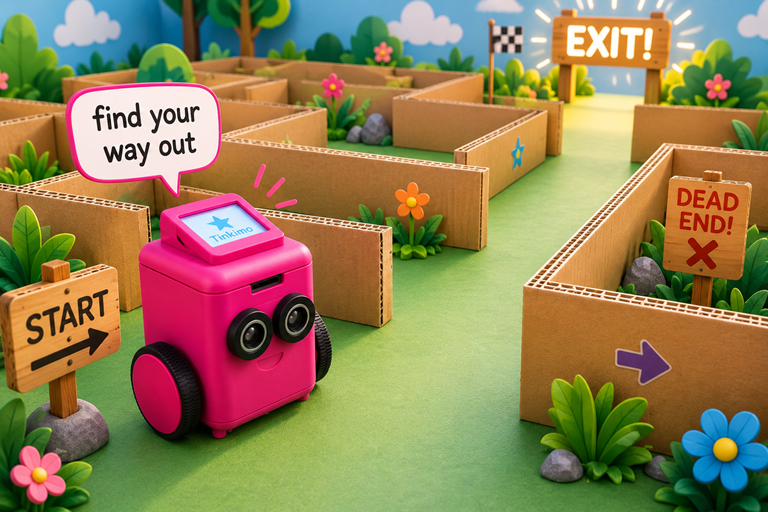
But designing these multi-agent systems is complex. Small changes to the instructions given to an agent (known as prompts) can cause big swings in performance. The way agents are linked together (their topology) can also make or break results.
How the new framework works
Mass tackles both issues at once. It first improves each agent’s instructions, then tests different ways of connecting them, and finally fine-tunes the whole system so they work smoothly as a group.
In testing, Mass outperformed older methods. On maths problems, it achieved 84% accuracy, compared with 76–80% for existing approaches. In coding benchmarks, it boosted performance by up to six percentage points.
Faster to build, easier to use
Another advantage is speed. Mass was developed quickly yet already surpasses established systems, showing how fast AI research is moving.
For businesses, the framework reduces trial and error, making systems faster to build and more reliable in practice. Experts say industries such as customer support, logistics, and video analysis could all benefit.
Key terms explained
- Agent: A smaller AI unit designed to do one specific task
- Prompt: Instructions given to an AI agent to guide its response
- Topology: The way agents are connected to one another
- Multi-agent system (MAS): A group of agents sharing work to solve a larger problem
- Optimisation: Improving performance by testing and adjusting prompts and connections