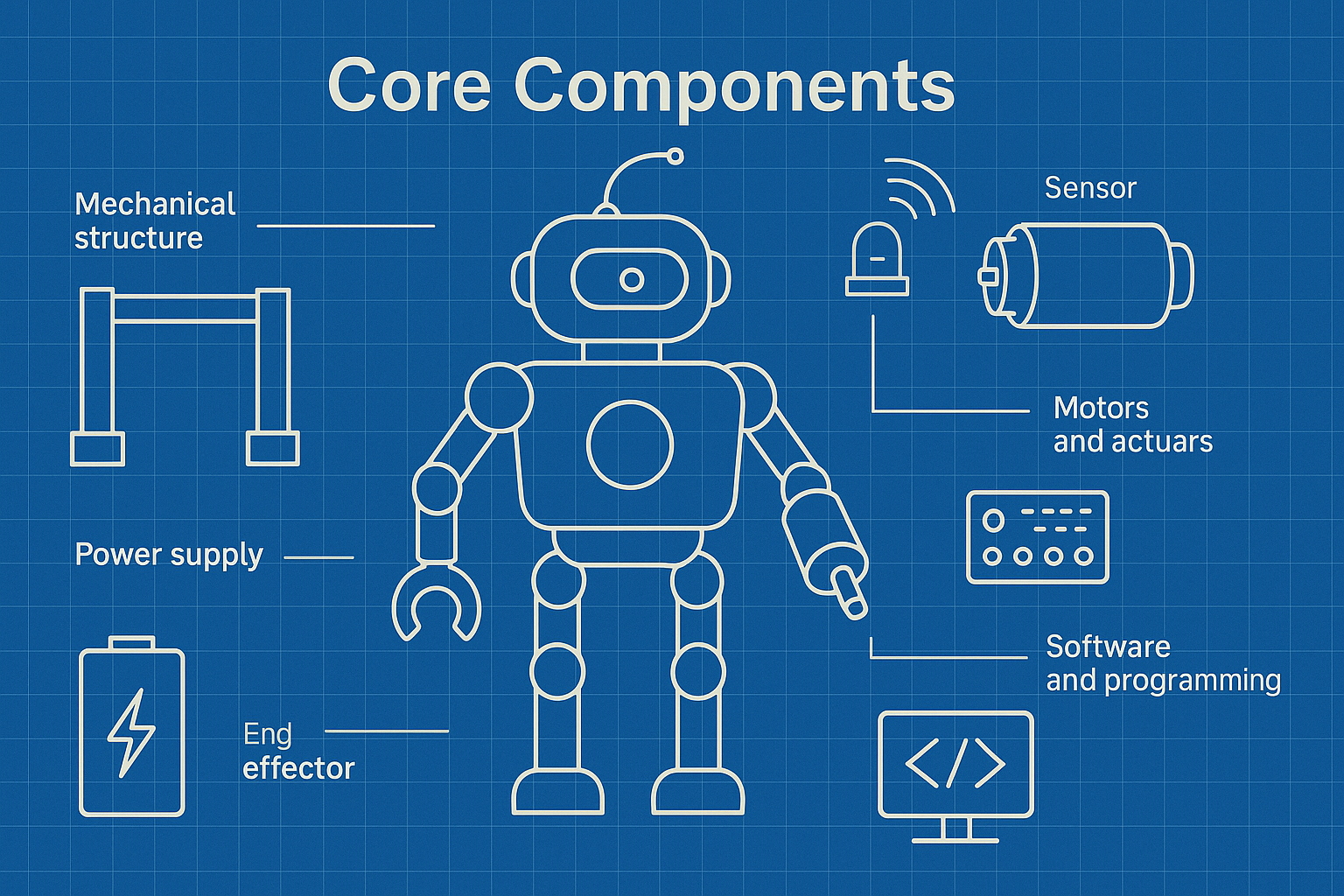
Robots need electricity to move their motors, run sensors, and keep their “brain” (controller) working. Without power, they stop.
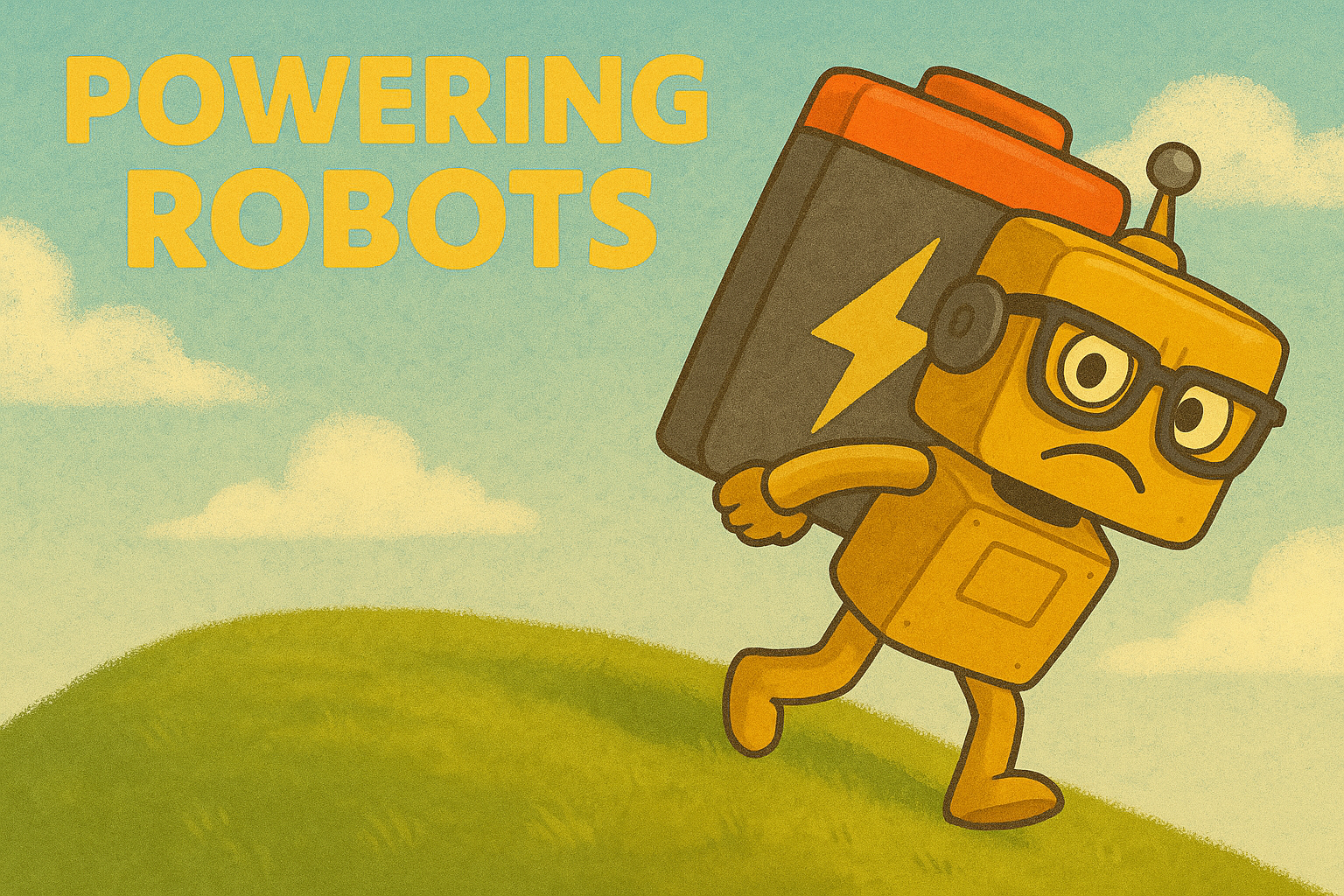
Small robots might use a few AA or AAA batteries. Larger robots may use car-sized batteries. Some even plug into mains electricity. The problem is that batteries add weight. The heavier the robot, the more power it needs to move, which means the batteries run out faster.
What does “stable power” mean?
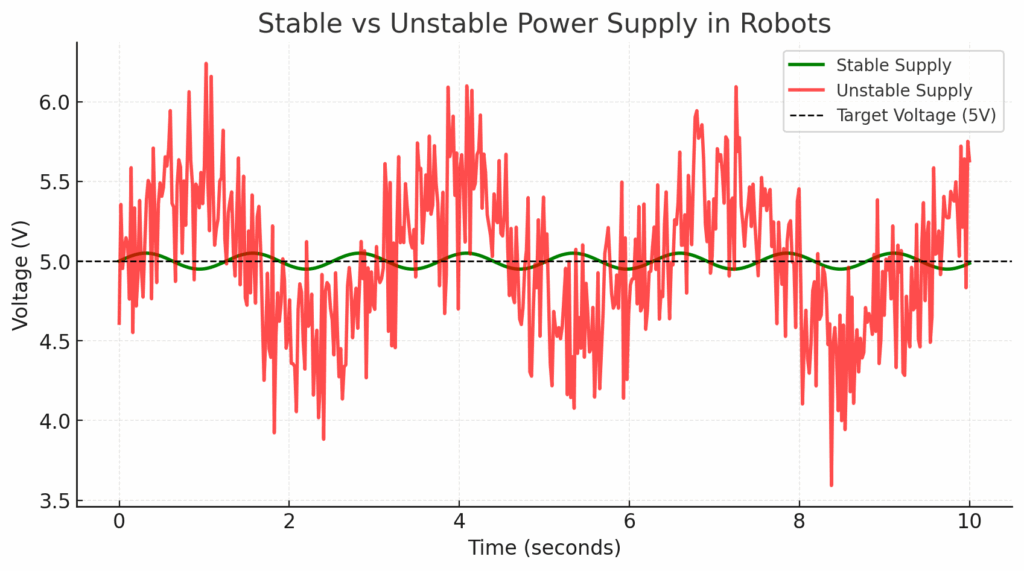
A robot needs a stable supply of electricity. This means:
- The voltage stays steady (e.g. close to 5 V) and doesn’t suddenly drop when motors start.
- The current is enough to power everything without overheating.
- There is little electrical noise, so sensors and radios work properly.
If power isn’t stable, the robot may behave unpredictably or even shut down.
Different ways to power robots
Robots can be powered in different ways:
- Batteries: Portable and simple. They give freedom of movement but eventually run flat and need replacing or recharging.
- Mains power (plugged in): Provides unlimited power but ties the robot to a wire. This works well for robots that stay in one place, like robotic arms.
- Powered floors: A special system where electricity runs through metal strips on the floor. Robots collect the power through brushes. This allows them to run all day without changing batteries.
Choosing a battery
When picking a battery, designers think about:
- Voltage and current: Must match the robot’s motors and electronics.
- Capacity: Higher capacity means longer runtime but usually more weight.
- Weight: A heavier battery drains faster because motors work harder.
- Safety: Some batteries, like Li-ion, need protection to stop overheating.
Types of batteries
| Battery Type | Advantages | Disadvantages | Typical Uses |
|---|---|---|---|
| Alkaline | Cheap, easy to find, disposable | Weak, not rechargeable, voltage drops as it drains | Small hobby robots |
| NiMH | Rechargeable, steadier voltage than alkaline | Heavy, lose charge when not used | Educational robots |
| Li-ion / LiPo | Very light, powerful, high energy | Expensive, need careful charging, can overheat | Drones, mobile robots |
| LiFePO₄ | Safer, longer life, steady voltage | Stores less energy than Li-ion | Reliable mobile robots |
| Lead-acid | Cheap, tough, good for big loads | Very heavy | Large or industrial robots |
Regenerative braking
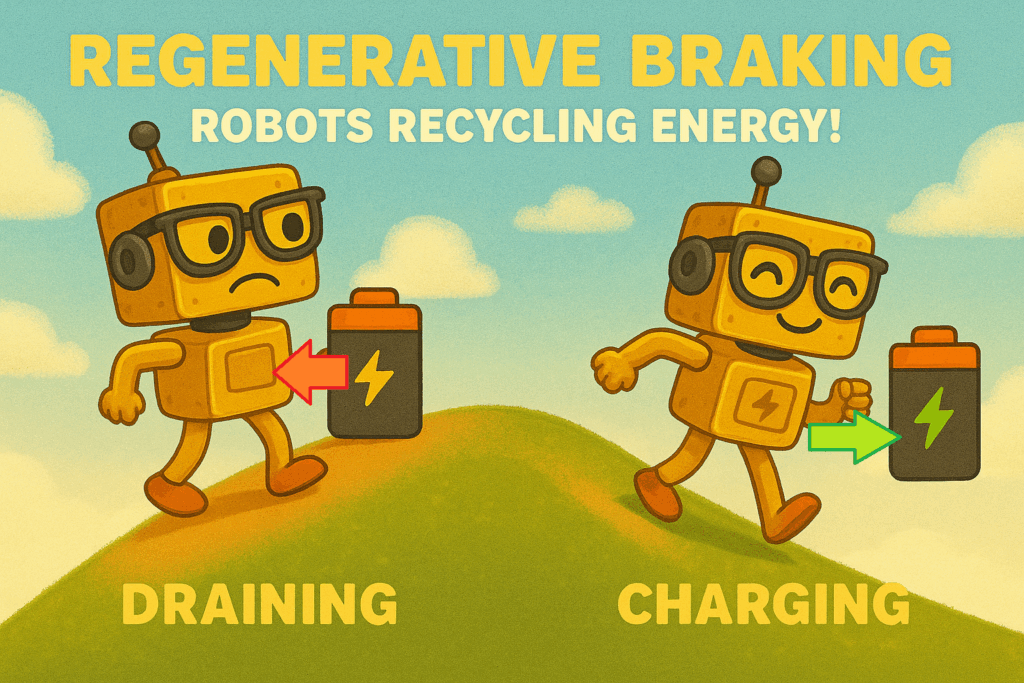
Some robots can save energy by using their motors as generators when slowing down. This is called regenerative braking. Instead of wasting energy as heat, it goes back into the battery. Not all robots use this, but it can extend runtime.
Power conversion
Robots often need more than one voltage. For example, motors may need 12 V, controllers 5 V, and sensors 3.3 V. Special circuits called converters change the battery voltage into the right levels for each part. Without converters, parts may not work or could be damaged.
Charging robots
There are different ways to recharge:
- Manual charging: Plugging in by hand.
- Docking stations: The robot recharges itself automatically when the battery is low (like robot vacuum cleaners).
- Wireless charging: No cables needed, but slower.
- Solar charging: Useful outdoors, but depends on sunlight.
Recap
- Robots need electricity to run motors, sensors, and controllers.
- Stable power means steady voltage and current with little noise.
- Batteries are common but must be chosen carefully for voltage, weight, and safety.
- Different battery types have strengths and weaknesses (see table).
- Robots may also use mains power or powered floors.
- Regenerative braking helps recycle energy.
- Charging methods include manual plugs, docking stations, wireless pads, and solar panels.