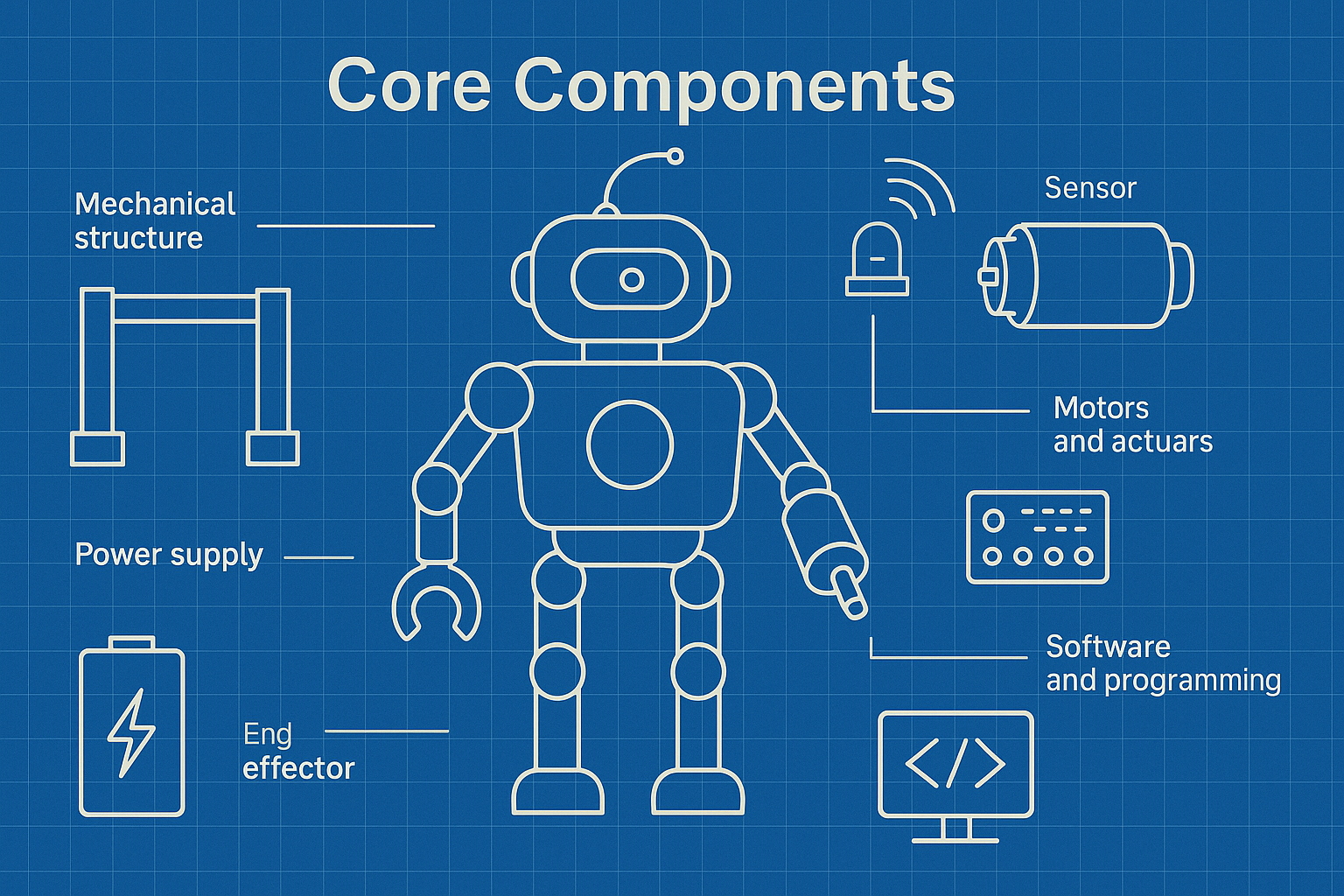
Every robot, whether it is a small hobby project on your desk or a large machine in a factory, needs a body that holds everything together. The structure is like the robot’s skeleton: it supports motors, sensors, tools, and control systems. A weak structure can bend, shake, or break, while one that is too heavy can waste power and slow down the robot. A good design balances strength, weight, and practicality.
Choosing Materials
The materials used in a robot’s body depend on its size, purpose, and environment.
Metals are very common because they are strong and durable. Steel is often found in heavy-duty industrial robots, such as robotic welding arms on car assembly lines, because it can handle big loads. Aluminum is lighter and easier to machine, so it is used in both hobby robots and many industrial robots, like warehouse mobile robots. Advanced metals such as stainless steel or titanium are used when corrosion resistance or very high strength is needed.
Plastics are lighter and easier to shape than metals. In hobby robots, plastics like ABS or polycarbonate are often used for panels or protective shells. In industry, polycarbonate is used for transparent guards around machines, while strong plastics like acetal are used for gears and moving parts.
Composites, such as carbon fiber and fiberglass, combine strength with low weight. They are used in drones, high-speed robots, and medical robots, where precision and efficiency are vital. Wood is generally limited to learning projects and hobby builds because it is cheap and easy to cut but not durable enough for industrial use.
Flexible materials also matter. Rubber and silicone are used for wheels, seals, and shock absorbers. Cables, chains, and belts are found in both hobby and industrial robots to transmit power or hold parts in tension.
Designing the Structure
The design principles are similar for both hobby and industrial robots. The body must be strong enough to support loads, but light enough to move efficiently.
One of the simplest tricks is to use triangles for strength. Triangles hold their shape under stress, while rectangles can bend or twist unless braced. This is why industrial robot arms often have triangular cross-sections inside their beams, and why hobbyists add diagonal braces to small frames.
Weight placement is just as important. For example, industrial robotic arms place heavy motors at the base rather than at the tip, so the arm can move faster without bending. In hobby robots, batteries and motors are best kept low and near the center to avoid tipping over.
Joints are often the weakest points in a structure. Industrial robots use carefully machined joints, welded connections, or heavy-duty bolts. Hobby robots rely on screws, brackets, or gussets. In both cases, reinforcing the joints helps prevent failures and extends the robot’s lifespan.
Another principle is modularity. Industrial robots are often built in sections—like a base, arm, and end effector—so parts can be swapped or repaired easily. Hobby builders can take the same approach by making separate modules for the drivetrain, arms, or sensors, which makes upgrades and repairs simpler.
Examples of Robot Structures
Looking at real robots helps show how structure design works in practice.
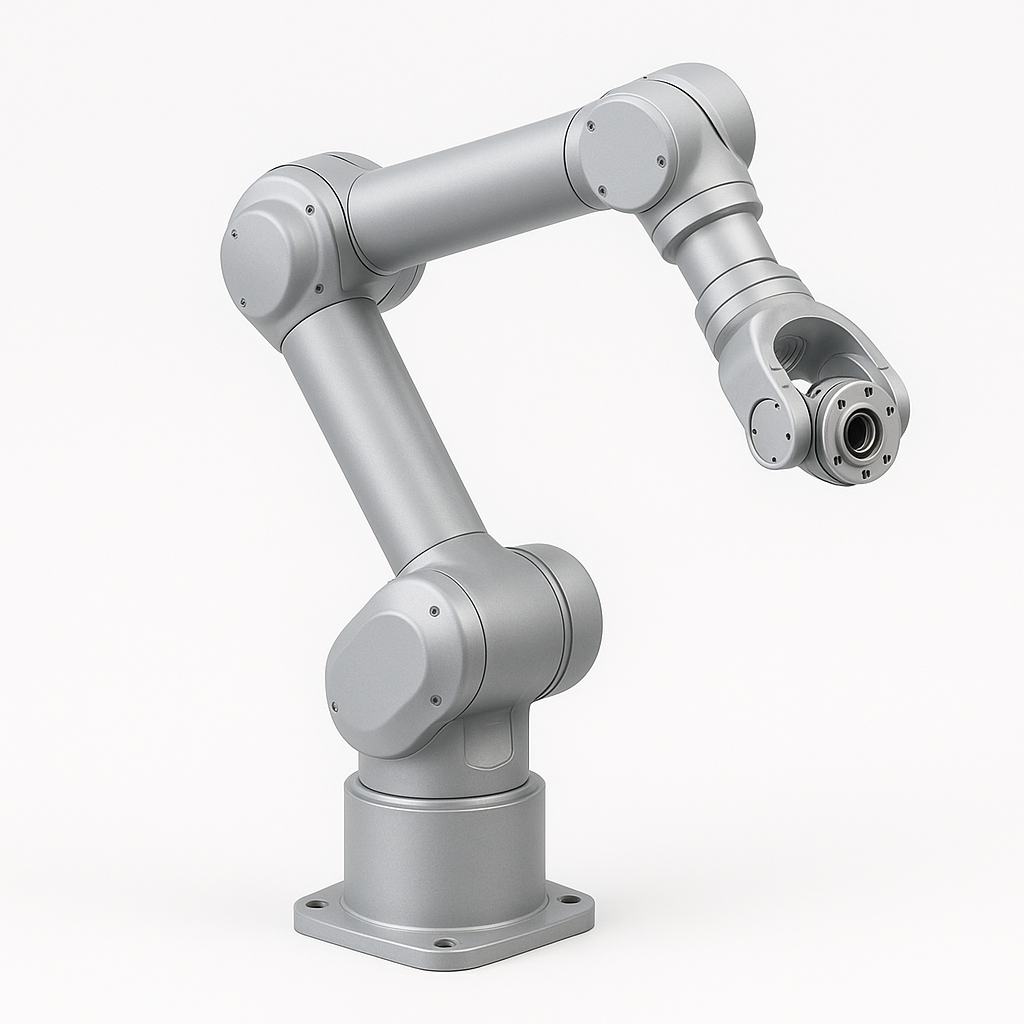
Robotic Arms (Industrial): These are found in car factories and electronics assembly. Their bodies are built from rigid steel or aluminum sections with strong joints, allowing them to lift and move heavy parts precisely. The motors are usually at the base to reduce strain.

Mobile Robots (Industrial and Hobby): Warehouse robots like those used by Amazon use lightweight aluminum or steel frames with plastic covers. Hobby versions, like small wheeled robots, follow the same idea—keep the frame rigid, protect the electronics, and place the weight low to avoid tipping.
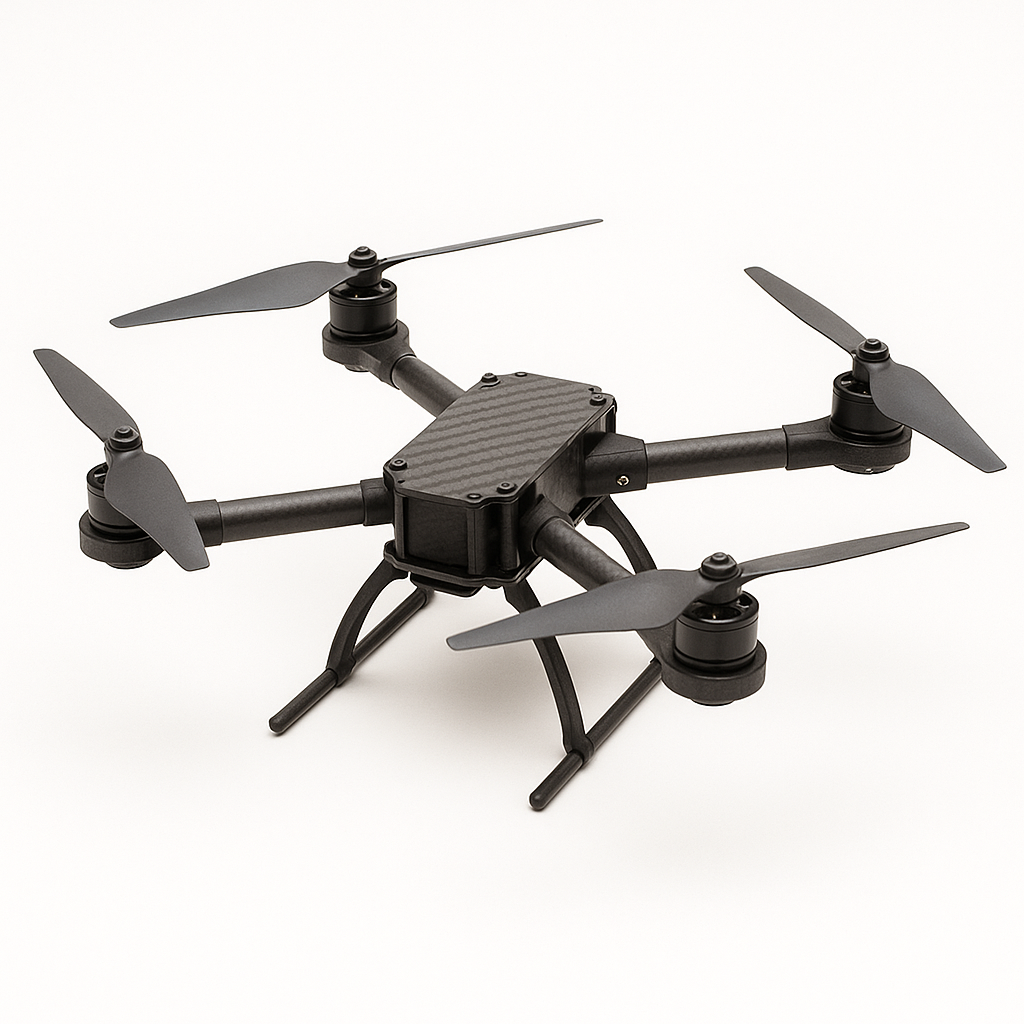
Drones (Hobby and Commercial): Drone frames are usually made from carbon fiber or lightweight aluminum. They rely heavily on triangulation in their arms and bodies to stay rigid while remaining light enough to fly.Building and Testing
Whether you are in a workshop or a factory, accuracy is essential. Parts must be cut and aligned carefully; even small errors can cause problems later. Sharp corners should be avoided because they can crack under stress, while smooth curves spread forces more evenly. Testing is just as important—small trial runs or load tests can reveal weak points before the robot is put into full use.
Conclusion
The structure of a robot is the foundation that everything else relies on. Whether you are building a small hobby robot at home or designing an industrial machine for a factory, the same rules apply: choose the right materials, balance strength with weight, reinforce joints, and design with stability in mind. Triangles make frames solid, good weight placement improves balance, and modular designs make repairs easier. By following these principles, you can build a robot body that is reliable, efficient, and ready for action in any setting—from your garage to the factory floor.