Artificial Intelligence (AI) is everywhere these days. From job applications and loan approvals to healthcare, policing, and even the social media feeds we scroll through, AI systems are quietly shaping big parts of our lives.
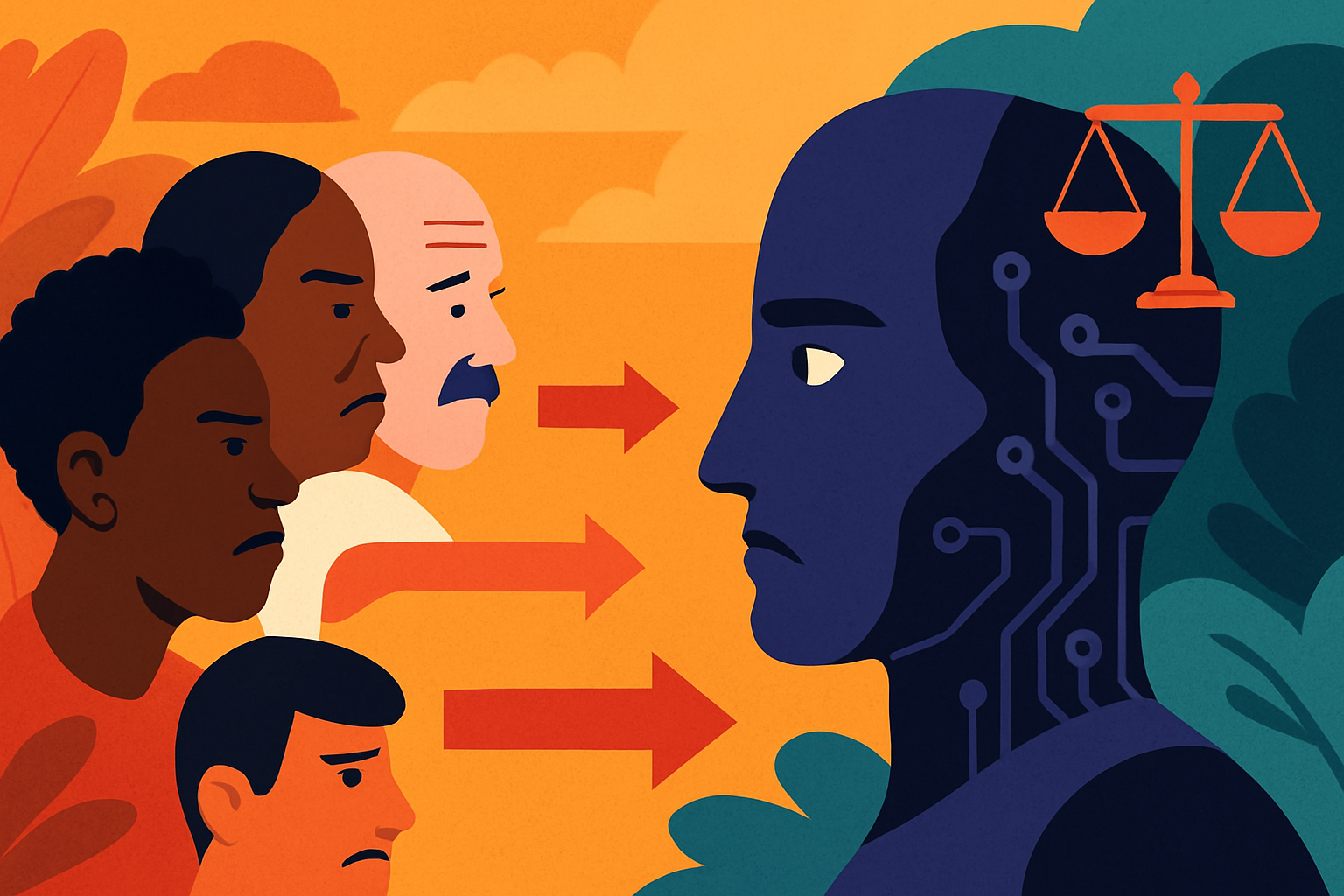
On the surface, it all sounds great: computers making quick, logical decisions without the messy biases of humans. But here’s the twist: AI isn’t actually neutral at all. In fact, it can make bias worse. And the main culprit? The data we use to train it.
How Bias Slips Into AI
AI is only as good as the information it’s fed. If the data is unbalanced or unfair, the AI will reflect that. Here are three big ways this happens:
- History repeats itself
If AI is trained on hiring records from an industry where men have historically dominated, it might “learn” that men are better suited for certain jobs. In other words, it just copies old patterns of inequality. - Missing pieces of the puzzle
Imagine teaching facial recognition using mostly photos of light-skinned people. The system will struggle with darker-skinned faces because it hasn’t seen enough examples. This is called sampling bias because the data doesn’t represent everyone. - Human labels, human flaws
Often, people have to tag or label data to help AI learn. But people carry unconscious bias. If crime-related data is labelled in a way that reflects racial stereotypes, the AI will absorb those unfair assumptions and repeat them.
The Maths Bit (Don’t Worry, It’s Simple)
Under the bonnet, AI uses fancy maths to spot patterns. One common method is called “regression.” Think of it like drawing a line through dots on a graph to predict where the next dot might land.
The catch? If your dots (data) are biased, the line will be too. In short: clever maths can’t fix bad data.
Why Should You Care?
This isn’t just an academic problem. It affects people in very real ways. For example:
- Jobs: Biased AI in recruitment software can filter out qualified candidates based on gender or ethnicity.
- Money: Loan applications might be unfairly declined because the system learned from past decisions that disadvantaged certain groups.
- Health: If medical AI is trained mostly on data from men, it might miss symptoms in women or other groups.
- Everyday life: Even your social media feed could reinforce stereotypes if the algorithms are skewed.
And when stories of unfair AI hit the news, it damages trust in technology. If people don’t believe AI can be fair, they won’t want to use it, and that slows down innovation that could actually benefit us.
So, What Can Be Done?
The good news is, bias in AI isn’t inevitable. Here are some of the steps researchers and developers are working on:
- Better data sets: Making sure training data reflects a wide range of people and experiences.
- Bias testing: Checking how AI performs across different groups before it’s rolled out.
- Transparency: Being open about how systems are trained and what data is used.
- Diverse teams: Building AI with input from people of different backgrounds to spot blind spots early.
None of this is a quick fix, but it’s a start.
Conclusion
AI isn’t automatically fair or objective. It mirrors the data we give it, and if that data carries bias, the AI will pass it on. Left unchecked, this can lead to unfair decisions in hiring, healthcare, finance, and beyond.
But there’s a positive side. Once we acknowledge the problem, we can design systems that are more transparent, better tested, and based on data that represents everyone. Building fairer AI is less about inventing new technology and more about making thoughtful choices in how we create and use it.
In the end, AI reflects us. The fairer we make the data, the fairer the outcomes will be.